
30-32 East 21st Street (New York City, New York)
USA /
New Jersey /
West New York /
New York City, New York /
East 21st Street, 30-32
World
/ USA
/ New Jersey
/ West New York
apartment building
Add category
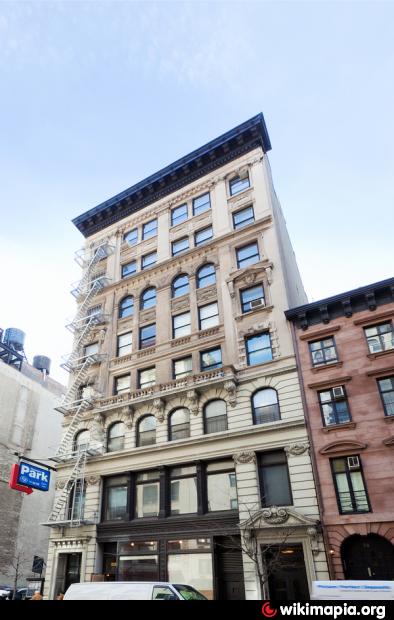
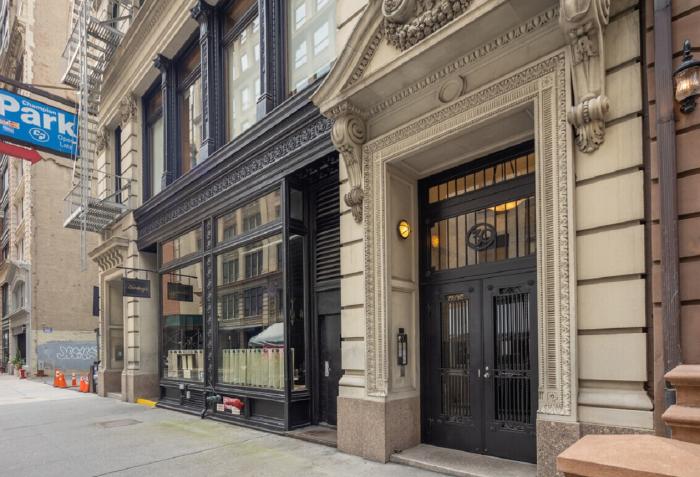
9-story Renaissance-revival cooperative-apartment building completed in 1898. Designed by Ralph Samuel Townsend as a store-and-loft building, its brick and limestone facade is distinguished by a prominent cornice and double-height, cast-iron storefront. The facade is divided into three zones. The 3-story base is articulated in deeply-coursed stone. Its four pilasters with carved capitals extend the height of the first two floors; the pilasters frame, in the end bays, a pedimented entrance with modern metal doors, a linteled entrance with a wood and glass service door, and a rectangular window. In the center bay, they frame a 2-story, cast-iron storefront, which has (on its 1st floor) two large show windows capped by transoms and flanked by doors, one with a modern ventilation grille, and (on the 2nd floor) decorative pilasters dividing four windows capped by transoms and divided by a row of rosettes. Above, a prominent cornice supports the row of round-arched windows at the 3rd floor; these alternate with decorative consoles beneath a protruding balustraded balcony.
In the 3-story middle zone, two central bays are organized by the balcony and double-height arcades which group the windows and carved spandrels into two pairs separated by a broad pilaster. The end bays are emphasized by windows with elaborately banded and pedimented surrounds.
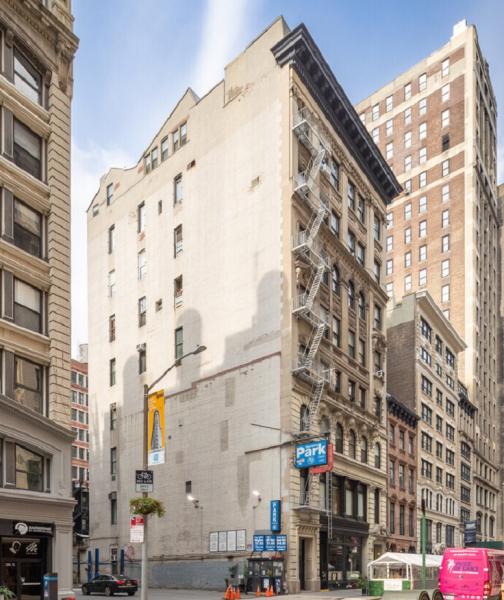
In the 2-story top zone, Ionic pilasters separate the end bays with one window per floor from the paired windows of the central bays, which are also flanked by pilasters. A deep black metal dentiled roof cornice caps the entire facade. A grey metal fire escape, attached to the eastern edge, runs between the top and 2nd floors. The eastern elevation is brick, partially parged, with just a few windows.
Among the building's tenants, who were characteristic of the district, were: the Tonnele Company, advertising photographers and publishers; Heins and LaFarge, architects; Harwell-Evans, art publisher; and several tailors and lace curtain manufacturers. It was converted to residential in 1981.
In the 3-story middle zone, two central bays are organized by the balcony and double-height arcades which group the windows and carved spandrels into two pairs separated by a broad pilaster. The end bays are emphasized by windows with elaborately banded and pedimented surrounds.
In the 2-story top zone, Ionic pilasters separate the end bays with one window per floor from the paired windows of the central bays, which are also flanked by pilasters. A deep black metal dentiled roof cornice caps the entire facade. A grey metal fire escape, attached to the eastern edge, runs between the top and 2nd floors. The eastern elevation is brick, partially parged, with just a few windows.
Among the building's tenants, who were characteristic of the district, were: the Tonnele Company, advertising photographers and publishers; Heins and LaFarge, architects; Harwell-Evans, art publisher; and several tailors and lace curtain manufacturers. It was converted to residential in 1981.
Nearby cities:
Coordinates: 40°44'21"N 73°59'19"W
- ABC Carpet & Home 0.1 km
- Zeckendorf Towers 0.5 km
- 211 East 18th Street 0.5 km
- Gramercy Park Towers 0.5 km
- Gramercy Square Condominium 0.5 km
- Victoria Apartments 0.5 km
- One Union Square South 0.6 km
- 40 and 50 East 10th Street 0.9 km
- Stewart House Apartments 0.9 km
- The Hamilton 1 km
- Flatiron District 0.2 km
- Union Square Park 0.4 km
- 14th Street / Union Square Subway Station (4,5,6,<6>,L,N,Q,R) 0.5 km
- Midtown (South Central) 0.5 km
- Washington Irving Educational Campus 0.5 km
- Gramercy 0.5 km
- Zeckendorf Towers 0.5 km
- 44 East 14th Street 0.6 km
- Greenwich Village 1.3 km
- Chelsea 1.3 km