
Sage House Apartments (New York City, New York)
USA /
New Jersey /
West New York /
New York City, New York /
Lexington Avenue, 4
World
/ USA
/ New Jersey
/ West New York
interesting place, apartment building, Italianate style (architecture)
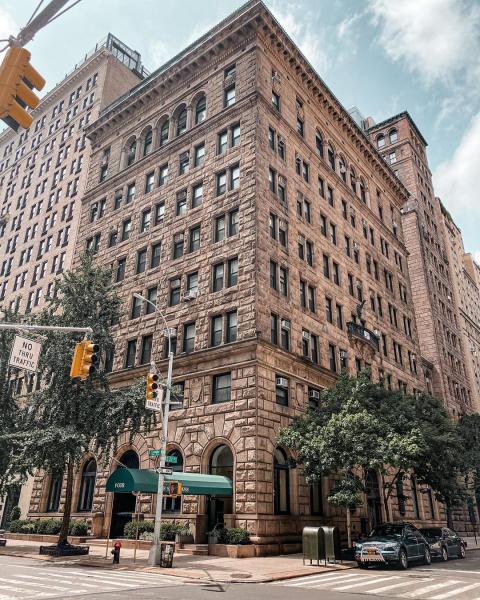
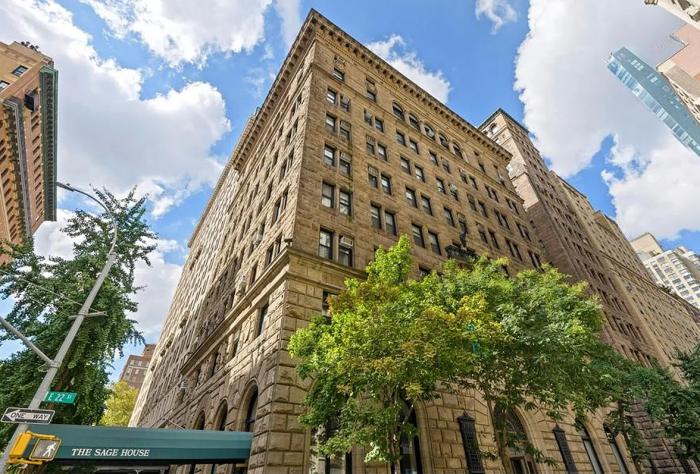
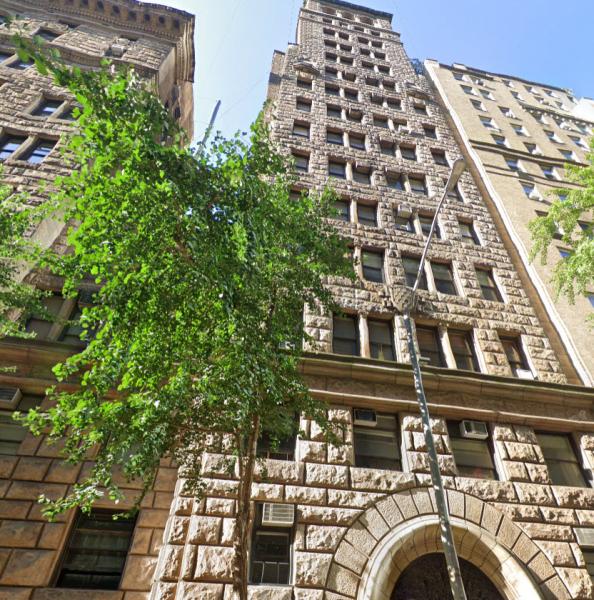
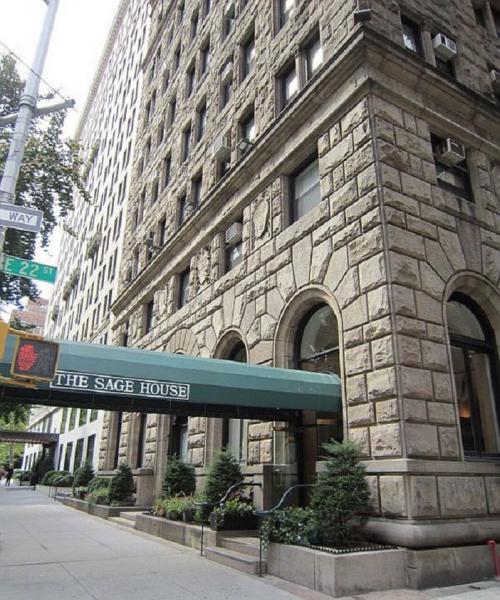
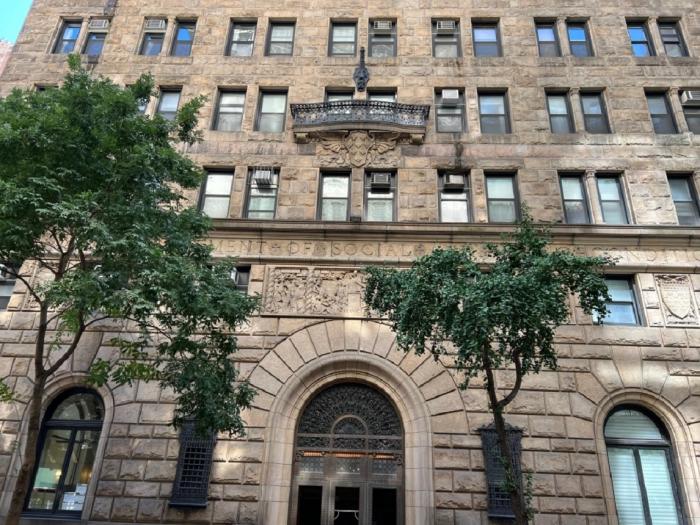
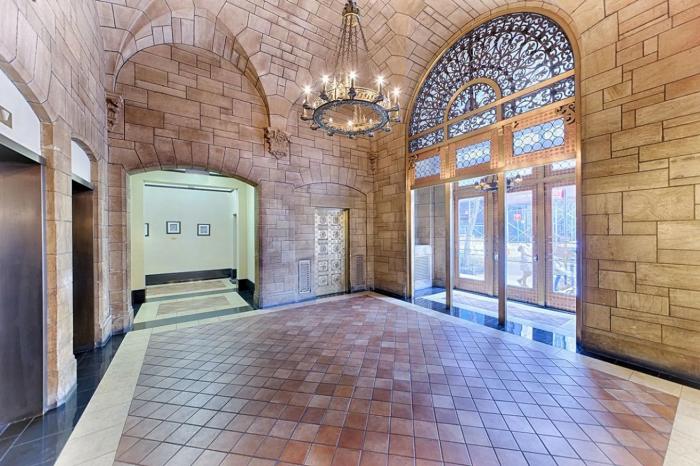
192-foot, 16-story Italian Renaissance style cooperative-apartment building completed in 1931 as an annex to the adjoining 9-story building completed in 1913. The earlier building was designed by Grosvenor Atterbury for the headquarters of the Russell Sage Foundation. Its interior was decorated by Anthony & Cowell Co., and it has a 10th-story penthouse added in 1923. The taller annex to the west was designed by the same architect, and both buildings are almost entirely clad in rockfaced sandstone of a light brown/pink color, with the buildings linked by a 5-story hyphen.
After a reorganization, the foundation sold its headquarters in 1949. The complex was occupied from 1950 until 1973 by the Catholic Charities of the Archdiocese of New York. It was subsequently converted into a cooperative apartment building, with 160 apartments, called Sage House.
On the original building, the two principal facades, similarly articulated, feature a tripartite horizontal division separated by band courses. The base has round-arched fenestration (original single-pane wood casement windows with transoms) with voussoirs on the ground floor, the midsection has paired rectangular windows, and the upper section has central 2-story arcades (that facing 22nd Street is a loggia), flanked by rectangular windows with six granite sculpture spandrel panels. Nine granite sculpture panels on the 2nd floor, executed in 1922-26 from models by sculptor Rene Chambellan, display the themes of RSF's work and concerns. The building is surmounted by a heavy modillioned cornice with copper rosettes and puti and owls heads. The 10-story penthouse has, on the principal facades, sections clad in stone with rectangular windows flanking central arcades clad in copper. The arcade windows have been altered by covering over the upper sections. The roof is covered with copper Spanish tiles.
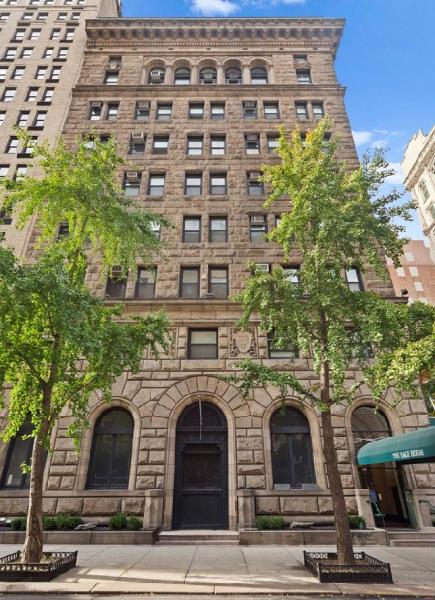
On East 22nd Street, the north facade has the former main entrance, with two stone steps and flanked by cheek posts, and three decorative bronze doors surmounted by a transom with the original leaded glass and a fanlight with a wrought-iron grille. It is flanked by small rectangular windows with wrought-iron grilles. The band course over the entrance bears the inscription "for the improvement of social and living conditions". At the 4th floor is a curved iron balcony set above a large winged shield, and a flagpole set in a decorative metal holder.
On Lexington Avenue, the former entrance (originally to a lecture hall), with two stone steps, has a decorative marble surround surmounted by a fanlight with a wrought-iron grille. The northernmost window bay was altered into the current main entrance with glass doors and transom, and has two stone-paved steps and a rounded, green canvas canopy.
The taller annex building on the west end has a primary facade on East 22nd Street and articulated two-bay eastern and western facades. This tower-like front portion of the annex was executed in a style and with materials similar to the original building; the rest of the building (only partially visible from the street) is unarticulated and clad in cream-colored brick. The ground floor has a broad, round-arched former entrance with three bossed bronze doors (currently painted and fixed, with plate glass panels and iron bars) surmounted by a triple panel and a fanlight with a wrought-iron grille. This former entrance is flanked by squat cheek posts and by a small rectangular window (east) and double metal doors (west) with wrought-iron grilles. A shield is placed above the 3rd floor and decorative panels (with balconets) above the 9th floor; the upper section is arcaded; a setback occurs above the 10th floor; and the cornice is copper. The hipped roof is covered in copper Spanish tiles. A 2-story rooftop penthouse addition was added above the brick section of the annex. Ornamental metalwork was supplied by Sexauer & Lemke with some ironwork by Tiffany Studios.
www.beyondthegildedage.com/2012/02/russell-sage-foundat...
s-media.nyc.gov/agencies/lpc/lp/2065.pdf
archive.org/details/atterbury-monograph/page/n4/mode/1u...
hdl.handle.net/2027/mdp.39015059445117?urlappend=%3Bseq...
hdl.handle.net/2027/mdp.39015086699298?urlappend=%3Bseq...
hdl.handle.net/2027/pst.000065812389?urlappend=%3Bseq=1...
After a reorganization, the foundation sold its headquarters in 1949. The complex was occupied from 1950 until 1973 by the Catholic Charities of the Archdiocese of New York. It was subsequently converted into a cooperative apartment building, with 160 apartments, called Sage House.
On the original building, the two principal facades, similarly articulated, feature a tripartite horizontal division separated by band courses. The base has round-arched fenestration (original single-pane wood casement windows with transoms) with voussoirs on the ground floor, the midsection has paired rectangular windows, and the upper section has central 2-story arcades (that facing 22nd Street is a loggia), flanked by rectangular windows with six granite sculpture spandrel panels. Nine granite sculpture panels on the 2nd floor, executed in 1922-26 from models by sculptor Rene Chambellan, display the themes of RSF's work and concerns. The building is surmounted by a heavy modillioned cornice with copper rosettes and puti and owls heads. The 10-story penthouse has, on the principal facades, sections clad in stone with rectangular windows flanking central arcades clad in copper. The arcade windows have been altered by covering over the upper sections. The roof is covered with copper Spanish tiles.
On East 22nd Street, the north facade has the former main entrance, with two stone steps and flanked by cheek posts, and three decorative bronze doors surmounted by a transom with the original leaded glass and a fanlight with a wrought-iron grille. It is flanked by small rectangular windows with wrought-iron grilles. The band course over the entrance bears the inscription "for the improvement of social and living conditions". At the 4th floor is a curved iron balcony set above a large winged shield, and a flagpole set in a decorative metal holder.
On Lexington Avenue, the former entrance (originally to a lecture hall), with two stone steps, has a decorative marble surround surmounted by a fanlight with a wrought-iron grille. The northernmost window bay was altered into the current main entrance with glass doors and transom, and has two stone-paved steps and a rounded, green canvas canopy.
The taller annex building on the west end has a primary facade on East 22nd Street and articulated two-bay eastern and western facades. This tower-like front portion of the annex was executed in a style and with materials similar to the original building; the rest of the building (only partially visible from the street) is unarticulated and clad in cream-colored brick. The ground floor has a broad, round-arched former entrance with three bossed bronze doors (currently painted and fixed, with plate glass panels and iron bars) surmounted by a triple panel and a fanlight with a wrought-iron grille. This former entrance is flanked by squat cheek posts and by a small rectangular window (east) and double metal doors (west) with wrought-iron grilles. A shield is placed above the 3rd floor and decorative panels (with balconets) above the 9th floor; the upper section is arcaded; a setback occurs above the 10th floor; and the cornice is copper. The hipped roof is covered in copper Spanish tiles. A 2-story rooftop penthouse addition was added above the brick section of the annex. Ornamental metalwork was supplied by Sexauer & Lemke with some ironwork by Tiffany Studios.
www.beyondthegildedage.com/2012/02/russell-sage-foundat...
s-media.nyc.gov/agencies/lpc/lp/2065.pdf
archive.org/details/atterbury-monograph/page/n4/mode/1u...
hdl.handle.net/2027/mdp.39015059445117?urlappend=%3Bseq...
hdl.handle.net/2027/mdp.39015086699298?urlappend=%3Bseq...
hdl.handle.net/2027/pst.000065812389?urlappend=%3Bseq=1...
Wikipedia article: https://en.wikipedia.org/wiki/Russell_Sage_Foundation
Nearby cities:
Coordinates: 40°44'19"N 73°59'8"W
- Oakley 385 km
- Elmwood 430 km
- Jerdone Castle 444 km
- Clem-Kagey Farm 452 km
- Grassdale 471 km
- Hawkwood 472 km
- Bellevue 510 km
- Glenwood 630 km
- Belle-Hampton 700 km
- Madison Historic District 1001 km
- Gramercy Park 0.1 km
- CUNY Baruch College 0.2 km
- Gramercy Square Condominium 0.3 km
- Gramercy 0.3 km
- Flatiron District 0.4 km
- Washington Irving Educational Campus 0.4 km
- The Ball Field 0.5 km
- Midtown (South Central) 0.5 km
- Kips Bay 0.7 km
- Stuyvesant Town 1 km