
Church Missions House (New York City, New York)
USA /
New Jersey /
West New York /
New York City, New York /
Park Avenue South, 281
World
/ USA
/ New Jersey
/ West New York
NRHP - National Register of Historic Places, interesting place, historical building, commercial building
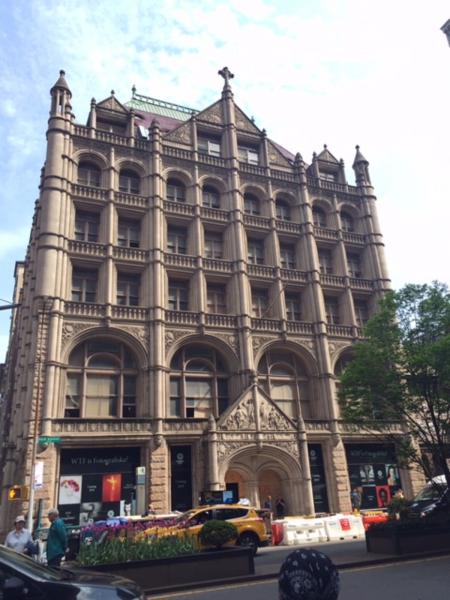
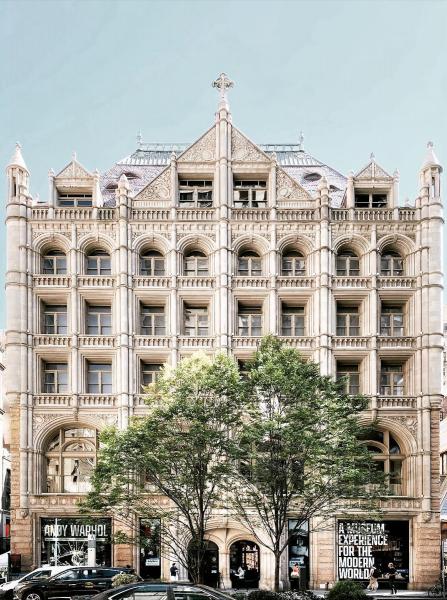
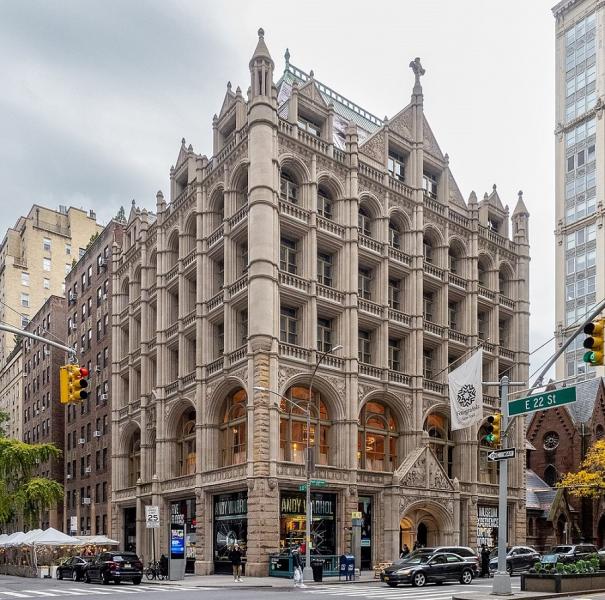
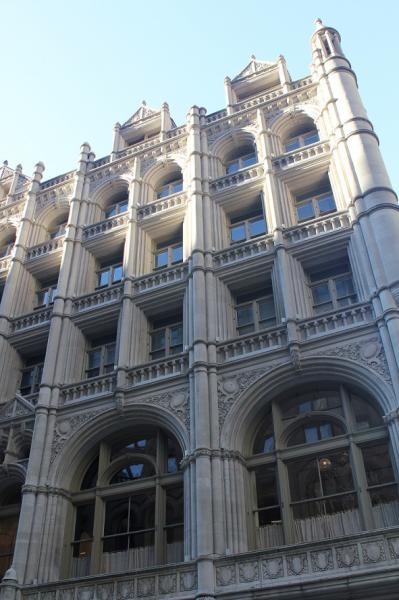
6-story Neo-Gothic/Flemish commercial building completed in 1894. Designed by Robert W. Gibson and Edward J. Neville Stent, it was inspired by the town halls of Haarlem and medieval Amsterdam. Church Missions House is so named because it was the headquarters of the Episcopal Church's Domestic and Foreign Missionary Society for much of the 20th century. It was later occupied by the Federation of Protestant Welfare Agencies which promotes the social and economic well-being of greater New York’s most vulnerable people. It was converted in 2019 by CetraRuddy Architects to a photography museum named Fotografiska, which closed in 2024.
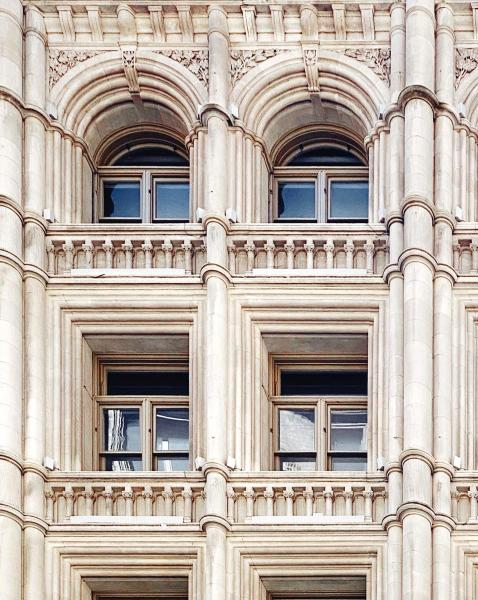
The facade is made of granite at the ground story and Indiana Limestone on the other stories. The facade's composition is based on the arrangement of the superstructure, which is arranged as a grid of rectangles. The main entrance is through a porch at the center of the Park Avenue facade. At each corner of the building is a tourelle that extends the height of the building. The rest of the facade is subdivided by vertical columns, which separate the facade into bays of openings, and horizontal spandrels, which separate windows on each story. The Park Avenue facade is divided into eight bays while the 22nd Street facade is divided into seven bays. The bays on the lowest two stories are paired; the 22nd Street facade is asymmetrical due to the arrangement of bays there.
The main entrance is through a porch at the center of the Park Avenue facade. It consists of an archway, above which is a triangular pediment with a tympanum inside a bas-relief. The bas-relief is based on a scene from Christus Consolator, in which the ill are blessed by Christ. On the tympanum itself, the left side shows Augustine of Canterbury preaching to British people in the sixth century, while the right side shows Samuel Seabury, the first American bishop of the Episcopal Church. Edward J. N. Stent carved the tympanum. The spandrels at the top corners of the arch are decorated with icons inspired by 16th-century motifs. Originally, a screen with large wrought-iron gates was at the Park Avenue entrance. The remainder of the ground floor contains storefront windows, which are flanked by piers of rock-faced granite.
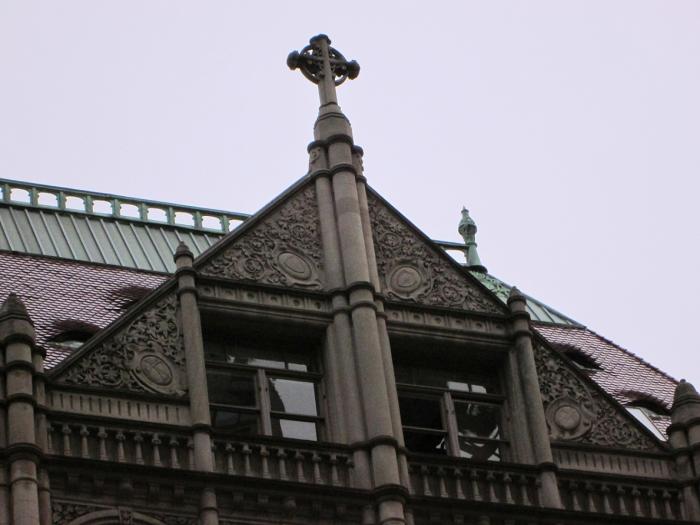
The 2nd floor consists of an arcade with double-width arches that mostly correspond to the storefront windows below. At the top corners of the windows are spandrels with foliate carvings. The 3rd and 4th floors are composed of rectangular window openings. The 5th floor has round-arched openings that represent part of a triforium in a medieval church. The 6th floor has a tiled mansard roof with dormer windows. The central dormer on Park Avenue has a gable with a stone cross; it is flanked by a pair of smaller dormers. The center gable has a statue of St. Paul. A copper cresting and skylights run above the roof.
The facade is made of granite at the ground story and Indiana Limestone on the other stories. The facade's composition is based on the arrangement of the superstructure, which is arranged as a grid of rectangles. The main entrance is through a porch at the center of the Park Avenue facade. At each corner of the building is a tourelle that extends the height of the building. The rest of the facade is subdivided by vertical columns, which separate the facade into bays of openings, and horizontal spandrels, which separate windows on each story. The Park Avenue facade is divided into eight bays while the 22nd Street facade is divided into seven bays. The bays on the lowest two stories are paired; the 22nd Street facade is asymmetrical due to the arrangement of bays there.
The main entrance is through a porch at the center of the Park Avenue facade. It consists of an archway, above which is a triangular pediment with a tympanum inside a bas-relief. The bas-relief is based on a scene from Christus Consolator, in which the ill are blessed by Christ. On the tympanum itself, the left side shows Augustine of Canterbury preaching to British people in the sixth century, while the right side shows Samuel Seabury, the first American bishop of the Episcopal Church. Edward J. N. Stent carved the tympanum. The spandrels at the top corners of the arch are decorated with icons inspired by 16th-century motifs. Originally, a screen with large wrought-iron gates was at the Park Avenue entrance. The remainder of the ground floor contains storefront windows, which are flanked by piers of rock-faced granite.
The 2nd floor consists of an arcade with double-width arches that mostly correspond to the storefront windows below. At the top corners of the windows are spandrels with foliate carvings. The 3rd and 4th floors are composed of rectangular window openings. The 5th floor has round-arched openings that represent part of a triforium in a medieval church. The 6th floor has a tiled mansard roof with dormer windows. The central dormer on Park Avenue has a gable with a stone cross; it is flanked by a pair of smaller dormers. The center gable has a statue of St. Paul. A copper cresting and skylights run above the roof.
Click to show deleted objects Deleted objects
Add place (company, shop, etc.) to this building
Wikipedia article: http://en.wikipedia.org/wiki/Church_Missions_House
Nearby cities:
Coordinates: 40°44'21"N 73°59'12"W
- Building B 11 km
- Oyster Bay High School 41 km
- Smithtown Public Schools Administration Building 67 km
- Michter's Distillery 204 km
- Dranesville Tavern 347 km
- Chantilly Place 358 km
- Liberia 370 km
- Omni Bedford Springs Resort - Hotel Building 392 km
- Dalkeith 607 km
- Tusculum 607 km
- Flatiron District 0.3 km
- Gramercy 0.4 km
- Washington Irving Educational Campus 0.4 km
- 14th Street / Union Square Subway Station (4,5,6,<6>,L,N,Q,R) 0.5 km
- Union Square Park 0.5 km
- Midtown (South Central) 0.5 km
- Zeckendorf Towers 0.6 km
- 44 East 14th Street 0.7 km
- Chelsea 1.4 km
- Greenwich Village 1.5 km