
Peleș Castle (Sinaia)
Romania /
Prahova /
Sinaia /
Aleea Peleșului
World
/ Romania
/ Prahova
/ Sinaia
palace, listed building / architectural heritage, Neo-Renaissance (architecture)
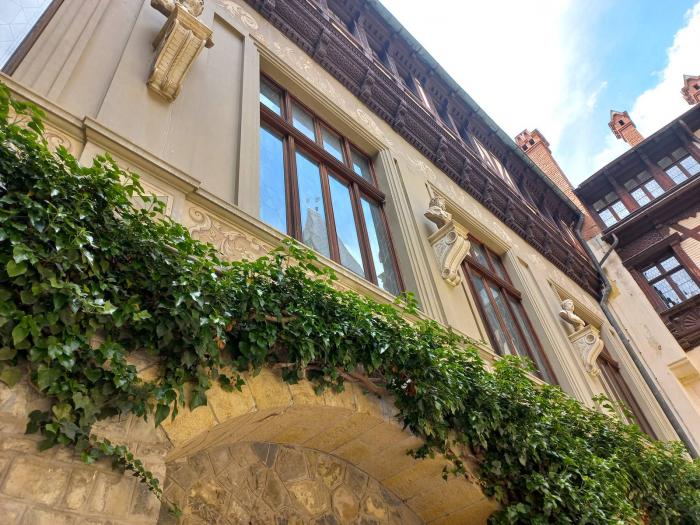
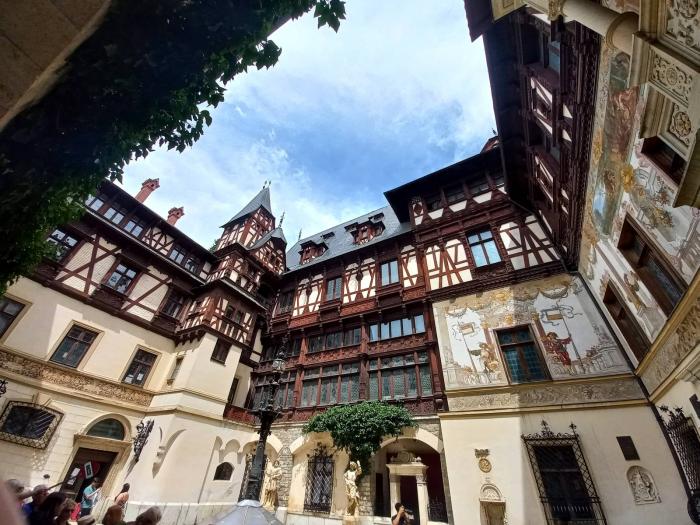
Peleș Castle (Romanian: Castelul Peleș pronounced is a Neo-Renaissance palace in the Royal Domain of Sinaia in the Carpathian Mountains, near Sinaia, in Prahova County, Romania, on an existing medieval route linking Transylvania and Wallachia, built between 1873 and 1914. Its inauguration was held in 1883. It was constructed for King Carol I of Romania.
King Charles I personally oversaw construction to ensure every detail was perfect and spared no effort to build a residence worthy of a European monarch. Renowned architects of the period such as Wilhelm von Doderer, Johannes Schult, Karel Liman and Andre Lecomte du Nouy contributed to the design and construction. Du Nouy transformed it into one of the most remarkable monuments in Europe by combining several neo-architectural styles.
The solidity and safety of the castle were ensured by exceptional measures. It is built on a solid foundation surrounded by seven terraces decorated with statues sculpted by the Italian artist Romanelli, fountains and ornaments made of Carrara marble. The architects have used a lot of wood for decoration, both for the interior and exterior, which gives the building its special appearance.
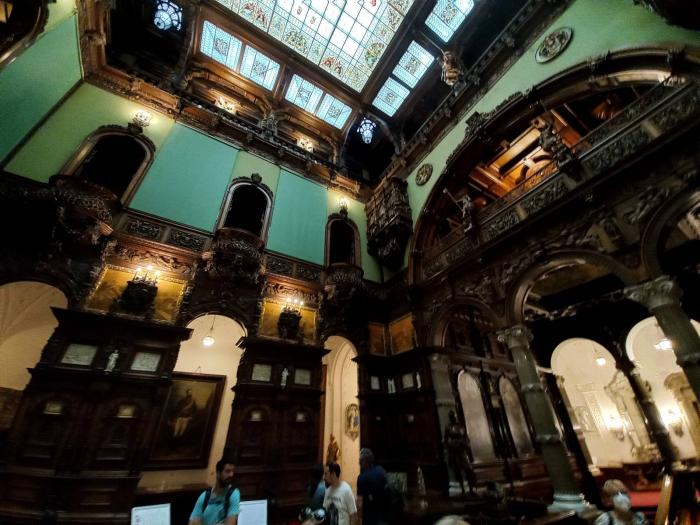
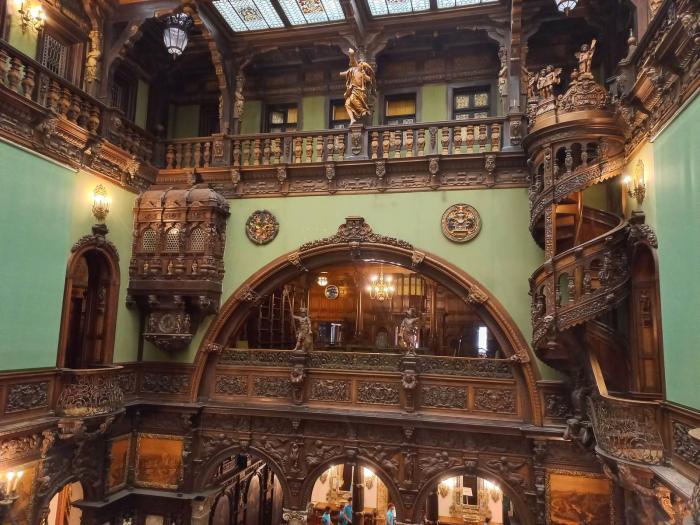
The interior of the Castle, a true wonder, thanks to the beauty and richness of the wooden decorations and stained glass windows, offers visitors a foray into the art and history of the 20th century. And for their realization, only the most famous decorators and furniture manufacturers were contracted, including Auguste Bembe, Bernhard Ludwig, who also decorated the Palace of Justice and the Museum of Natural History in Vienna, and the company J.D. Heyman, the furniture supplier to the Emperor of Japan.
King Charles I personally oversaw construction to ensure every detail was perfect and spared no effort to build a residence worthy of a European monarch. Renowned architects of the period such as Wilhelm von Doderer, Johannes Schult, Karel Liman and Andre Lecomte du Nouy contributed to the design and construction. Du Nouy transformed it into one of the most remarkable monuments in Europe by combining several neo-architectural styles.
The solidity and safety of the castle were ensured by exceptional measures. It is built on a solid foundation surrounded by seven terraces decorated with statues sculpted by the Italian artist Romanelli, fountains and ornaments made of Carrara marble. The architects have used a lot of wood for decoration, both for the interior and exterior, which gives the building its special appearance.
The interior of the Castle, a true wonder, thanks to the beauty and richness of the wooden decorations and stained glass windows, offers visitors a foray into the art and history of the 20th century. And for their realization, only the most famous decorators and furniture manufacturers were contracted, including Auguste Bembe, Bernhard Ludwig, who also decorated the Palace of Justice and the Museum of Natural History in Vienna, and the company J.D. Heyman, the furniture supplier to the Emperor of Japan.
Wikipedia article: http://en.wikipedia.org/wiki/Peleș_Castle
Nearby cities:
Coordinates: 45°21'35"N 25°32'33"E
- Brukenthal Palace and Park 100 km
- Palace of the Parliament 112 km
- Pototsky Palace - Pałac Stanisława Szczęsnego Potockiego w Tulczynie 447 km
- Ihlamur Kasri 555 km
- Dolmabahçe Palace Grounds 556 km
- Yildiz Palace 556 km
- Dolmabahçe Palace 557 km
- Ciragan Palace Kempinski Istanbul 557 km
- Topkapi Palace 558 km
- Beylerbeyi Palace area 558 km
- Area of Peles National Museum 0.1 km
- Castle Foisor area 0.5 km
- Dimitrie Ghica park 1 km
- Royal Sheepyard [RO: "Stana Regala"" "Poaiana Stanei"] 2 km
- Poiana Tapului 3.5 km
- Bucegi eastern slope forest 3.8 km
- Cartierul Zamora 5 km
- Bucegi Mountains of the Southern Carpathians 6.6 km
- Baiului Mountains (Gârbova Mountains) 13 km
- Brașov County 48 km