
Rutherford Place (New York City, New York)
USA /
New Jersey /
West New York /
New York City, New York /
Second Avenue, 305
World
/ USA
/ New Jersey
/ West New York
World / United States / New York
condominium, NRHP - National Register of Historic Places, interesting place
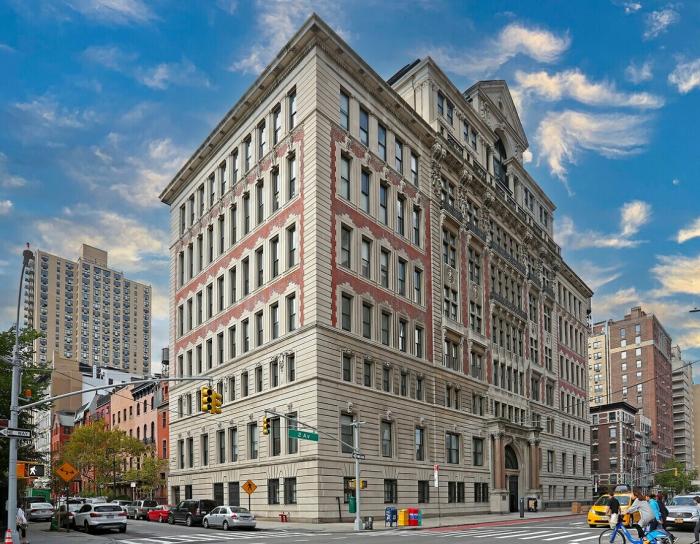
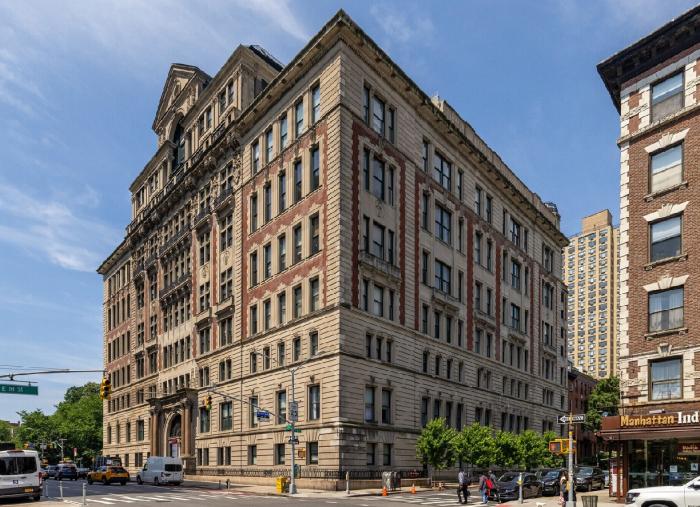
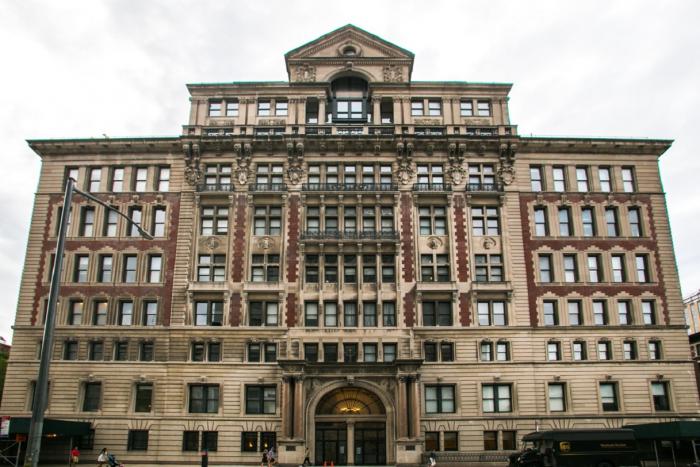
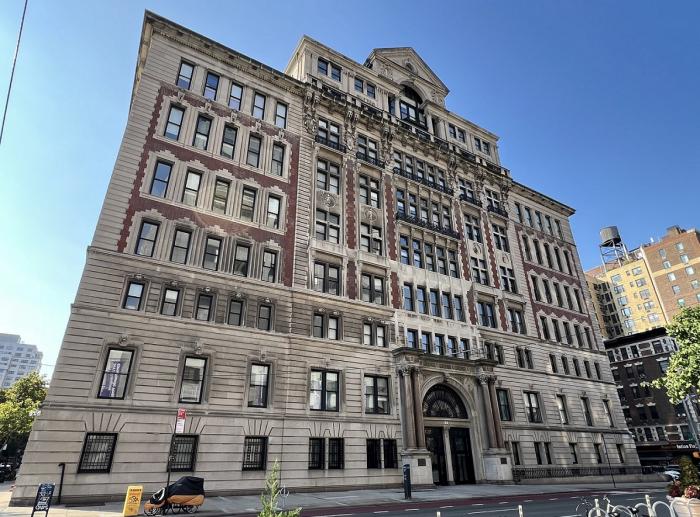
169-foot, 10-story Neo-Classical/Italian Renaissance residential building completed as a maternity hospital in 1902. Designed by Robert H. Robertson as Society for The Lying-In Hospital using funds donated by J.P. Morgan, it was converted to 127 high-end residential condominiums on the north edge of Stuyvesant Square by Beyer Blinder Belle in 1985, and named Rutherford Place.
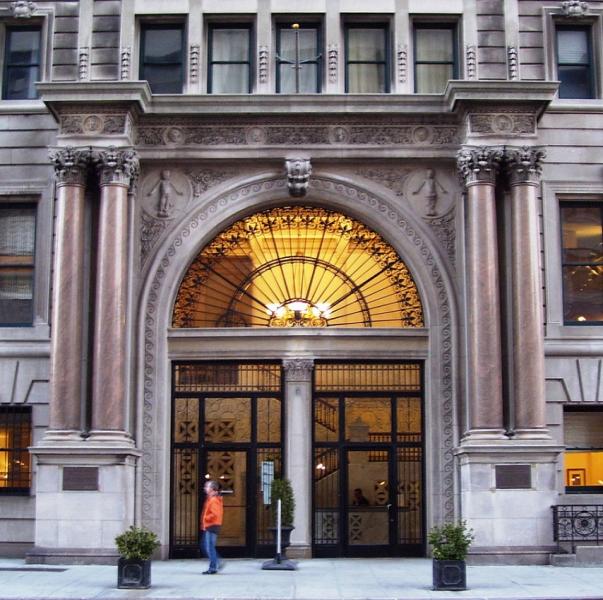
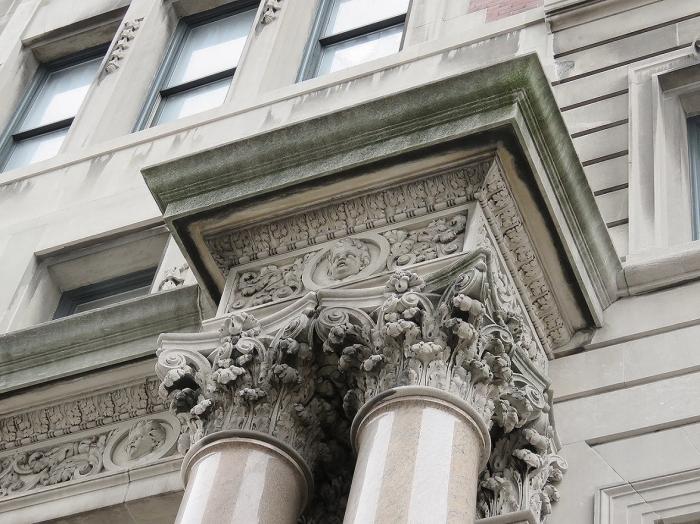
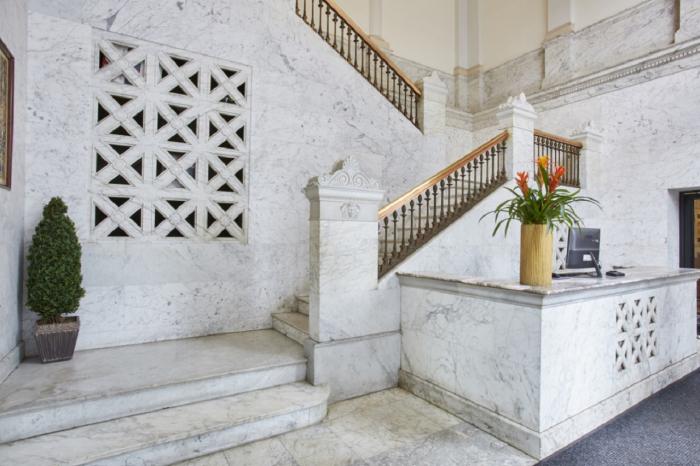
The monumental facade is clad in limestone, red brick, and terra-cotta. The lower three floors are finely rusticated as are some of the multi-story pilasters above. The wide, arched, double-story entrance is flanked by pairs of handsome columns of polished pink granite with Corinthian capitals, each pair resting on a sturdy stone base. There are two glass doors, each set in a wrought-iron-and-glass surround, separated by a central pilasters with another Corinthian capital. Above is a large fanlight. The arch is lined by wave moldings and has a keystone, topped by an entablature with the faces of babies in the frieze (a nod to the fact that 60 percent of all NYC hospital births were here at the Lying-In Hospital in the early 20th century). There are also two bas-relief sculptures of babies framing the arch, behind which is a marble, 30-foot-high lobby that still has a tablet inscribed with the Hippocratic Oath.
To either side of the entrance are two bays of double-windows, and three bays of single-windows, larger at the 2nd floor, where they have stone surrounds with scrolled keystones. At the 3rd floor the fenestration pattern of the east facade changes to five windows in the center, above the entrance, with two double-windows and five single-windows to either side. Except for the middle windows, the rest at the 3rd floor have thinner stone surrounds, topped by small escutcheons.
At the midsection some of the brick piers has stone quoins, and wider quoins span the piers that frame the two end sections at the 4th-6th floors. There is a stone balcony with wrought-iron railings fronting the middle five windows at the 6th floor, and stone spandrel panels with more baby bas-reliefs at the two bays of double-windows on either side. At the 7th floor there is another balcony in the middle, with two narrower balconies to either side. Here the brick on the piers gives way to more rusticated limestone, and each pier at the central section is highlighted by a large cartouche. The 7th floor is topped by a dentiled stone cornice, with rosettes on the underside, and the center section supported by pairs of large, scrolled brackets at the piers, and smaller brackets centered on the bays.
The facade is surmounted by a Palladian pavilion. The 8th-9th floors have a small tower setback at the sides capped with a large pediment at the 10th floor with an oculus above an arched window.
The north facade on 18th Street has similar design elements at the base and middle floors, without some of the ornament and balconies. There is a center bay of double-windows, followed to each side by a 4-window bay (with the middle two joined into a double-window on the higher floors), and an end bay with either a double-window, triple-window, or tripartite window arrangement varying by floor. Some of the windows on the ground floor are replaced by secondary entrances or service doors. There is an additional narrow bay at the far west end, with single-windows, very slightly set back from the rest of the facade. The facade terminates above the 7th floor at the east end, with the same cornice. The is an 8th-floor section at the middle and west end, with a small 9th-story octagonal tower at the northwest corner.
The narrower south facade on 17th Street has two wrought-iron gates service entries at the middle of the ground floor, with another at the west end. There is also a window next to the end doorway, and two more near the east end. The 2nd & 3rd floors have three bays of paired windows, with two alternating bays of single-windows. At the upper floors they change to ten evenly-spaced single-window bays.
Originally, the first floor housed the offices of the doctors, the 2nd and 3rd floors were for “the clerical department” and accommodations for 52 nurses, while the 4th, 5th and 6th floors housed the wards. The kitchen and laundry were on the top two floors and a solarium was on the roof. As the years passed, John Pierpont Morgan, Jr. was concerned about the long-term stability of the hospital his father had so generously provided for. Upon the subsequent opening of the New York Hospital-Cornell Medical Center in 1932, the Lying-In Hospital moved out of the Second Avenue building. It became the more modern-sounding Obstetrics and Gynecology Department of New York Hospital.
Celebrity residents of the newer condominiums have included Tom Cruise and Mimi Rogers, Sean Combs, Judd Nelson and David Lee Roth.
www.corcoran.com/building/gramercy/4632
streeteasy.com/building/rutherford-place
www.cityrealty.com/nyc/gramercy-park/rutherford-place-3...
archive.org/details/sim_architectural-record_1902-01_11...
archive.org/details/realestaterecord7319unse/page/1437/...
The monumental facade is clad in limestone, red brick, and terra-cotta. The lower three floors are finely rusticated as are some of the multi-story pilasters above. The wide, arched, double-story entrance is flanked by pairs of handsome columns of polished pink granite with Corinthian capitals, each pair resting on a sturdy stone base. There are two glass doors, each set in a wrought-iron-and-glass surround, separated by a central pilasters with another Corinthian capital. Above is a large fanlight. The arch is lined by wave moldings and has a keystone, topped by an entablature with the faces of babies in the frieze (a nod to the fact that 60 percent of all NYC hospital births were here at the Lying-In Hospital in the early 20th century). There are also two bas-relief sculptures of babies framing the arch, behind which is a marble, 30-foot-high lobby that still has a tablet inscribed with the Hippocratic Oath.
To either side of the entrance are two bays of double-windows, and three bays of single-windows, larger at the 2nd floor, where they have stone surrounds with scrolled keystones. At the 3rd floor the fenestration pattern of the east facade changes to five windows in the center, above the entrance, with two double-windows and five single-windows to either side. Except for the middle windows, the rest at the 3rd floor have thinner stone surrounds, topped by small escutcheons.
At the midsection some of the brick piers has stone quoins, and wider quoins span the piers that frame the two end sections at the 4th-6th floors. There is a stone balcony with wrought-iron railings fronting the middle five windows at the 6th floor, and stone spandrel panels with more baby bas-reliefs at the two bays of double-windows on either side. At the 7th floor there is another balcony in the middle, with two narrower balconies to either side. Here the brick on the piers gives way to more rusticated limestone, and each pier at the central section is highlighted by a large cartouche. The 7th floor is topped by a dentiled stone cornice, with rosettes on the underside, and the center section supported by pairs of large, scrolled brackets at the piers, and smaller brackets centered on the bays.
The facade is surmounted by a Palladian pavilion. The 8th-9th floors have a small tower setback at the sides capped with a large pediment at the 10th floor with an oculus above an arched window.
The north facade on 18th Street has similar design elements at the base and middle floors, without some of the ornament and balconies. There is a center bay of double-windows, followed to each side by a 4-window bay (with the middle two joined into a double-window on the higher floors), and an end bay with either a double-window, triple-window, or tripartite window arrangement varying by floor. Some of the windows on the ground floor are replaced by secondary entrances or service doors. There is an additional narrow bay at the far west end, with single-windows, very slightly set back from the rest of the facade. The facade terminates above the 7th floor at the east end, with the same cornice. The is an 8th-floor section at the middle and west end, with a small 9th-story octagonal tower at the northwest corner.
The narrower south facade on 17th Street has two wrought-iron gates service entries at the middle of the ground floor, with another at the west end. There is also a window next to the end doorway, and two more near the east end. The 2nd & 3rd floors have three bays of paired windows, with two alternating bays of single-windows. At the upper floors they change to ten evenly-spaced single-window bays.
Originally, the first floor housed the offices of the doctors, the 2nd and 3rd floors were for “the clerical department” and accommodations for 52 nurses, while the 4th, 5th and 6th floors housed the wards. The kitchen and laundry were on the top two floors and a solarium was on the roof. As the years passed, John Pierpont Morgan, Jr. was concerned about the long-term stability of the hospital his father had so generously provided for. Upon the subsequent opening of the New York Hospital-Cornell Medical Center in 1932, the Lying-In Hospital moved out of the Second Avenue building. It became the more modern-sounding Obstetrics and Gynecology Department of New York Hospital.
Celebrity residents of the newer condominiums have included Tom Cruise and Mimi Rogers, Sean Combs, Judd Nelson and David Lee Roth.
www.corcoran.com/building/gramercy/4632
streeteasy.com/building/rutherford-place
www.cityrealty.com/nyc/gramercy-park/rutherford-place-3...
archive.org/details/sim_architectural-record_1902-01_11...
archive.org/details/realestaterecord7319unse/page/1437/...
Wikipedia article: http://en.wikipedia.org/wiki/Society_for_the_Lying-In_Hospital
Nearby cities:
Coordinates: 40°44'5"N 73°59'1"W
- Gramercy Square Condominium 0.2 km
- Zeckendorf Towers 0.5 km
- ABC Carpet & Home 0.7 km
- The Grand Madison Condominium 1.1 km
- The Caroline Apartments 1.2 km
- Hugh O’Neill Dry Goods Store 1.2 km
- 115-135 West 16th Street 1.3 km
- The Chelsea Seventh Condominium 1.4 km
- The Greenwich Lane (former St. Vincent's Hospital Complex) 1.5 km
- Eventi/The Beatrice 1.5 km
- Stuyvesant Square Park 0.1 km
- Mount Sinai Beth Israel Hospital 0.2 km
- Gramercy 0.2 km
- Consolidated Edison Building 0.4 km
- First Avenue Subway Station (L) 0.5 km
- Stuyvesant Town 0.6 km
- Kips Bay 0.8 km
- NoHo 0.9 km
- East Village 1 km
- Alphabet City 1.2 km