
W New York Union Square (New York City, New York)
USA /
New Jersey /
West New York /
New York City, New York /
Park Avenue South, 201
World
/ USA
/ New Jersey
/ West New York
World / United States / New York
hotel, high-rise, NRHP - National Register of Historic Places, 1911_construction, Renaissance Revival (architecture)
www.marriott.com/en-us/hotels/nycnu-w-new-york-union-sq...
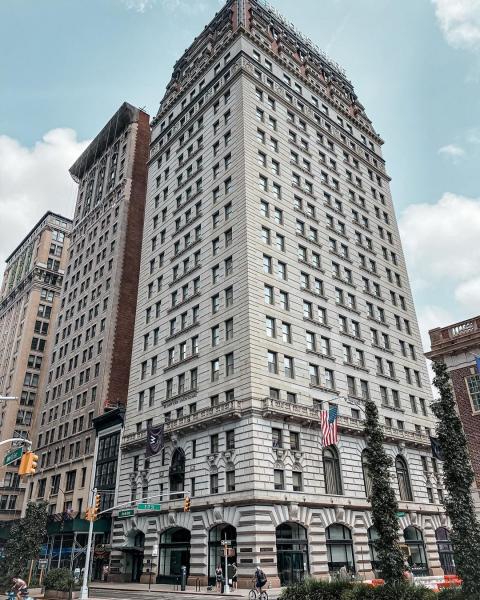
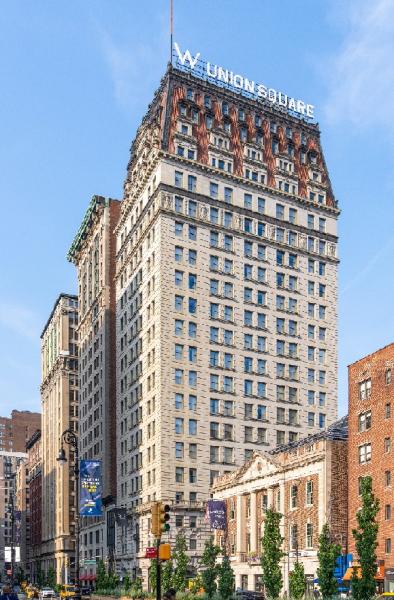
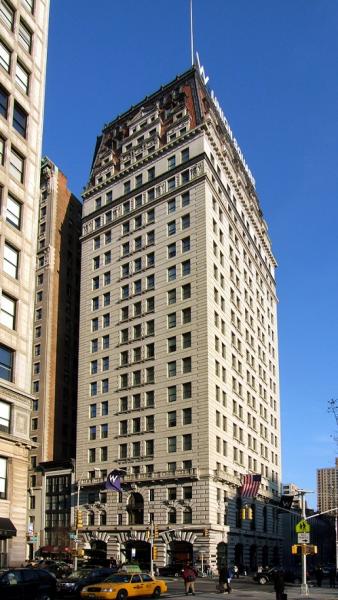
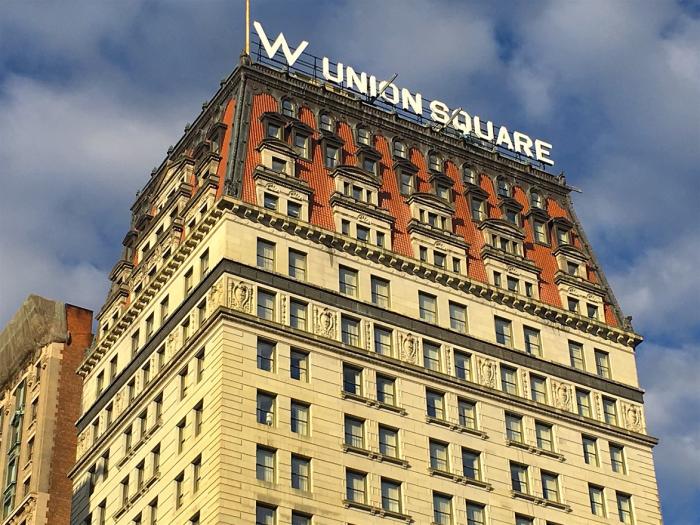
289-foot, 21-story Beaux-Arts/Renaissance-revival style hotel building originally completed in 1911 as an office building for the Germania Life Insurance Company. Designed by D’Oench & Yost, it is clad in grey Concord granite interspersed with brick, except for the red Numidian-granite water table, and the red Spanish-tile mansard roof. The building's namesake company was renamed Guardian Life Insurance during the anti-German movement during WWI that also renamed hamburgers Salisbury Steaks. It was designated NYC Landmark #156 in 1988.
The building is a tripartite columnar skyscraper which incorporates in its design motifs from traditional European architecture, most prominently the grand 4-story mansard roof with varied dormer windows. The mansard roof and other features tie the building's design to French architecture, both the Second Empire style and the modern French mode that dominated Parisian architecture of the 1890s. By employing the mansard, D'Oench & Yost alluded to a mansarded building that previously housed the company, thus continuing an architectural tradition which began around 1870 and conveyed a sound public image.
The design of the Germania Life Building is dominated by the 4-story mansard roof (the building's most pronounced feature) with its varied dormer windows, the escutcheons at the top of the transitional story, and the garlanded keystones which tie the building's design to French architecture and the modern French mode that dominated Parisian architecture in the 1890s. Given the numbers of Americans who studied abroad at the time, including D'Oench, the style -- also known as "The Cartouche Style" due to "its extensive use of that particular ornamental device as well as swags, garlands, festoons and a host of other overscaled motifs to enrich the facade"-- had an inevitable transatlantic influence.
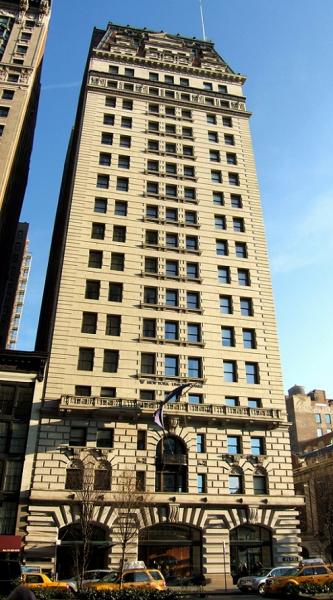
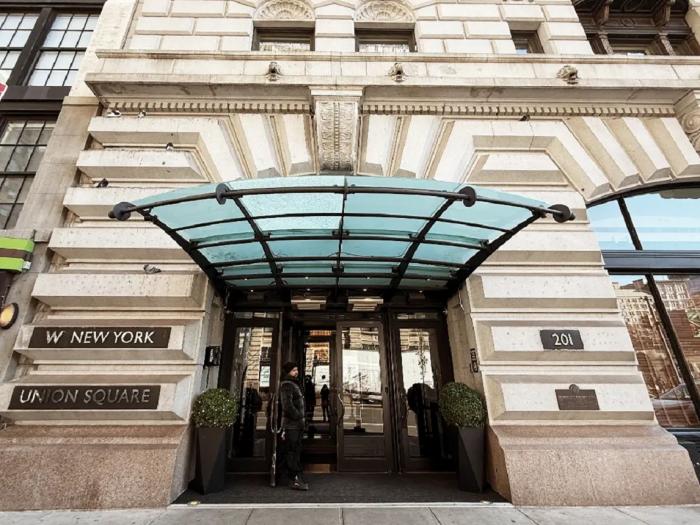
On all floors, there are eight architectural bays, three facing Park Avenue to the west and five facing 17th Street to the south. The ground floor facade is rusticated with several rows of beveled masonry blocks, and deep crevices between each row of blocks. In each of the ground-floor bays, there are rusticated arches with foliate keystones. The arches formerly contained storefronts until the building's conversion into a hotel. The main entrance is from the northernmost arch on Park Avenue South. A belt course runs on the facade between the ground and second floors. The 2nd and 3rd floor facades are also rusticated with beveled blocks but have shallower crevices between each row. The center bay on Park Avenue South and the center three bays on 17th Street contain double-story arched openings with keystones at top, while each of the bay at the ends of each facade contain two windows per floor. On the Park Avenue South side, there is a small iron balcony projecting from the 3rd story of the double arch, with the initials "G" and "L" on the iron railing. The 3rd floor facade is topped by a denticulated (tooth-like) cornice.
The facades of the 4th through 15th floors are largely uniform, with shallow belt courses and quoins in the spaces between each set of windows. Shallow balconies on the 4th floor, with stone colonnades, are located above the denticulated 3rd-floor cornices on the Park Avenue South and 17th Street sides, and run across nearly the entire width of both facades. On the west and east facades, the fenestration or window arrangement is in a 2-3-2 format, i.e. there are two windows per floor on the side bays and three windows per floor in the central bay. On the south facade, the fenestration is in a 2-2-2-2-2 format, i.e. five bays with two windows each. The beige-brick-clad north facade contains the recessed "light court" and is divided into two asymmetric sections, both with simple window openings. The center bays on the west and south facades contain projecting windowsills on the 4th through 14th floors. Above the 15th and 17th stories are stone cornices. The 16th story also used to have a cornice above it, but the cornice was replaced around 1940 with a fascia of sheet metal. The 16th floor contains panels depicting torches and shields in the spaces between each bay, while the 17th floor facade is unadorned.
The building's most prominent feature is its 4-story mansard roof, which contains dormer windows, escutcheons, and five decorative keystones with garlands. On the 18th story, the west and east facades contain fenestration in a 2-3-2 format and the south facade contains fenestration in a 2-3-3-3-2 format. On the 19th story, the west and east facades' fenestration is in a 1-3-1 format and the south facade's fenestration is in a 1-3-3-3-1 format. There are carved scallops atop each of the window groupings on the 18th and 19th stories. On the 20th story, the west and east facades contain a triple window in the center, topped by a large triangular pediment, while there are two standalone dormer windows on each side of the triple window, all with smaller pediments. The south side of the 20th story contains ten dormer windows, all with pediments. On the 21st story, there are five round-arched dormer windows on the west and east facades, and eight round-arched dormer windows on the south facade. A horizontal band runs at the top of the 21st story facade, below a cornice, while vertical acroteria run along the roof's corners.
On top of the roof is a horizontal lighted sign with white letters. It originally contained the letters "Germania Life". The sign was changed to "Guardian Life" in 1917 upon the company's renaming. Most of the letters seem to have been reused when the sign was replaced, while the letters "E" and "M" were replaced with a "U" and "D". The sign was later replaced with a "W Union Square" sign.
Guardian Life moved its headquarters to the financial district in 1998. The Union Square building was sold and completely remodeled into a hotel in 2000 by Rockwell Group Architects, the same year is was listed on the National Register of Historic Places. It contains 270 guest rooms. The former General Office (also known as the cashier's room) was kept intact and is used as the grand ballroom. The ornate room has a coffered ceiling with walls featuring guttae and cartouches with ciphers of the G.L.I.C. initials carved into them.
289-foot, 21-story Beaux-Arts/Renaissance-revival style hotel building originally completed in 1911 as an office building for the Germania Life Insurance Company. Designed by D’Oench & Yost, it is clad in grey Concord granite interspersed with brick, except for the red Numidian-granite water table, and the red Spanish-tile mansard roof. The building's namesake company was renamed Guardian Life Insurance during the anti-German movement during WWI that also renamed hamburgers Salisbury Steaks. It was designated NYC Landmark #156 in 1988.
The building is a tripartite columnar skyscraper which incorporates in its design motifs from traditional European architecture, most prominently the grand 4-story mansard roof with varied dormer windows. The mansard roof and other features tie the building's design to French architecture, both the Second Empire style and the modern French mode that dominated Parisian architecture of the 1890s. By employing the mansard, D'Oench & Yost alluded to a mansarded building that previously housed the company, thus continuing an architectural tradition which began around 1870 and conveyed a sound public image.
The design of the Germania Life Building is dominated by the 4-story mansard roof (the building's most pronounced feature) with its varied dormer windows, the escutcheons at the top of the transitional story, and the garlanded keystones which tie the building's design to French architecture and the modern French mode that dominated Parisian architecture in the 1890s. Given the numbers of Americans who studied abroad at the time, including D'Oench, the style -- also known as "The Cartouche Style" due to "its extensive use of that particular ornamental device as well as swags, garlands, festoons and a host of other overscaled motifs to enrich the facade"-- had an inevitable transatlantic influence.
On all floors, there are eight architectural bays, three facing Park Avenue to the west and five facing 17th Street to the south. The ground floor facade is rusticated with several rows of beveled masonry blocks, and deep crevices between each row of blocks. In each of the ground-floor bays, there are rusticated arches with foliate keystones. The arches formerly contained storefronts until the building's conversion into a hotel. The main entrance is from the northernmost arch on Park Avenue South. A belt course runs on the facade between the ground and second floors. The 2nd and 3rd floor facades are also rusticated with beveled blocks but have shallower crevices between each row. The center bay on Park Avenue South and the center three bays on 17th Street contain double-story arched openings with keystones at top, while each of the bay at the ends of each facade contain two windows per floor. On the Park Avenue South side, there is a small iron balcony projecting from the 3rd story of the double arch, with the initials "G" and "L" on the iron railing. The 3rd floor facade is topped by a denticulated (tooth-like) cornice.
The facades of the 4th through 15th floors are largely uniform, with shallow belt courses and quoins in the spaces between each set of windows. Shallow balconies on the 4th floor, with stone colonnades, are located above the denticulated 3rd-floor cornices on the Park Avenue South and 17th Street sides, and run across nearly the entire width of both facades. On the west and east facades, the fenestration or window arrangement is in a 2-3-2 format, i.e. there are two windows per floor on the side bays and three windows per floor in the central bay. On the south facade, the fenestration is in a 2-2-2-2-2 format, i.e. five bays with two windows each. The beige-brick-clad north facade contains the recessed "light court" and is divided into two asymmetric sections, both with simple window openings. The center bays on the west and south facades contain projecting windowsills on the 4th through 14th floors. Above the 15th and 17th stories are stone cornices. The 16th story also used to have a cornice above it, but the cornice was replaced around 1940 with a fascia of sheet metal. The 16th floor contains panels depicting torches and shields in the spaces between each bay, while the 17th floor facade is unadorned.
The building's most prominent feature is its 4-story mansard roof, which contains dormer windows, escutcheons, and five decorative keystones with garlands. On the 18th story, the west and east facades contain fenestration in a 2-3-2 format and the south facade contains fenestration in a 2-3-3-3-2 format. On the 19th story, the west and east facades' fenestration is in a 1-3-1 format and the south facade's fenestration is in a 1-3-3-3-1 format. There are carved scallops atop each of the window groupings on the 18th and 19th stories. On the 20th story, the west and east facades contain a triple window in the center, topped by a large triangular pediment, while there are two standalone dormer windows on each side of the triple window, all with smaller pediments. The south side of the 20th story contains ten dormer windows, all with pediments. On the 21st story, there are five round-arched dormer windows on the west and east facades, and eight round-arched dormer windows on the south facade. A horizontal band runs at the top of the 21st story facade, below a cornice, while vertical acroteria run along the roof's corners.
On top of the roof is a horizontal lighted sign with white letters. It originally contained the letters "Germania Life". The sign was changed to "Guardian Life" in 1917 upon the company's renaming. Most of the letters seem to have been reused when the sign was replaced, while the letters "E" and "M" were replaced with a "U" and "D". The sign was later replaced with a "W Union Square" sign.
Guardian Life moved its headquarters to the financial district in 1998. The Union Square building was sold and completely remodeled into a hotel in 2000 by Rockwell Group Architects, the same year is was listed on the National Register of Historic Places. It contains 270 guest rooms. The former General Office (also known as the cashier's room) was kept intact and is used as the grand ballroom. The ornate room has a coffered ceiling with walls featuring guttae and cartouches with ciphers of the G.L.I.C. initials carved into them.
Wikipedia article: http://en.wikipedia.org/wiki/W_New_York_Union_Square
Nearby cities:
Coordinates: 40°44'11"N 73°59'18"W
- Old Waldorf-Astoria Hotel 1.4 km
- Hotel Pennsylvania site 1.5 km
- New York Marriott Marquis Hotel 2.5 km
- The Towers of the Waldorf Astoria New York 2.6 km
- Waldorf Astoria New York 2.6 km
- The Ambassador Hotel 2.7 km
- The William Vale Hotel 3 km
- New York Hilton Midtown 3 km
- The Plaza 3.3 km
- Mandarin Oriental 3.7 km
- Union Square Park 0.2 km
- Zeckendorf Towers 0.2 km
- Washington Irving Educational Campus 0.2 km
- 14th Street / Union Square Subway Station (4,5,6,<6>,L,N,Q,R) 0.2 km
- 44 East 14th Street 0.3 km
- Gramercy 0.4 km
- Flatiron District 0.5 km
- Midtown (South Central) 0.8 km
- Greenwich Village 1.2 km
- Chelsea 1.5 km