Slivarovo

Bulgaria / Burgas / Malko Tarnovo /

Slivarovo is small almost uninhabited village in Malko Tarnovo Municipality.
Nearby cities:
Coordinates:   41°58'7"N   27°39'54"E

Comments

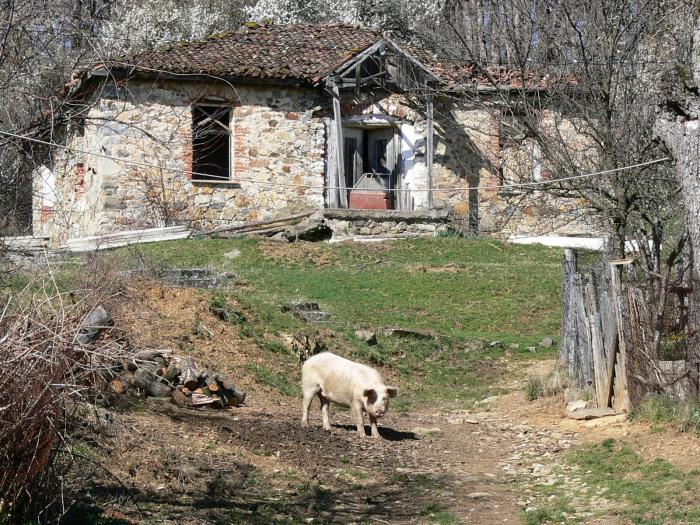
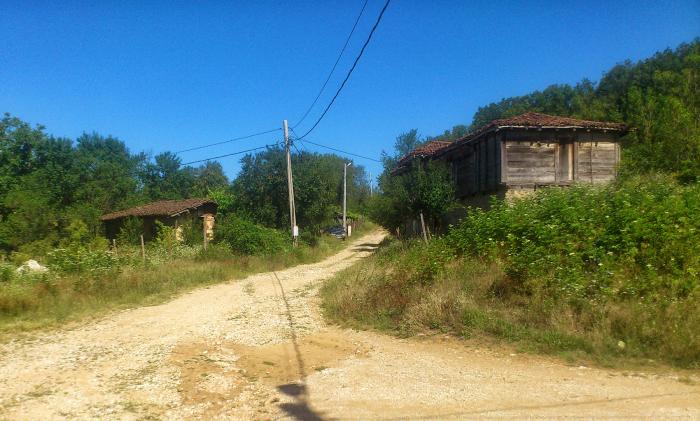
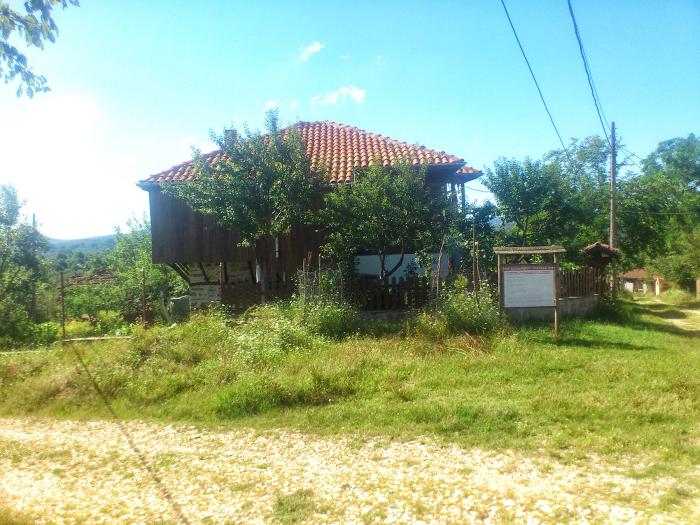
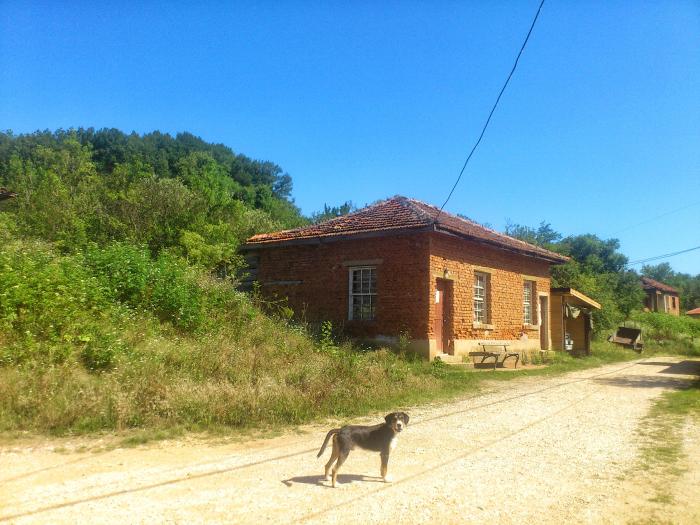
  • The village of Slivarovo is located in the Strandzha Mountains and within the boundaries of the Strandzha Nature Park. It is located 16 km from the municipal center of Malko Tarnovo and 90 km from the regional center of Burgas. It is located a few kilometers north of the Rezovska River and 500 m. from the border with Turkey. History The village was founded in the 17th century by settlers from Malko Tarnovo and was originally called Kladara (probably from the Strandzha word "klada" - a thick old tree that the river carries along its course. In a narrow place it is blocked between the two banks and serves as a bridge. Population: 1 inhabitant - the smallest village in Strandzha and in the Malko Tarnovo municipality, as well as one of the smallest in Bulgaria. The village was part of Hasekiyat, and therefore, according to Murad's firman, the Bulgarians were privileged in the 14th-15th-16th-17th and 18th centuries and paid only "badja parasa" (dimnina - privileged land, exempt from taxes). The village was purely Bulgarian until the Russian-Turkish wars of 1829 and 1878, when the firman was lost - the Sultan's firman, giving privileges to the population of Hasekiyat, was destroyed in 1845, when its last guardian, Hadji Stoyan from the village of Zvezdets, was murdered. The Thracian mound necropolises, traces of metallurgical activity (rupi), the remains of a fortress from Thracian and late antique times, as well as the Thracian rock sanctuary in the Vatralova Polyana area, with stone circles with a diameter of 10-15 cm cut into the rock, testify to the existence of a settlement at this place in antiquity. In all probability, the sun god Helios was worshipped here. Gold mining has been noted in the area of ​​the village. In some of them, glass cups without a seat were found, at the bottom of which there were traces of gold-bearing sand. It was established in its current location in the 17th century. The preserved houses, with the typical 19th century Strandzha architecture, give it the character of a unique reserve. It was one of the centers of the Preobrazhensko Uprising of 1903 in the Strandzha region. At The suppression of the uprising Kladara suffered greatly. All 70 houses and the church were looted, and the population fled. It was annexed to Bulgaria in 1913, and by 1926 it had 380 inhabitants. After World War II, Slivarovo was included in the border zone with limited access, which accelerated the depopulation of the village. South of Slivarovo, a picturesque landscape opens up to the deeply incised valley of the Rezovska River, in which one of the few deposits of the endemic plant Strandzha soapwort is located. The meadows near the village are a place for rest and feeding of large flocks of storks during their seasonal migration. Landmarks Church of St. Panteleimon (19th century) - It was built in the 19th century on the foundations of an old church. According to its plan, it is a three-aisled basilica with a women's section and an open vestibule. Of the icons, the work of Tryavna, Lozengrad and Strandzha icon painters, today only one can be seen in the church. Reserve "Uzunbudzhak" Protected area "Rudenovo" Remains of an ancient fortress - Slivarovsko Kale Thracian sanctuary Indipasha - An ancient Thracian sanctuary under an overhanging cliff, with a spring (ayazmo) gushing at its base. It is located in a deep and lush valley, overgrown with a dense beech forest. The name is associated with pilgrimages and the offering of sacrifices at the very place five days after Easter - Pascha. The area is visited year-round by hundreds of pilgrims seeking healing through the practice of ancient rites, in which the purifying and healing power of water plays a major role. Cave-sanctuary "St. Marina" - Located about 12 km from the village in an eastern direction. A unique ayazmo, located in the cave of the same name - the water that drips from the walls of the cave is collected in vessels placed on the floor and is perceived as a holy spring. The sanctuary was the largest cult center of the saint in Southeastern Thrace, attracting pilgrims from as far away as Constantinople in the past. People from nearby and distant villages came here to worship and "wash" for healing purposes. A very ancient tradition is also associated with this cave - at the opening in its eastern part or at the icon, miniature images of the diseased organ or an entire human figure (votives) made of tin or silver were left. It was believed that the disease would remain on the image in the cave. The saint's day (July 30, AD, July 17, AD) was a great holiday for young men and women of premarital age, which is why in Strandzha it is called the "Lefter's Panagyr". The sacred places of St. Marina are complexes of a monastery, a healing spring (ayazmo), a tree (or several trees) on which they hang thread, garment or part of it with the belief that the disease that has passed into them will self-destruct, and the person will return home completely healed. These sacred complexes are located outside the settlements, in low, fertile areas, most often in a cave or deep valley. Source: https://bg.wikipedia.org/wiki/%D0%A1%D0%BB%D0%B8%D0%B2%D0%B0%D1%80%D0%BE%D0%B2%D0%BE