
Tedhi Qabar (Lucknow)
India /
Uttar Pradesh /
Lakhnau /
Lucknow /
Nakkhas.
World
/ India
/ Uttar Pradesh
/ Lakhnau
grave, place with historical importance, islam, interesting place
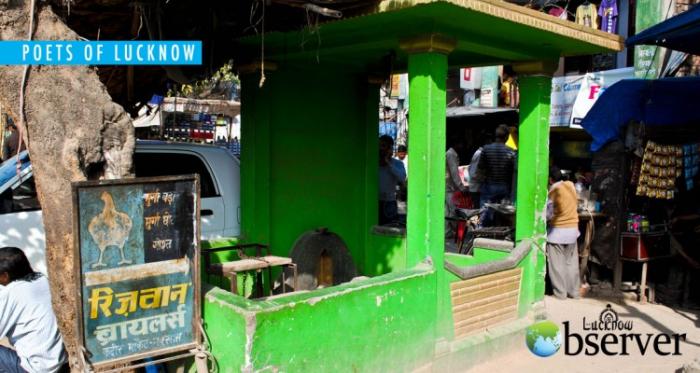
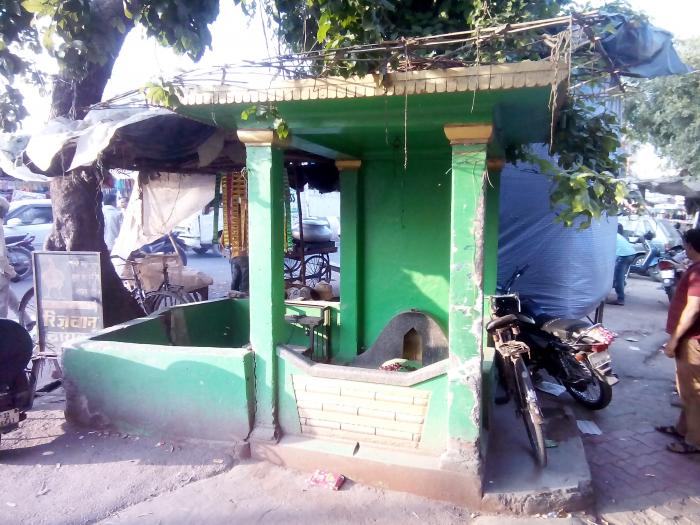
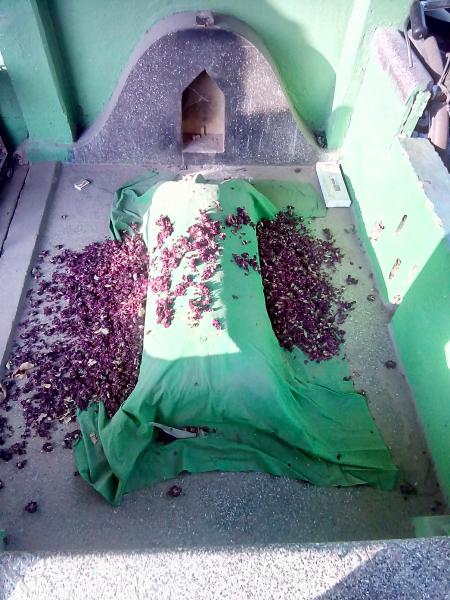
Grave of Munshi Chunoolal (Dilgeer Lucknowi) A hindu poet who wrote "Ghabraye Gi Zainab" and other Marsiyas.
Dilgeer was born in 1780 and died in 1848. He was alive during the reign of Nawab Saadat Ali Khan. He also witnessed the coronation of Badshah Ghazi Uddin Haider. In ‘Shahan-E-Awadh –Haqeeqat ke Aine Mein’, (Rulers of Awadh in the Mirror of Reality)
The most prominent composition of Dilgeer is ‘Ghabraegi Zainab- Ghabraegi Zainab- Bhaiya ko Madine mein Kahan payegi Zainab’. This famous dirge is recited all over the world after almost every Shaam-e Ghareeban Majlis.His composition titled ‘Majmua Marasi Mirza Dilgeer’, was printed by Munshi Nawal Kishore Press, Lucknow. His creative best is also reflected when he says “
“Akbar Hai Na Qasim Hai Na Abbas-e Dilawar,
Yeh Meri Rihaee To Hai Ab Qaid Se Badtar”
( This release is worst then prison without Akbar, Qasim and Abbas)
People from all faiths revere a ‘Terhi Qabr’ (Tilted Qabr) near famous ‘Chiriya Bazar( Birds’ Market) in ‘Nakhas’ area of Lucknow as a shrine of ‘Shaheed Mard’(Martyr). Who floated the theory of ‘Tehri Qabr’ as that of a martyr is not known but there is no doubt that one of the greatest marsiya writers and devotee of Imam Husain lies buried in the grave. His name was Jhunnu Lal( Mentioned also as Chunnu Lal in the accounts of certain historians) and he composed his marsiyas with ‘Takhallus’ (pen name) ‘Dilgeer’. Some people addresses him as Channu Lal also. He was brother of Raja Jhau Lal who was deputy chief Minister during the regime of Nawab Asaf Ud Daula.
As usually happens in the case of men with poetic talents, Jhunnu Lal also began as a romantic poet and concentrated on Ghazals, Masnavi and vasokht. But once he started praising the prophet and his progeny , he gave up writing ghazals or other forms of romantic poetry completely .Not only this, he destroyed all his earlier compositions by throwing them into Moti Jheel and dedicated himself to marsiya and salam writing.
History records that he was one of the most favorite disciple of one of the most celebrated poets of Urdu’ Nasikh’ and contemporary of Mir Khaliq and Mirza Fasih. Another version says that Mirza Khani Nawazish was his first Ustad and Nasikh replaced him at a later stage. Poet Mushafi has praised his poetry but stated that ‘Tarab’ was his takhallus.
He did not recite marsiyas himself due to speech defect but his compositions were quite popular during the regime of King Muhammad Ali Shah and were recited in Majlises. The researchers are of the view that he used Tarab as takhallus so long as he composed Ghazals but once he started composing poetry in praise of Ahle-bait-E-Athar, he always used Dilgeer as pen name.
His reputation as a marsiya writer soared so high that a large number of people used to believe that he was Ustad of one of the greatest Marsiyago Mirza Dabeer. At the time of his death, the entire Lucknow was engulfed in the rumor that the Ustad of Mirza Dabeer had breathed his last. Mirza Dabeer however did not brush aside the rumor and just remarked “It indeed would have been a great honor for me, had Dilgeer been my Ustad.”
Dilgeer was born in 1780 and died in 1848. He was alive during the reign of Nawab Saadat Ali Khan. He also witnessed the coronation of Badshah Ghazi Uddin Haider. In ‘Shahan-E-Awadh –Haqeeqat ke Aine Mein’, (Rulers of Awadh in the Mirror of Reality)
The most prominent composition of Dilgeer is ‘Ghabraegi Zainab- Ghabraegi Zainab- Bhaiya ko Madine mein Kahan payegi Zainab’. This famous dirge is recited all over the world after almost every Shaam-e Ghareeban Majlis.His composition titled ‘Majmua Marasi Mirza Dilgeer’, was printed by Munshi Nawal Kishore Press, Lucknow. His creative best is also reflected when he says “
“Akbar Hai Na Qasim Hai Na Abbas-e Dilawar,
Yeh Meri Rihaee To Hai Ab Qaid Se Badtar”
( This release is worst then prison without Akbar, Qasim and Abbas)
People from all faiths revere a ‘Terhi Qabr’ (Tilted Qabr) near famous ‘Chiriya Bazar( Birds’ Market) in ‘Nakhas’ area of Lucknow as a shrine of ‘Shaheed Mard’(Martyr). Who floated the theory of ‘Tehri Qabr’ as that of a martyr is not known but there is no doubt that one of the greatest marsiya writers and devotee of Imam Husain lies buried in the grave. His name was Jhunnu Lal( Mentioned also as Chunnu Lal in the accounts of certain historians) and he composed his marsiyas with ‘Takhallus’ (pen name) ‘Dilgeer’. Some people addresses him as Channu Lal also. He was brother of Raja Jhau Lal who was deputy chief Minister during the regime of Nawab Asaf Ud Daula.
As usually happens in the case of men with poetic talents, Jhunnu Lal also began as a romantic poet and concentrated on Ghazals, Masnavi and vasokht. But once he started praising the prophet and his progeny , he gave up writing ghazals or other forms of romantic poetry completely .Not only this, he destroyed all his earlier compositions by throwing them into Moti Jheel and dedicated himself to marsiya and salam writing.
History records that he was one of the most favorite disciple of one of the most celebrated poets of Urdu’ Nasikh’ and contemporary of Mir Khaliq and Mirza Fasih. Another version says that Mirza Khani Nawazish was his first Ustad and Nasikh replaced him at a later stage. Poet Mushafi has praised his poetry but stated that ‘Tarab’ was his takhallus.
He did not recite marsiyas himself due to speech defect but his compositions were quite popular during the regime of King Muhammad Ali Shah and were recited in Majlises. The researchers are of the view that he used Tarab as takhallus so long as he composed Ghazals but once he started composing poetry in praise of Ahle-bait-E-Athar, he always used Dilgeer as pen name.
His reputation as a marsiya writer soared so high that a large number of people used to believe that he was Ustad of one of the greatest Marsiyago Mirza Dabeer. At the time of his death, the entire Lucknow was engulfed in the rumor that the Ustad of Mirza Dabeer had breathed his last. Mirza Dabeer however did not brush aside the rumor and just remarked “It indeed would have been a great honor for me, had Dilgeer been my Ustad.”
Wikipedia article: https://en.wikipedia.org/wiki/List_of_Marsiya_writers_in_Urdu
Nearby cities:
Coordinates: 26°51'30"N 80°54'24"E
- Indian Institute of Pulses Researches (IIPR) 76 km
- Bhaisauli 89 km
- Uttarvahini Ganga 90 km
- Kada 135 km
- Alwar Taal 162 km
- Ancient Site Kaushambi 174 km
- Bharosa Singh Bandh, Manikpur 199 km
- Kulpahar, कुलपहाड़ 213 km
- Birsinghpur 229 km
- Jatara 279 km
- Old City 0.3 km
- BAJAZA 0.4 km
- Shahi Khairat Khana, (Husainabad Trust). 0.5 km
- MADARSA MAZHAR-UL ISLAM 0.6 km
- Raja Bazar 0.6 km
- GYN Deptt.And Queen Marie Hospital 0.9 km
- Bhadewan 0.9 km
- Sultanul Madaris Arabic College 1 km
- BAZAR KHALA 1.1 km
- King George's Medical University / CSMMU 1.3 km
Comments