
Rancho Oro Verde Fly-Inn Dude Ranch AKA "Happy Bottom Riding Club"
USA /
California /
Rosamond /
World
/ USA
/ California
/ Rosamond
World / United States / California
interesting place
Add category
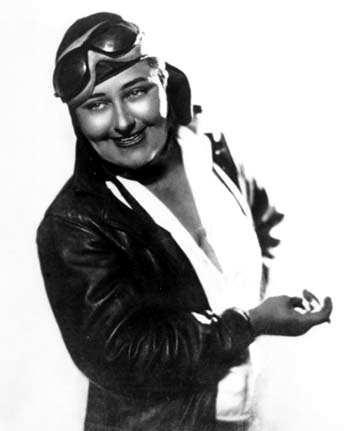

Former Hollywood stunt pilot Pancho Barnes purchased 80 acres of desert farmland in 1935 near a small Army Air Corps gunnery range at Rogers Dry Lake.
The small gunnery range eventually became Muroc Army Airfield, which would play a large role in the future course of Barnes' ranch.
The ranch was a working ranch at first, growing alfalfa & raising livestock.
But Pancho was never without an airplane, and one of the first things she did was to scratch out an airstrip on the desert hardpan.
Pancho set out to make the most of her new environment.
Due to the steady growth of the nearby Muroc AAF, Pancho expanded her ranch to include 2 bars, a restaurant, a dance hall, a motel & even a swimming pool - an exotic touch for the late 1930's.
Within a few years the ranch had expanded from 80 acres to 368.
The airmen loved Pancho’s party atmosphere as the opportunities for other recreation were severely limited.
Most of the booze came up from Mexico in Pancho’s plane & was dispensed freely.
The airstrip was enlarged & illuminated for the increasing number of guests & friends who flew in.
Soon Pancho found herself the proud mistress of the "Rancho Oro Verde Fly-Inn Dude Ranch".
Among military flyers, the ranch eventually became nicknamed the "Happy Bottom Riding Club".
The earliest chart depiction of the Barnes Airfield which has been located
was on the 1941 LA Sectional Chart.
After WW2, when Muroc continued to expand in its new role as the Air Force's primary flight test center (eventually becoming Edwards AFB), the party went on at Pancho’s place.
Pancho was a staunch friend & confidante to many of the young fliers of the day:
Al Boyd, Pete Everest, Jack Ridley & many others.
With Chuck Yeager, a bond was formed which lasted her lifetime.
When Yeager broke the "sound barrier" in the X-1 in 1947, Pancho was one of the few who knew about the official secret.
Yeager won a free steak dinner from Pancho for that feat, thereby starting a tradition for all pilots celebrating their first supersonic flight.
Pancho’s barroom was at the literal center of the supersonic age and served as the unofficial debriefing room for the most elite test pilots in the world.
After the first pool was destroyed in the 1952 Tehachapi earthquake, a much more elaborate pool was built to replace it, consisting of 2 massive, inter-connected quarter sections, customized with special options demanded by Pancho including recessed underwater lighting and, most astonishingly, a gently sloping ramp that allowed Pancho & her horse, after particularly arduous rides, to cool off by walking directly into the pool.
At nighttime, the shimmering, iridescent blue-green glow of the swimming pool
became an unmistakable navigational beacon for fliers overhead.
In fact, it was then the only pool in the Antelope Valley.
Pancho’s remote 368 acre Rancho Oro Verde property was, at the height of its fame, reachable only by air or a brutal 20-mile dirt road from Lancaster.
In spite of its isolation, the compound offered a swanky 20 room motel surrounding a remarkable 80’ fountain in the shape of the Army Air Corps insignia,
a well-stocked horse corral, a restaurant, airplane hangars, 3 landing strips, a dance hall, gambling den and the world-famous bar where she hosted what she called "the fastest & bravest men on earth."
Bordered by lush planting of cottonwoods, Chinese elms, poplars & bamboo,
the Happy Bottom Flying Club was a verdant oasis in the desert & the site of a lifestyle as exuberant as its host.
Yeager’s boss in the flight test world, Col Albert Boyd, was another legendary old-time pilot who had warm regard for Pancho & her accomplishments.
But after his departure from Edwards in 1952, the good times rapidly drew to a close.
Soon after the next commander arrived on the scene, the entire atmosphere began to change.
The reasons were many: conflicting requirements, personality clashes, and some genuine misunderstandings.
The immediate catalyst was airspace, which was becoming increasingly crowded with large numbers of new aircraft being tested, and the private airplanes of Pancho’s guests.
The borders of the base were already pressing hard upon Oro Verde, and a master plan had already been written calling for it to expand to its present western boundary.
There was even talk of lengthening the Edwards runway to a total of 27 miles(!), to accommodate the atomic-powered aircraft then on the drawing board.
Given that it was located only 4 miles away from the end of Edwards' Runway 4, directly along the extended centerline, the Happy Bottom Riding Club was doomed.
It was not long before condemnation proceedings were filed against Pancho’s property,
on the grounds that the ranch lay on a direct line with a proposed extension of the test center’s main runway.
But the situation was greatly worsened by a complete lack of rapport between the principals, and conflicts soon escalated into name calling, unjust accusations,
and ultimately into a flurry of acrimonious lawsuits.
In the middle of the fray, in 1953, coming at the worst possible time, a "mysterious" nighttime fire burned down the main buildings of the ranch, taking its memories of Hollywood celebrities with it.
Later in 1954, as part of the expansion of the base boundaries, Barnes' former ranch became part of the Edwards AFB property.
When Pancho died in 1975, her son was allowed to fly over her old ranch at Edwards AFB to spread her ashes.
Today, the remains of her ranch are now part of the base’s small arms firing range.
The outline of the former airfield is still perceptible in aerial photos of the site,
with 3 runways: north/south, east/west, and the primary runway, which runs northeast/southwest & is 5,500' long.
The small gunnery range eventually became Muroc Army Airfield, which would play a large role in the future course of Barnes' ranch.
The ranch was a working ranch at first, growing alfalfa & raising livestock.
But Pancho was never without an airplane, and one of the first things she did was to scratch out an airstrip on the desert hardpan.
Pancho set out to make the most of her new environment.
Due to the steady growth of the nearby Muroc AAF, Pancho expanded her ranch to include 2 bars, a restaurant, a dance hall, a motel & even a swimming pool - an exotic touch for the late 1930's.
Within a few years the ranch had expanded from 80 acres to 368.
The airmen loved Pancho’s party atmosphere as the opportunities for other recreation were severely limited.
Most of the booze came up from Mexico in Pancho’s plane & was dispensed freely.
The airstrip was enlarged & illuminated for the increasing number of guests & friends who flew in.
Soon Pancho found herself the proud mistress of the "Rancho Oro Verde Fly-Inn Dude Ranch".
Among military flyers, the ranch eventually became nicknamed the "Happy Bottom Riding Club".
The earliest chart depiction of the Barnes Airfield which has been located
was on the 1941 LA Sectional Chart.
After WW2, when Muroc continued to expand in its new role as the Air Force's primary flight test center (eventually becoming Edwards AFB), the party went on at Pancho’s place.
Pancho was a staunch friend & confidante to many of the young fliers of the day:
Al Boyd, Pete Everest, Jack Ridley & many others.
With Chuck Yeager, a bond was formed which lasted her lifetime.
When Yeager broke the "sound barrier" in the X-1 in 1947, Pancho was one of the few who knew about the official secret.
Yeager won a free steak dinner from Pancho for that feat, thereby starting a tradition for all pilots celebrating their first supersonic flight.
Pancho’s barroom was at the literal center of the supersonic age and served as the unofficial debriefing room for the most elite test pilots in the world.
After the first pool was destroyed in the 1952 Tehachapi earthquake, a much more elaborate pool was built to replace it, consisting of 2 massive, inter-connected quarter sections, customized with special options demanded by Pancho including recessed underwater lighting and, most astonishingly, a gently sloping ramp that allowed Pancho & her horse, after particularly arduous rides, to cool off by walking directly into the pool.
At nighttime, the shimmering, iridescent blue-green glow of the swimming pool
became an unmistakable navigational beacon for fliers overhead.
In fact, it was then the only pool in the Antelope Valley.
Pancho’s remote 368 acre Rancho Oro Verde property was, at the height of its fame, reachable only by air or a brutal 20-mile dirt road from Lancaster.
In spite of its isolation, the compound offered a swanky 20 room motel surrounding a remarkable 80’ fountain in the shape of the Army Air Corps insignia,
a well-stocked horse corral, a restaurant, airplane hangars, 3 landing strips, a dance hall, gambling den and the world-famous bar where she hosted what she called "the fastest & bravest men on earth."
Bordered by lush planting of cottonwoods, Chinese elms, poplars & bamboo,
the Happy Bottom Flying Club was a verdant oasis in the desert & the site of a lifestyle as exuberant as its host.
Yeager’s boss in the flight test world, Col Albert Boyd, was another legendary old-time pilot who had warm regard for Pancho & her accomplishments.
But after his departure from Edwards in 1952, the good times rapidly drew to a close.
Soon after the next commander arrived on the scene, the entire atmosphere began to change.
The reasons were many: conflicting requirements, personality clashes, and some genuine misunderstandings.
The immediate catalyst was airspace, which was becoming increasingly crowded with large numbers of new aircraft being tested, and the private airplanes of Pancho’s guests.
The borders of the base were already pressing hard upon Oro Verde, and a master plan had already been written calling for it to expand to its present western boundary.
There was even talk of lengthening the Edwards runway to a total of 27 miles(!), to accommodate the atomic-powered aircraft then on the drawing board.
Given that it was located only 4 miles away from the end of Edwards' Runway 4, directly along the extended centerline, the Happy Bottom Riding Club was doomed.
It was not long before condemnation proceedings were filed against Pancho’s property,
on the grounds that the ranch lay on a direct line with a proposed extension of the test center’s main runway.
But the situation was greatly worsened by a complete lack of rapport between the principals, and conflicts soon escalated into name calling, unjust accusations,
and ultimately into a flurry of acrimonious lawsuits.
In the middle of the fray, in 1953, coming at the worst possible time, a "mysterious" nighttime fire burned down the main buildings of the ranch, taking its memories of Hollywood celebrities with it.
Later in 1954, as part of the expansion of the base boundaries, Barnes' former ranch became part of the Edwards AFB property.
When Pancho died in 1975, her son was allowed to fly over her old ranch at Edwards AFB to spread her ashes.
Today, the remains of her ranch are now part of the base’s small arms firing range.
The outline of the former airfield is still perceptible in aerial photos of the site,
with 3 runways: north/south, east/west, and the primary runway, which runs northeast/southwest & is 5,500' long.
Wikipedia article: http://en.wikipedia.org/wiki/Happy_Bottom_Riding_Club
Nearby cities:
Coordinates: 34°51'44"N 117°57'45"W
- Means Dry Lake 141 km
- Six Spring Canyon 157 km
- Supersonic Low Level test area 158 km
- Olancha Dunes 161 km
- Deb Analog 172 km
- Rainbow Canyon / The Jedi Transition 172 km
- Little Dumont Dunes 176 km
- Devils Playground 189 km
- Val Jean Dunes 189 km
- Goodsprings, Nevada 253 km
- Rosamond Dry Lake 10 km
- Edwards Air Force Base 12 km
- Rogers Dry Lake 13 km
- Saddleback Butte State Park 26 km
- Edwards AFB Precision Impact Range Area (PIRA) 26 km
- Irrigated Fields 28 km
- Palmdale Regional Airport/United States Air Force Plant 42 29 km
- Lake Los Angeles, California 30 km
- San Andreas Fault (Zone) 55 km
- Los Angeles County, California 73 km