
Alexander Nevsky Bridge (Saint Petersburg)
| moveable bridge, road bridge, 1965_construction, bascule bridge
Russia /
Sankt Petersburg /
Saint Petersburg
World
/ Russia
/ Sankt Petersburg
/ Saint Petersburg
, 9 km from center (Санкт-Петербург)
World / Russia / Leningrad
moveable bridge, road bridge, 1965_construction, bascule bridge


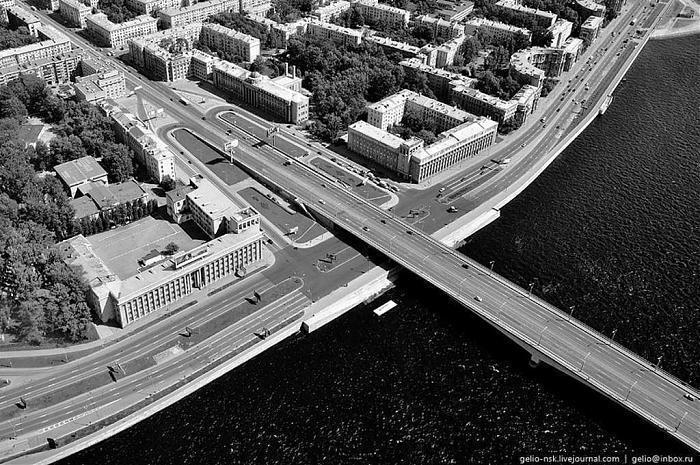
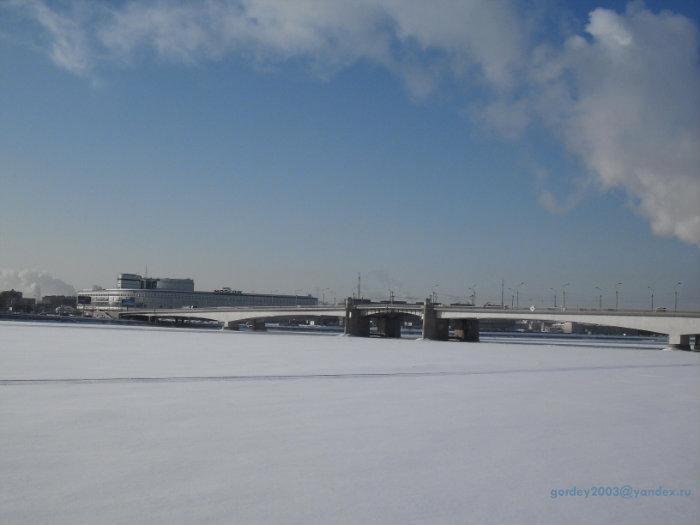
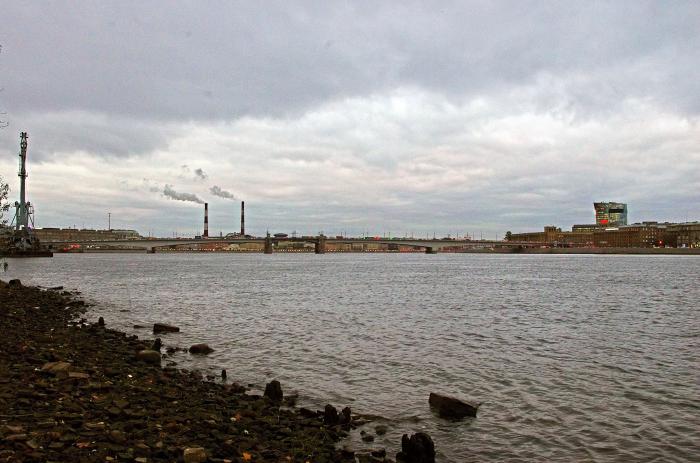
The Alexander Nevsky Bridge connects the right-bank district of St. Petersburg with the city center. Here, on the left bank of the Neva River, the border of the historical center of St. Petersburg passes.
The bridge is a seven-span reinforced concrete structure with a draw span in the middle and ramps on both banks. This is the longest of the drawbridges in St. Petersburg. Its length is 629 meters, and together with the coastal structures — 907.7 meters.
The Alexander Nevsky Bridge is the highest bridge across the Neva River within the city. The height of the draw span is 11 meters, the width is 50 meters. Wiring is carried out by means of a hydraulic drive. Two wings rise in just two minutes.
The structure of the draw span consists of a cross section of four main beams, in the closed state — a cantilever beam. Permanent spans are blocked by continuous beams with rigid sealing on an intermediate support. Steel cables (shrouds) d=70 mm were used as spring fittings. The shrouds, together with electrical cables, penetrate the entire bridge through special through openings. This is the only ferry in St. Petersburg where such fittings are used.
The sidewalk on permanent spans and ramps is separated from the roadway by a granite curb, and on the draw span — by a metal one.
760 LED floodlights are installed along the perimeter of the crossing, aimed at 110-meter reinforced concrete superstructures. The power of the equipment is 51.7 kW.
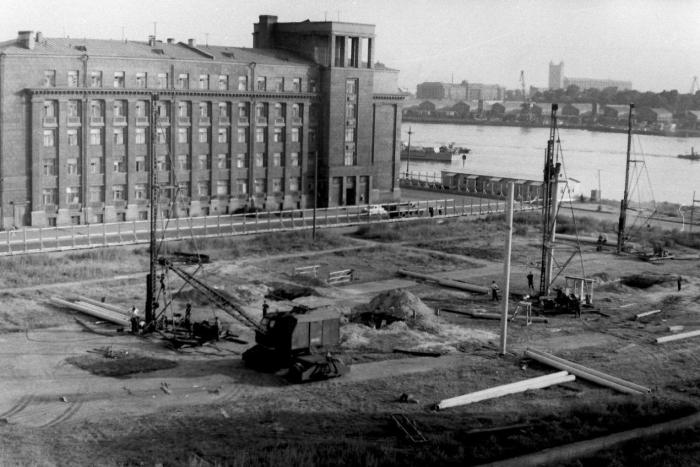
The crossing was planned in this place of the Neva River back in the 30s of the XX century, but only by the end of the 1950s mass housing construction began on the right bank of the river. Leningrad, already rebuilt after the war, grew rapidly in breadth: residential quarters appeared on Okhta, new districts were being designed on the site of the Petrovsky powder depots, in the area of Piskarevka, Polyustrovo, Rzhevka.
The new bridge across the Neva River was extremely necessary for the city to solve transport problems. The Leningrad authorities called the construction of the ferry a "town-planning task of special importance."
In 1959, the Leningrad City Executive Committee announced a closed project competition. The most famous Leningrad and Moscow organizations participated in the creative competition. Some projects turned out to be too expensive, others did not fit into the existing development, and others were questionable from a technical point of view. As a result, the jury did not award the first prize to anyone, and the second place was taken by the work of the institute "Lengiprotransmost". According to this project, the Alexander Nevsky Bridge was built.
The authors of the project are Chief Engineer A.S. Evdonin, engineers K.L. Klochkov, G.M. Stepanov, architects A.V. Zhuk, S.G. Mayofis, Yu.I. Sinitsa. This was a new word in bridge construction, many of the ideas of the designers of the Alexander Nevsky Bridge will then be further developed.
For the first time in the USSR, when creating a ferry, shrouds were used — steel cables. They were hidden by the construction (in modern projects, the shrouds are carried out). The cables of the Alexander Nevsky Bridge have a diameter of 70 mm and are made of alloy steel. The tension of the shrouds is regulated depending on the ambient temperature — in cold weather, the tension is relaxed, in heat it is tightened with the help of special winches.
For the first time, reinforced concrete shells for river supports were installed at a depth of 35 meters. The design of V-shaped superstructures was also new for Soviet bridge construction. They were cast on the shore, and then installed above the water. The total weight of each structure is over 5000 tons. And finally, a rare case for the USSR — the non-working space inside the ramps of the bridge was used to accommodate parking for 230 cars.
Until recently, the bridge remained the longest in the city on the Neva. And only in December 2004, the Bolshoy Obukhov Cable-stayed Bridge, which opened on the border of St. Petersburg and the Leningrad region, intercepted the palm (its total length is 2884 meters).
The construction turned out to be harmonious, proportional, very large details of the bridge do not seem heavy. Experts note the clarity of its constructive scheme, laconism and restrained emotionality. The bridge fits perfectly into the urban environment, does not rise above the historical buildings on the left bank of the Neva. In addition, with the opening of the crossing, transport interchanges on both banks of the river were solved.
During the construction period, the bridge was called Staronevsky, and even before the opening — on May 15, 1965, it was given the name that now exists — Alexander Nevsky Bridge in honor of the great Russian commander and patron saint of the city.
On November 1, 1965, a column of heavy tanks passed over the bridge — these were industrial tests for structural strength. The grand opening, dedicated to the anniversary of the October Revolution, took place on November 5: automobile, tram and pedestrian traffic opened on the bridge.
Despite the fact that the bridge was built using advanced technologies, its quality turned out to be far from ideal. Waterproofing was made of glass wool, and it began to gradually dissolve in bitumen. The shrouds began to rust quickly, and within two years after operation, 56 of them burst. The bridge continued to collapse, while the load on it was constantly increasing. In 1982, due to the wear of the structure, one of the counterweights of the bridge weighing 700 tons collapsed into the water. The bridge was closed to traffic, having established a ferry service. The crossing was repaired, replacing the counterweight, and reopened to traffic.
In 2000, the bridge was closed for major repairs. Reconstruction of the crossing was carried out from December 10, 2000 to April 2001. During the repair, 12 kilometers of shrouds and all waterproofing were replaced. In 2003, for the anniversary of St. Petersburg, the bridge was illuminated with 500 lamps and 8 searchlights.
On March 14, 2014, a new, powerful illumination of the Alexander Nevsky Bridge was opened.
en.mostotrest-spb.ru/bridges/aleksandra-nevskogo
The bridge is a seven-span reinforced concrete structure with a draw span in the middle and ramps on both banks. This is the longest of the drawbridges in St. Petersburg. Its length is 629 meters, and together with the coastal structures — 907.7 meters.
The Alexander Nevsky Bridge is the highest bridge across the Neva River within the city. The height of the draw span is 11 meters, the width is 50 meters. Wiring is carried out by means of a hydraulic drive. Two wings rise in just two minutes.
The structure of the draw span consists of a cross section of four main beams, in the closed state — a cantilever beam. Permanent spans are blocked by continuous beams with rigid sealing on an intermediate support. Steel cables (shrouds) d=70 mm were used as spring fittings. The shrouds, together with electrical cables, penetrate the entire bridge through special through openings. This is the only ferry in St. Petersburg where such fittings are used.
The sidewalk on permanent spans and ramps is separated from the roadway by a granite curb, and on the draw span — by a metal one.
760 LED floodlights are installed along the perimeter of the crossing, aimed at 110-meter reinforced concrete superstructures. The power of the equipment is 51.7 kW.
The crossing was planned in this place of the Neva River back in the 30s of the XX century, but only by the end of the 1950s mass housing construction began on the right bank of the river. Leningrad, already rebuilt after the war, grew rapidly in breadth: residential quarters appeared on Okhta, new districts were being designed on the site of the Petrovsky powder depots, in the area of Piskarevka, Polyustrovo, Rzhevka.
The new bridge across the Neva River was extremely necessary for the city to solve transport problems. The Leningrad authorities called the construction of the ferry a "town-planning task of special importance."
In 1959, the Leningrad City Executive Committee announced a closed project competition. The most famous Leningrad and Moscow organizations participated in the creative competition. Some projects turned out to be too expensive, others did not fit into the existing development, and others were questionable from a technical point of view. As a result, the jury did not award the first prize to anyone, and the second place was taken by the work of the institute "Lengiprotransmost". According to this project, the Alexander Nevsky Bridge was built.
The authors of the project are Chief Engineer A.S. Evdonin, engineers K.L. Klochkov, G.M. Stepanov, architects A.V. Zhuk, S.G. Mayofis, Yu.I. Sinitsa. This was a new word in bridge construction, many of the ideas of the designers of the Alexander Nevsky Bridge will then be further developed.
For the first time in the USSR, when creating a ferry, shrouds were used — steel cables. They were hidden by the construction (in modern projects, the shrouds are carried out). The cables of the Alexander Nevsky Bridge have a diameter of 70 mm and are made of alloy steel. The tension of the shrouds is regulated depending on the ambient temperature — in cold weather, the tension is relaxed, in heat it is tightened with the help of special winches.
For the first time, reinforced concrete shells for river supports were installed at a depth of 35 meters. The design of V-shaped superstructures was also new for Soviet bridge construction. They were cast on the shore, and then installed above the water. The total weight of each structure is over 5000 tons. And finally, a rare case for the USSR — the non-working space inside the ramps of the bridge was used to accommodate parking for 230 cars.
Until recently, the bridge remained the longest in the city on the Neva. And only in December 2004, the Bolshoy Obukhov Cable-stayed Bridge, which opened on the border of St. Petersburg and the Leningrad region, intercepted the palm (its total length is 2884 meters).
The construction turned out to be harmonious, proportional, very large details of the bridge do not seem heavy. Experts note the clarity of its constructive scheme, laconism and restrained emotionality. The bridge fits perfectly into the urban environment, does not rise above the historical buildings on the left bank of the Neva. In addition, with the opening of the crossing, transport interchanges on both banks of the river were solved.
During the construction period, the bridge was called Staronevsky, and even before the opening — on May 15, 1965, it was given the name that now exists — Alexander Nevsky Bridge in honor of the great Russian commander and patron saint of the city.
On November 1, 1965, a column of heavy tanks passed over the bridge — these were industrial tests for structural strength. The grand opening, dedicated to the anniversary of the October Revolution, took place on November 5: automobile, tram and pedestrian traffic opened on the bridge.
Despite the fact that the bridge was built using advanced technologies, its quality turned out to be far from ideal. Waterproofing was made of glass wool, and it began to gradually dissolve in bitumen. The shrouds began to rust quickly, and within two years after operation, 56 of them burst. The bridge continued to collapse, while the load on it was constantly increasing. In 1982, due to the wear of the structure, one of the counterweights of the bridge weighing 700 tons collapsed into the water. The bridge was closed to traffic, having established a ferry service. The crossing was repaired, replacing the counterweight, and reopened to traffic.
In 2000, the bridge was closed for major repairs. Reconstruction of the crossing was carried out from December 10, 2000 to April 2001. During the repair, 12 kilometers of shrouds and all waterproofing were replaced. In 2003, for the anniversary of St. Petersburg, the bridge was illuminated with 500 lamps and 8 searchlights.
On March 14, 2014, a new, powerful illumination of the Alexander Nevsky Bridge was opened.
en.mostotrest-spb.ru/bridges/aleksandra-nevskogo
Wikipedia article: http://en.wikipedia.org/wiki/Alexander_Nevsky_Bridge
Nearby cities:
Coordinates: 59°55'33"N 30°23'47"E
- Troitsky ('Trinity') (bridge 4.9 km
- Sampsoniyevsky Bridge 5 km
- Palace Bridge 5.3 km
- Annunciation Bridge (Blagoveschensky Bridge) 6.2 km
- Tuchkov Bridge 6.8 km
- Kantemirovsky Bridge 7.5 km
- Kamennostrovsky Bridge 7.9 km
- Betancourt Bridge 8.4 km
- Belyayevsky bridge 8.5 km
- Bolshoy Petrovsky Bridge 9 km
- The Holy Trinity St Alexander Nevsky monastery 0.7 km
- Monastyrsky island 0.8 km
- Ligovka-Yamskaya Municipal Okrug 1.2 km
- Peski (historical area) 1.3 km
- Malaya Okhta (historical area) 1.3 km
- Malaya Okhta municipal district 1.6 km
- Smolninskoye Municipal Okrug 1.9 km
- Tsentralny District 2.5 km
- Nevsky District 7.1 km
- Krasnogvardeysky District 7.5 km