
The Evangelical parsonage
Romania /
Sibiu /
Albert Huet Square, 1
World
/ Romania
/ Sibiu
/ Sibiu
World / Romania
place with historical importance, Gothic (architecture), parsonage, listed building / architectural heritage, historical building, 16th century construction, 15th century construction, 14th century construction, tourist attraction
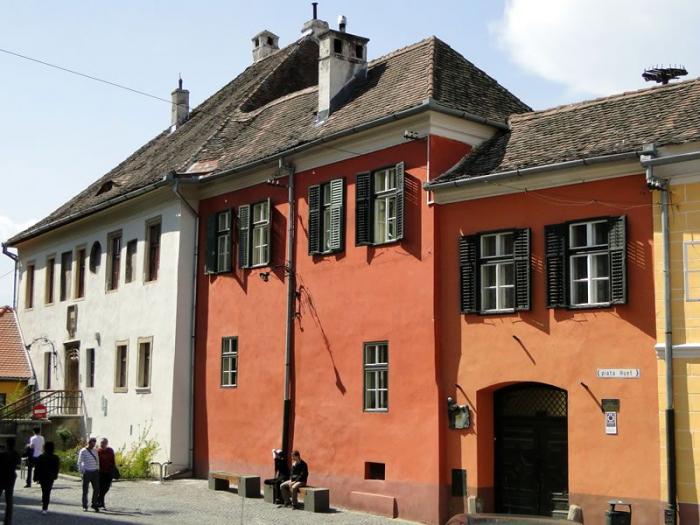
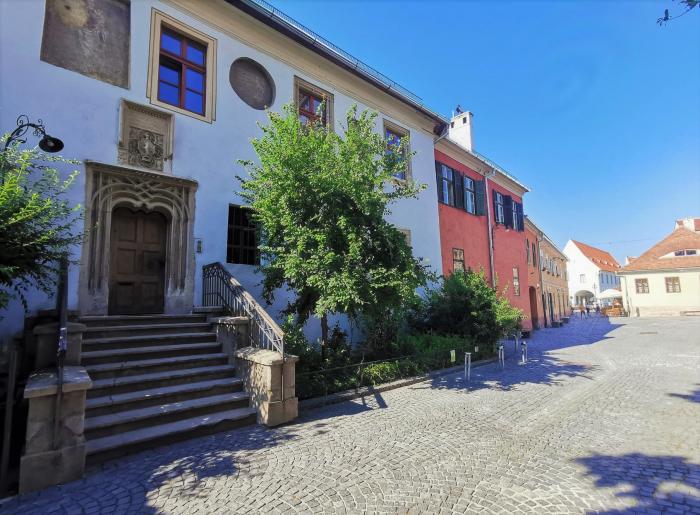
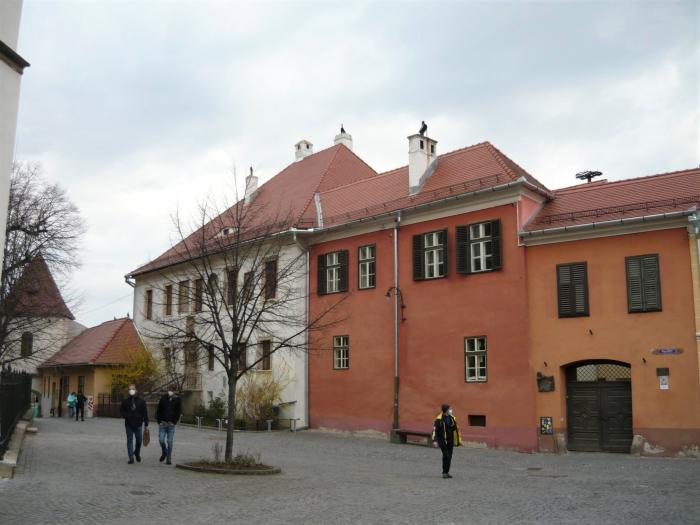
The building consists of 4 bodies that close a narrow courtyard. The body on the west is the oldest, probably dating from the early fourteen century. The body has two floors on the slope toward the city, used as living rooms. The hipped roof with a ridge parallel to the facade replaced after 1808 a much higher roof, with tiles. In the basement it is stored a stone ogival framing.
The second body of the building, consisting of basement, ground and first floor, dates from the nineteenth century.
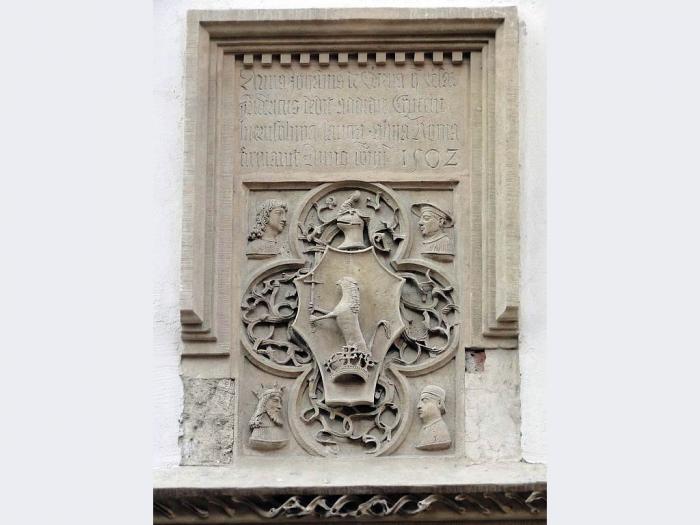
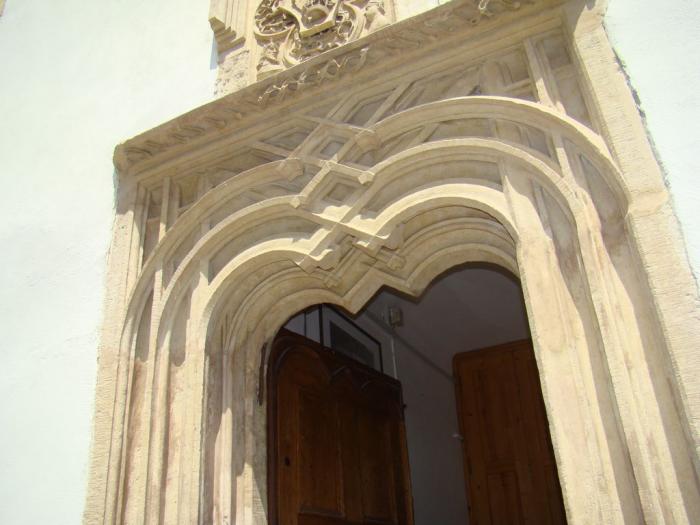
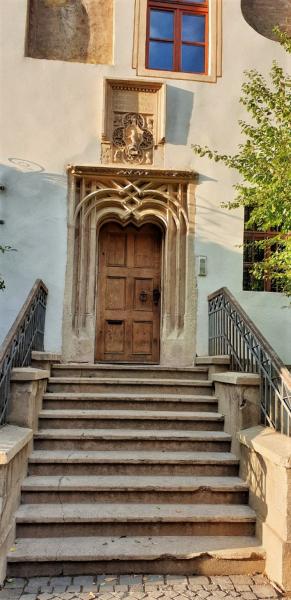
The entrance door with rich stone framing dates from the 15th century (Gothic style) and the stone arms above the portal dates from 1502. Attributed to famous stonemason and architect Andreas Lapicida, the portal was ordered by JOHANNES, the plebeian from Altana, having on the upper side a rectangular panel with its coat of arms (a ramping lion holding a cross emerging from a crown) and on its 4 corners it had four portraits - the plebeian's, his Patron St. John the Baptist, Emperor FREDERICK and Pope ALEXANDER VI BORGIA.
The inscription on the top, ARMA JOHANNIS DE OLCZNA Q(VE) CESAR/ FRIEDERICUS DEDIT ADDIDIT CRUCEM/ HIERUSOLIMA SANCTA ALMA ROMA/ FIRMAVIT ANNO DOMINI 1502, is framed by a profiling announcing the Renaissance. The door's Gothic framing is distinguished by the depth of the moldings and the delicacy of the vegetable decoration.
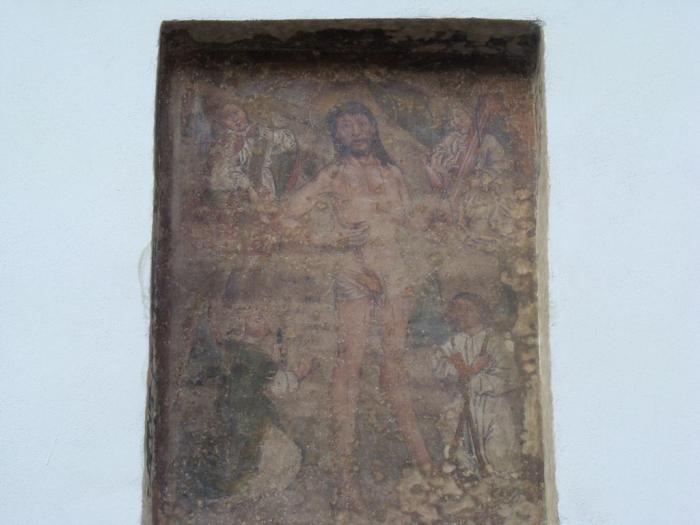
The murals in the main front pockets were uncovered during the 2007 restoration.
patrimoniu.sibiu.ro/cladiri_en/piata_huet/120
The second body of the building, consisting of basement, ground and first floor, dates from the nineteenth century.
The entrance door with rich stone framing dates from the 15th century (Gothic style) and the stone arms above the portal dates from 1502. Attributed to famous stonemason and architect Andreas Lapicida, the portal was ordered by JOHANNES, the plebeian from Altana, having on the upper side a rectangular panel with its coat of arms (a ramping lion holding a cross emerging from a crown) and on its 4 corners it had four portraits - the plebeian's, his Patron St. John the Baptist, Emperor FREDERICK and Pope ALEXANDER VI BORGIA.
The inscription on the top, ARMA JOHANNIS DE OLCZNA Q(VE) CESAR/ FRIEDERICUS DEDIT ADDIDIT CRUCEM/ HIERUSOLIMA SANCTA ALMA ROMA/ FIRMAVIT ANNO DOMINI 1502, is framed by a profiling announcing the Renaissance. The door's Gothic framing is distinguished by the depth of the moldings and the delicacy of the vegetable decoration.
The murals in the main front pockets were uncovered during the 2007 restoration.
patrimoniu.sibiu.ro/cladiri_en/piata_huet/120
Nearby cities:
Coordinates: 45°47'53"N 24°9'0"E
- The Large Square 0.1 km
- Former Cistercian abbey - built in the year 1202 32 km
- "Sugaletele" Medieval houses with arches 151 km
- Mănăstirea Arbore 255 km
- Lubart Castle 557 km
- Genoese Fortress of Sudak 851 km
- The Novogrudok Castle, ruins 877 km
- The Krevo Castle, ruins 960 km
- Medininkai Castle 979 km
- Trakai Island Castle 987 km
- Huet and Lesser/Small Squares - fortified perimeter finished around 1224-1240 (Cibinium) 0.1 km
- Lower Town 0.1 km
- Historic Center 0.1 km
- Upper Town 0.3 km
- Citadel Park--The Promenade 0.5 km
- Central Area (outside the Historic Center) 0.8 km
- Former Josephine district 0.9 km
- Terezian 1.1 km
- Sibiu 1.7 km
- Sibiu County 14 km