
Former NYSC North Yard (Camden, New Jersey)
USA /
New Jersey /
Gloucester City /
Camden, New Jersey
World
/ USA
/ New Jersey
/ Gloucester City
World / United States / New Jersey
place with historical importance, shipyard, production, shipbuilding
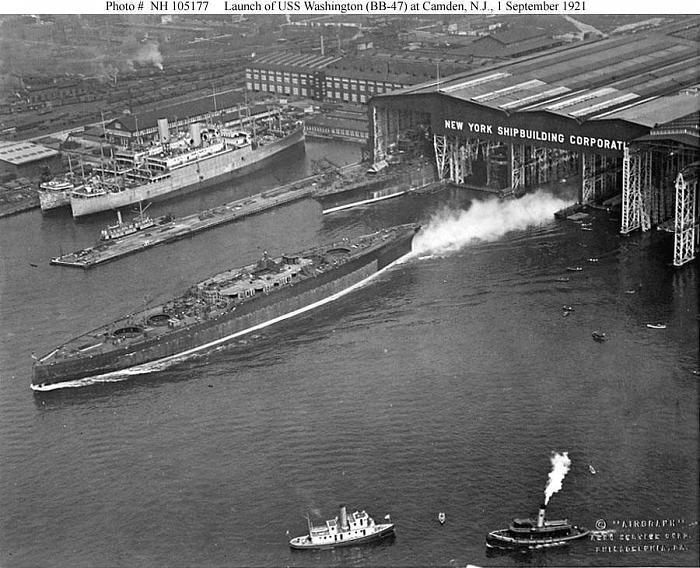
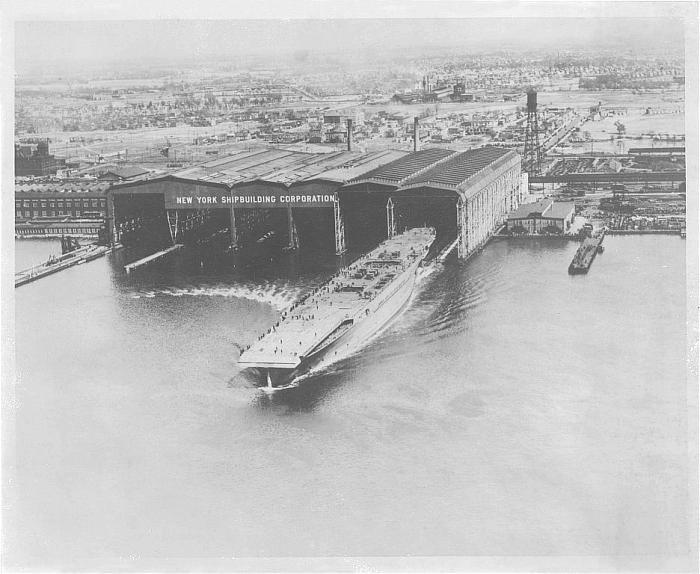
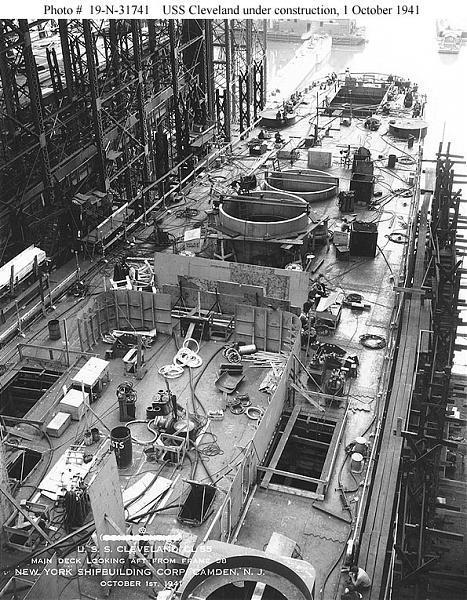
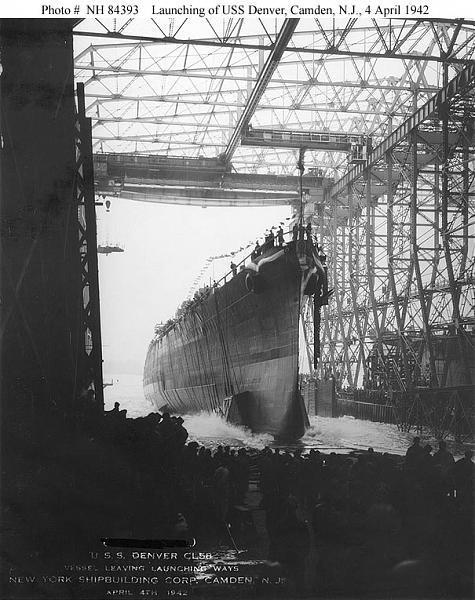
New York Shipbuilding Corporation's North Yard was the original site for the Camden-based shipyard, with ground broken on a former 160-acre farm on the east side of the Delaware River on July 3, 1899.
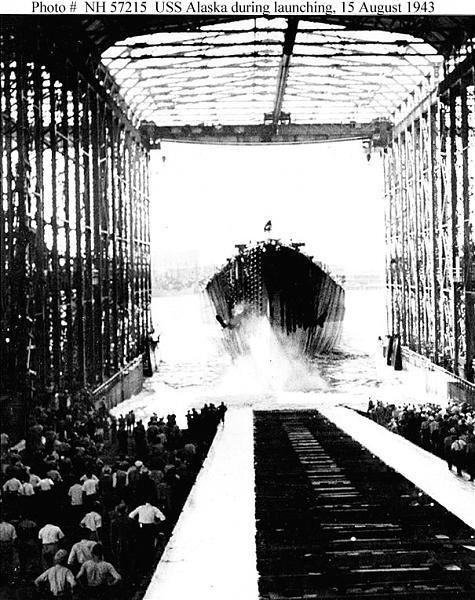
Three covered slipways (designated J, K, and L) and a covered wet slip (H) were constructed alongside the riverbank for the shipbuilding and outfitting operations, along with numerous ancillary shops and foundries landside. The covered slipway structure incorporated an enormous mold loft where hull plates were fabricated from templates, a now-common practice that NYSC pioneered in the shipbuilding industry. Overhead, several large bridge cranes with capacities up to 100 tons each were capable of lifting and moving fully assembled hull sections, engines or gun turret assemblies.
The keel of NYSC's first ship, the oil tanker J.M. Guffey, was laid in slipway L on November 29, 1900 while the adjoining slipways themselves were still under construction.
Two additional covered slipways were added in 1912 and 1915 to bring the total number of ways to five, and at the time all five were the largest slipways in any American shipyard.
Following the construction of another outdoor shipbuilding facility prior to World War I, the original facility became known as the North Yard. Becoming the primary large-vessel construction site, the North Yard's ways constructed several Battleships, Aircraft Carriers and Cruisers along with several large merchant and passenger vessels. All five slipways were enlarged during the Second World War by up to 250 feet to accommodate the planned building of six 30,000 ton Alaska Class Battle Cruisers, though the yard only produced two before the war's end.
During the Post-WWII & Cold War Era, the North Yard remained active and was retooled for the construction of Nuclear-Powered vessels in addition to conventionally powered ships. NYSC was able to produce several more Cruisers, Destroyers and Supply Ships at the North Yard, along with 4 Nuclear Attack Submarines and the N/S Savannah, one of 3 Nuclear-Powered merchant vessels during the 1950's and 1960's. This production however could not support the sprawling yard's facilities and its 4,000 man workforce, and in 1967 the entire yard shut down operations. The final ship to slide off the ways of NYSC's North Yard was the uncompleted hull of the Submarine USS Pogy (SSN-647) in 1967, after which the entire facility was idled.
The North Yard's covered slipways were eventually torn down in the 1970's as much for their scrap value as their potential collapse danger leaving only their footprint on the waterfront as the only physical evidence of their existance. Today the former site of NYSC's North Yard is used as a drybulk cargo storage area by the Port of Camden.
yorkship.us/
Three covered slipways (designated J, K, and L) and a covered wet slip (H) were constructed alongside the riverbank for the shipbuilding and outfitting operations, along with numerous ancillary shops and foundries landside. The covered slipway structure incorporated an enormous mold loft where hull plates were fabricated from templates, a now-common practice that NYSC pioneered in the shipbuilding industry. Overhead, several large bridge cranes with capacities up to 100 tons each were capable of lifting and moving fully assembled hull sections, engines or gun turret assemblies.
The keel of NYSC's first ship, the oil tanker J.M. Guffey, was laid in slipway L on November 29, 1900 while the adjoining slipways themselves were still under construction.
Two additional covered slipways were added in 1912 and 1915 to bring the total number of ways to five, and at the time all five were the largest slipways in any American shipyard.
Following the construction of another outdoor shipbuilding facility prior to World War I, the original facility became known as the North Yard. Becoming the primary large-vessel construction site, the North Yard's ways constructed several Battleships, Aircraft Carriers and Cruisers along with several large merchant and passenger vessels. All five slipways were enlarged during the Second World War by up to 250 feet to accommodate the planned building of six 30,000 ton Alaska Class Battle Cruisers, though the yard only produced two before the war's end.
During the Post-WWII & Cold War Era, the North Yard remained active and was retooled for the construction of Nuclear-Powered vessels in addition to conventionally powered ships. NYSC was able to produce several more Cruisers, Destroyers and Supply Ships at the North Yard, along with 4 Nuclear Attack Submarines and the N/S Savannah, one of 3 Nuclear-Powered merchant vessels during the 1950's and 1960's. This production however could not support the sprawling yard's facilities and its 4,000 man workforce, and in 1967 the entire yard shut down operations. The final ship to slide off the ways of NYSC's North Yard was the uncompleted hull of the Submarine USS Pogy (SSN-647) in 1967, after which the entire facility was idled.
The North Yard's covered slipways were eventually torn down in the 1970's as much for their scrap value as their potential collapse danger leaving only their footprint on the waterfront as the only physical evidence of their existance. Today the former site of NYSC's North Yard is used as a drybulk cargo storage area by the Port of Camden.
yorkship.us/
Nearby cities:
Coordinates: 39°54'49"N 75°7'23"W
- Philadelphia Refinery and Tank Farm - Sunoco Inc. 8 km
- Philadelphia University 14 km
- Budd Company Red Lion Railcar Production Facility 24 km
- US Pipe Foundary (former) 31 km
- Colonial Pipeline - Dual Pipelines run from Houston, TX to Linden, NJ 31 km
- Bristol Industrial Park 34 km
- Former Keystone/Fleetwings factory 34 km
- US Steel Fairless Hills Plant 42 km
- New Hope Winery 49 km
- American Standard Plumbing Plant (former) 52 km
- Piers 96 & 98 Annex 1.5 km
- Yorkship Village 1.8 km
- Interstate 676 Exit 5 3.1 km
- Queen Village 3.4 km
- Society Hill 4 km
- South Philadelphia 4.2 km
- Old City 4.4 km
- Center City 5.3 km
- Cooper River Park 5.3 km
- Camden County, New Jersey 20 km