
Kixby Hotel
USA /
New Jersey /
West New York /
West 35th Street, 45
World
/ USA
/ New Jersey
/ West New York
World / United States / New York
hotel
Add category
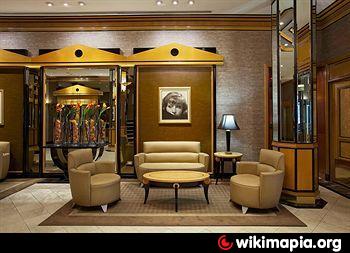


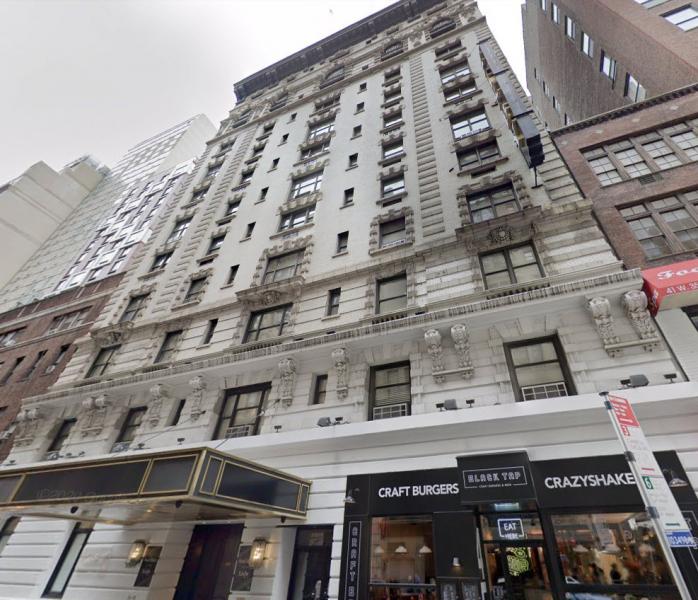

150-foot, 12-story Beaux-Arts hotel completed in 1901. Designed by Harry B. Mulliken, it opened as the Collingwood Hotel. The front facade has five main bays, and is clad in off-white brick above a 2-story white-painted limestone base. The ground floor is banded and has a central entrance, with glass-and-brass doors under a square, brass, suspended canopy. To the left are a pair of segmental-arched window openings with keystones; to the right is an arched door to the ground-floor restaurant and a 3-paned show window fronted by planter boxes. The ground floor is topped by a stone band course, and the 2nd floor has wider-spaced banding, overlapping the stone window surrounds at the five main bays. These are all square-headed, and wider in the middle, with canvas awnings. Flanking the center bay are two small, narrow windows, a pattern repeated on the upper floors. There is elaborate paired brackets around the end bays, and similar single brackets around the small windows, supporting a cornice above the 2nd floor.
The base of the 3rd floor has balustrades at each bay, rising from the cornice below. The walls around the middle bay have brick banding, and the outer bays have grey stone banding. The windows have stone surrounds banded with textured panels. The center and end bays have escutcheons on top and small brackets supporting cornices, while the other two main bays have splayed tops of the carved and banded stone surrounds. A stone band course runs between the three cornices, setting off the upper floors from the 3rd. The 4th-9th floors narrower stone banding framing the end bays, with the pier on the inner side of each projecting slightly. The five main windows have banded stone surrounds like those below, but without the escutcheons and cornices. At the next five floors they have simpler stone sills but similar splayed lintels. Another cornice sets off the 3-story crown.
At the 10th-11th floors, the five main bays are all enframed by banded surrounds, with round-arches and scrolled keystones at the tops (the center bay being wider). The arches spring from cornices supported by Ionic capitals Within each bay, a black iron spandrel divides the two floors. The end bays have large cartouches and heraldic shields on either side, and a smaller cornice runs between the shoulders of the arches. The arches at the end bays are flanked by statues of reclining figures, leaning against the sides of the arch. The figures are supposed to represent the continents of Asia, North American, Europe and Africa.
The top floor, banded, also has banded surrounds at the window openings, all square headed, and wider at the middle and end bays. The facade is topped by a white roof cornice with dentils, modillions and paired brackets. The east and west facades are clad in reddish-brown brick, with light courts in the middle of both elevations. There is a single bay of windows on either side of the light courts, as well as windows on the interior walls of the light courts. A roof deck on top has large, red, rounded canopies.
While upscale transient guests visiting New York were welcomed, the Collingwood was mainly an “apartment hotel;” one in which well-heeled residents lived and enjoyed the amenities of a staff without the inconvenience of running a private household. Seth H. Moseley, who had been manager of the hotel, purchased it from the Guggenheimer Estate in 1913 for about $1 million. As late as the 1920s wealthy New Yorkers remained in the Collingwood. But by the 1930s West 35th Street was highly commercial with factory loft spaces filling many of the properties. The Collingwood underwent a remodeling in 1934 and two years after it was sold to Nathan Wilson in 1949, it was modernized again. By 2000 the convenient location of the once-grimy 35th Street was attracting out-of-towners. In 2008 a series of modern hotels with national names like Marriott and Hampton Inn began rising on the sites of old loft buildings.
In the meantime, the Hotel Collingwood became the Metro Hotel, completely renovated and modernized to attract 21st-century guests. It 2020 it was re-opened as the Kixby. The east part of the ground floor is occupied by Black Tap Craft Burgers & Beer.
www.jstor.org/stable/community.16955043
The base of the 3rd floor has balustrades at each bay, rising from the cornice below. The walls around the middle bay have brick banding, and the outer bays have grey stone banding. The windows have stone surrounds banded with textured panels. The center and end bays have escutcheons on top and small brackets supporting cornices, while the other two main bays have splayed tops of the carved and banded stone surrounds. A stone band course runs between the three cornices, setting off the upper floors from the 3rd. The 4th-9th floors narrower stone banding framing the end bays, with the pier on the inner side of each projecting slightly. The five main windows have banded stone surrounds like those below, but without the escutcheons and cornices. At the next five floors they have simpler stone sills but similar splayed lintels. Another cornice sets off the 3-story crown.
At the 10th-11th floors, the five main bays are all enframed by banded surrounds, with round-arches and scrolled keystones at the tops (the center bay being wider). The arches spring from cornices supported by Ionic capitals Within each bay, a black iron spandrel divides the two floors. The end bays have large cartouches and heraldic shields on either side, and a smaller cornice runs between the shoulders of the arches. The arches at the end bays are flanked by statues of reclining figures, leaning against the sides of the arch. The figures are supposed to represent the continents of Asia, North American, Europe and Africa.
The top floor, banded, also has banded surrounds at the window openings, all square headed, and wider at the middle and end bays. The facade is topped by a white roof cornice with dentils, modillions and paired brackets. The east and west facades are clad in reddish-brown brick, with light courts in the middle of both elevations. There is a single bay of windows on either side of the light courts, as well as windows on the interior walls of the light courts. A roof deck on top has large, red, rounded canopies.
While upscale transient guests visiting New York were welcomed, the Collingwood was mainly an “apartment hotel;” one in which well-heeled residents lived and enjoyed the amenities of a staff without the inconvenience of running a private household. Seth H. Moseley, who had been manager of the hotel, purchased it from the Guggenheimer Estate in 1913 for about $1 million. As late as the 1920s wealthy New Yorkers remained in the Collingwood. But by the 1930s West 35th Street was highly commercial with factory loft spaces filling many of the properties. The Collingwood underwent a remodeling in 1934 and two years after it was sold to Nathan Wilson in 1949, it was modernized again. By 2000 the convenient location of the once-grimy 35th Street was attracting out-of-towners. In 2008 a series of modern hotels with national names like Marriott and Hampton Inn began rising on the sites of old loft buildings.
In the meantime, the Hotel Collingwood became the Metro Hotel, completely renovated and modernized to attract 21st-century guests. It 2020 it was re-opened as the Kixby. The east part of the ground floor is occupied by Black Tap Craft Burgers & Beer.
www.jstor.org/stable/community.16955043
Nearby cities:
Coordinates: 40°45'0"N 73°59'9"W
- Old Waldorf-Astoria Hotel 0.1 km
- Hotel Pennsylvania site 0.5 km
- New York Marriott Marquis Hotel 1 km
- The Towers of the Waldorf Astoria New York 1.3 km
- Waldorf Astoria New York 1.3 km
- The Ambassador Hotel 1.4 km
- New York Hilton Midtown 1.5 km
- The Plaza 1.9 km
- Mandarin Oriental 2.1 km
- The William Vale Hotel 3.9 km
- Koreatown 0.3 km
- NoMad 0.5 km
- Garment District 0.6 km
- Midtown (South Central) 0.8 km
- Murray Hill 0.9 km
- Midtown (North Central) 0.9 km
- Amtrak East River Tunnels 1.6 km
- Manhattan 3.6 km
- Hudson County, New Jersey 7.6 km
- Queens 15 km