
Wreck of HIJMS Maikaze (舞風)
Micronesia /
Chuuk /
Tol /
World
/ Micronesia
/ Chuuk
/ Tol
Second World War 1939-1945, military, shipwreck, destroyer (ship)
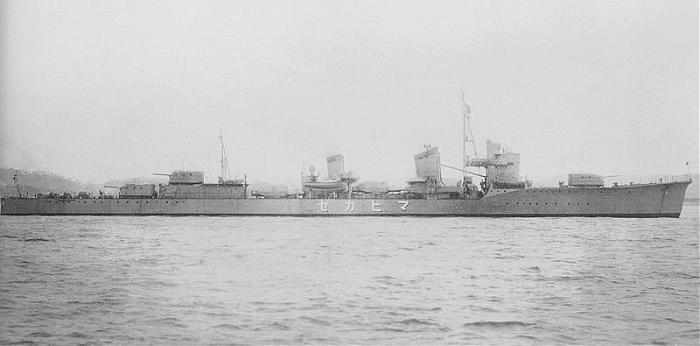
HIJMS Maikaze was the 18th member of the Kagero Class of Destroyers built for the Imperial Japanese Navy, laid down at the Fujinagata Shipbuilding Yard in April 1940 and commissioned into service in July 1941. After her shakedown cruise, Maikaze and her crew began intensive training and fleet exercises aimed at sharpening their capabilities for the impending war with the United States and her Allies.
Opening her role in the Second World War by escorting Troopship convoys to the Philippines, Malayan Peninsula and Dutch East Indies through February 1942, the Maikaze screened supply ships which were supporting Japanese naval units engaged in the Indian Ocean Raids through the end of March before she returned to Japan as an escort for the Fleet Carriers HIJMS Shokaku and HIJMS Zuikaku in mid April. Following a brief refit, the Maikaze escorted the ships of the Midway Invasion Force from Japan to the mid-Pacific, only to be turned back roughly 300 miles from her destination by the disastrous defeat of the Japanese Navy on the 4th of June at the hands of the US Navy. Reassigned to the IJN 3rd Fleet after Midway, the Maikaze and her crew began operations as a member of Destroyer Squadron 10 at Truk Atoll in late August, and were almost immediately involved in the pitched battle for the Island of Guadalcanal in the Southern Solomons Islands. Constantly engaged in resupply, support and escort duties for the “Tokyo Express” force which was providing assistance to the Japanese force on the island, the Maikaze and her crew shuttled between Truk, Rabaul, the Shortland Islands and Guadalcanal for the next six months, frequently clashing with United States air, sea and ground forces as both sides vied for control of the island and its surrounding sea lanes. Despite the substantial efforts of Maikaze, her crew and those of the hundreds of ships involved in the operation to sustain the garrison on Guadalcanal, by the end of January 1943 the order was passed to withdraw from the island in favor of defensive positions further up the Solomons chain. Moderately damaged while providing cover for evacuation forces during the night and early morning of February 4th, the Maikaze ended her time in the Guadalcanal Campaign by being towed to safety with a flooded engine room which required her return to Japan for four months of battle damage repairs and overhaul.
Returning to Truk at the end of July 1943 the Maikaze and her crew resumed convoy escort work out of the large Japanese base, ranging as far as Shanghai but mainly operating between Japan and Rabaul for the balance of 1943 and into early 1944. By the end of January American advances in the Marshall and Gilbert Islands had steadily encroached on Truk to the point where the base was now within range of American Carrier Aircraft, and fearing for the safety of its Capital ships the Japanese Navy began to withdraw its main Battleships, Carriers and Cruisers from the lagoon, especially after American forces landed on Kwajalein Atoll on the 31st of January. Arriving at Truk with a fuel and supply convoy on the 12th of February, Maikaze and her crew provided anti-submarine patrols for departing vessels for the next four days before she received orders to join an escort for the armed merchant ship Akagi Maru, which was bound for Yokosuka with a load of supplies and evacuees. Weighing anchor before 0400hrs on the 17th of February, the Maikaze joined her fellow Destroyer HIJMS Nowaki, the Light Cruiser HIJMS Katori and the Minesweeper Shonan Maru # 15 as escorts and made for the Northern entrance to Truk Atoll. Entering open waters shortly after 0630, the formation had just shaped their course for Yokosuka when frantic reports came over the radio that Truk was under heavy air attack as the US Navy’s Operation Hailstone was carried out. Shortly after 0730hrs the Maikaze and her convoy came under concentrated attack from aircraft flying from several US Aircraft Carriers, and despite the efforts of her AA Gunners the Maikaze was repeatedly strafed and near-missed in the multiple coordinated attacks which also resulted in the loss of the Akagi Maru and the Light Cruiser Katori being torpedoed.
A temporary break in the action allowed the survivors from the sunken maru to be rescued by the Katori while Maikaze and Nowaki provided cover, however once the rescue completed the force had no choice but to depart the area since the base facilities at Truk had been severely damaged. Forced to steam at a lower speed due to the damage suffered by the Katori, each ship’s crew effected damage control measures as the group made their way Northwest in the hopes of outranging the American Carrier Aircraft. By 1230hrs the ships had put enough distance between themselves and Truk to allow their crews to stand down for a meal, however the respite from battle proved to be all too short lived, as lookouts aboard the Katori sighted the ominous signs of enemy vessels on the horizon at 1300hrs. Within minutes, the ships of Rear Admiral Robert C. Giffen's Task Group 50.9 consisting of the Battleships USS Iowa (BB-61) and USS New Jersey (BB-62), the Heavy Cruisers USS Minneapolis (CA-36) and USS New Orleans (CA-32) and Destroyers USS Bradford (DD-545) and USS Burns (DD-588) were in sight and making straight for Maikaze and her group. With her avenue of escape seemingly cut off to the front and no safe harbor to her rear, the Maikaze’s Captain wasted no time in bringing his ship to flank speed and charged towards the American ships to launch a torpedo attack.
Slicing through the ocean swells at 35 knots, the Maikaze generated smoke to obscure her convoy mates as she closed on her enemy, and was soon under direct fire from the two American Battleships while at a range of 7000 yards. Skillfully dodging the accurate American fire, Maikaze’s skipper got his ship into unscathed position and at approximately 1320hrs ordered a full salvo of his deadly “Long Lance” torpedoes fired at the two sister Battleships. As her forward gun mounts barked ineffective fire at the two battlewagons, Maikaze’s Stern mount began a solo duel with the two Heavy Cruisers closing on her position from behind, and after it became clear none of her torpedoes had found their mark, Maikaze swung around and brought her full armament to bear on the approaching ships. The Minneapolis and New Orleans, both battle-hardened and scarred Veterans of the Guadalcanal and Solmons Campaigns, quickly spread apart and divided the fire of the Maikaze’s guns, while allowing their full 8-inch battery to envelope the Destroyer with accurate radar-guided fire. Within minutes of her engagement, Maikaze was struck several times across her length, the most serious of which was a direct hit to her rear gun mount which started a large ready ammunition fire. Continuing to fight on despite the clearly insurmountable odds she was facing, Maikaze continued to charge at her adversaries and swap fire until the raging fire astern reached her ammunition magazines and caused an explosion at 1340hrs which blew off much of the rear quarter of the ship. Slowing to a halt and quickly swamping to the Stern, the surviving crew of Maikaze defiantly remained at their posts and continued to fire on the two Cruisers as their ship foundered beneath them. Roughly three minutes after the magazine blast, the Maikaze went down fighting Stern-first at this position, carrying her entire crew with her to the bottom.
www.combinedfleet.com/maikaz_t.htm
Opening her role in the Second World War by escorting Troopship convoys to the Philippines, Malayan Peninsula and Dutch East Indies through February 1942, the Maikaze screened supply ships which were supporting Japanese naval units engaged in the Indian Ocean Raids through the end of March before she returned to Japan as an escort for the Fleet Carriers HIJMS Shokaku and HIJMS Zuikaku in mid April. Following a brief refit, the Maikaze escorted the ships of the Midway Invasion Force from Japan to the mid-Pacific, only to be turned back roughly 300 miles from her destination by the disastrous defeat of the Japanese Navy on the 4th of June at the hands of the US Navy. Reassigned to the IJN 3rd Fleet after Midway, the Maikaze and her crew began operations as a member of Destroyer Squadron 10 at Truk Atoll in late August, and were almost immediately involved in the pitched battle for the Island of Guadalcanal in the Southern Solomons Islands. Constantly engaged in resupply, support and escort duties for the “Tokyo Express” force which was providing assistance to the Japanese force on the island, the Maikaze and her crew shuttled between Truk, Rabaul, the Shortland Islands and Guadalcanal for the next six months, frequently clashing with United States air, sea and ground forces as both sides vied for control of the island and its surrounding sea lanes. Despite the substantial efforts of Maikaze, her crew and those of the hundreds of ships involved in the operation to sustain the garrison on Guadalcanal, by the end of January 1943 the order was passed to withdraw from the island in favor of defensive positions further up the Solomons chain. Moderately damaged while providing cover for evacuation forces during the night and early morning of February 4th, the Maikaze ended her time in the Guadalcanal Campaign by being towed to safety with a flooded engine room which required her return to Japan for four months of battle damage repairs and overhaul.
Returning to Truk at the end of July 1943 the Maikaze and her crew resumed convoy escort work out of the large Japanese base, ranging as far as Shanghai but mainly operating between Japan and Rabaul for the balance of 1943 and into early 1944. By the end of January American advances in the Marshall and Gilbert Islands had steadily encroached on Truk to the point where the base was now within range of American Carrier Aircraft, and fearing for the safety of its Capital ships the Japanese Navy began to withdraw its main Battleships, Carriers and Cruisers from the lagoon, especially after American forces landed on Kwajalein Atoll on the 31st of January. Arriving at Truk with a fuel and supply convoy on the 12th of February, Maikaze and her crew provided anti-submarine patrols for departing vessels for the next four days before she received orders to join an escort for the armed merchant ship Akagi Maru, which was bound for Yokosuka with a load of supplies and evacuees. Weighing anchor before 0400hrs on the 17th of February, the Maikaze joined her fellow Destroyer HIJMS Nowaki, the Light Cruiser HIJMS Katori and the Minesweeper Shonan Maru # 15 as escorts and made for the Northern entrance to Truk Atoll. Entering open waters shortly after 0630, the formation had just shaped their course for Yokosuka when frantic reports came over the radio that Truk was under heavy air attack as the US Navy’s Operation Hailstone was carried out. Shortly after 0730hrs the Maikaze and her convoy came under concentrated attack from aircraft flying from several US Aircraft Carriers, and despite the efforts of her AA Gunners the Maikaze was repeatedly strafed and near-missed in the multiple coordinated attacks which also resulted in the loss of the Akagi Maru and the Light Cruiser Katori being torpedoed.
A temporary break in the action allowed the survivors from the sunken maru to be rescued by the Katori while Maikaze and Nowaki provided cover, however once the rescue completed the force had no choice but to depart the area since the base facilities at Truk had been severely damaged. Forced to steam at a lower speed due to the damage suffered by the Katori, each ship’s crew effected damage control measures as the group made their way Northwest in the hopes of outranging the American Carrier Aircraft. By 1230hrs the ships had put enough distance between themselves and Truk to allow their crews to stand down for a meal, however the respite from battle proved to be all too short lived, as lookouts aboard the Katori sighted the ominous signs of enemy vessels on the horizon at 1300hrs. Within minutes, the ships of Rear Admiral Robert C. Giffen's Task Group 50.9 consisting of the Battleships USS Iowa (BB-61) and USS New Jersey (BB-62), the Heavy Cruisers USS Minneapolis (CA-36) and USS New Orleans (CA-32) and Destroyers USS Bradford (DD-545) and USS Burns (DD-588) were in sight and making straight for Maikaze and her group. With her avenue of escape seemingly cut off to the front and no safe harbor to her rear, the Maikaze’s Captain wasted no time in bringing his ship to flank speed and charged towards the American ships to launch a torpedo attack.
Slicing through the ocean swells at 35 knots, the Maikaze generated smoke to obscure her convoy mates as she closed on her enemy, and was soon under direct fire from the two American Battleships while at a range of 7000 yards. Skillfully dodging the accurate American fire, Maikaze’s skipper got his ship into unscathed position and at approximately 1320hrs ordered a full salvo of his deadly “Long Lance” torpedoes fired at the two sister Battleships. As her forward gun mounts barked ineffective fire at the two battlewagons, Maikaze’s Stern mount began a solo duel with the two Heavy Cruisers closing on her position from behind, and after it became clear none of her torpedoes had found their mark, Maikaze swung around and brought her full armament to bear on the approaching ships. The Minneapolis and New Orleans, both battle-hardened and scarred Veterans of the Guadalcanal and Solmons Campaigns, quickly spread apart and divided the fire of the Maikaze’s guns, while allowing their full 8-inch battery to envelope the Destroyer with accurate radar-guided fire. Within minutes of her engagement, Maikaze was struck several times across her length, the most serious of which was a direct hit to her rear gun mount which started a large ready ammunition fire. Continuing to fight on despite the clearly insurmountable odds she was facing, Maikaze continued to charge at her adversaries and swap fire until the raging fire astern reached her ammunition magazines and caused an explosion at 1340hrs which blew off much of the rear quarter of the ship. Slowing to a halt and quickly swamping to the Stern, the surviving crew of Maikaze defiantly remained at their posts and continued to fire on the two Cruisers as their ship foundered beneath them. Roughly three minutes after the magazine blast, the Maikaze went down fighting Stern-first at this position, carrying her entire crew with her to the bottom.
www.combinedfleet.com/maikaz_t.htm
Wikipedia article: http://en.wikipedia.org/wiki/Japanese_destroyer_Maikaze
Nearby cities:
Coordinates: 7°52'10"N 151°25'3"E
- Chuuk International Airport (PTKK) 64 km
- Northwest Field (site) 964 km
- Former airfield West Field 1017 km
- Former USAAF North Field Airbase 1023 km
- Wake Island Atoll 2076 km
- Battle of Iwo Jima 2170 km
- Iwo To / Iwo Jima 2172 km
- Battle of Tarawa 2491 km
- Wreck of the HIJMS Shinano (信濃) 3177 km
- The Last Gun Line 3620 km
- Polle, Tol Paata and Wonei islands (Mwasewas Islands) 61 km
- Chuuk Lagoon 62 km
- Weno 69 km
- Nomwin Atoll 84 km
- Kuop / Neoch Atoll 106 km
- Namonuito Atoll 180 km
- Hitchfield Bank 197 km
- Pulap Atoll 223 km
- Lady Elgin Bank 275 km
- Lamotrek Atoll 564 km