
New York Athletic Club
| athletics (sport), 1930_construction, Renaissance Revival (architecture)
USA /
New Jersey /
West New York /
Central Park South, 180
World
/ USA
/ New Jersey
/ West New York
World / United States / New York
athletics (sport), 1930_construction, athletic club, Renaissance Revival (architecture)
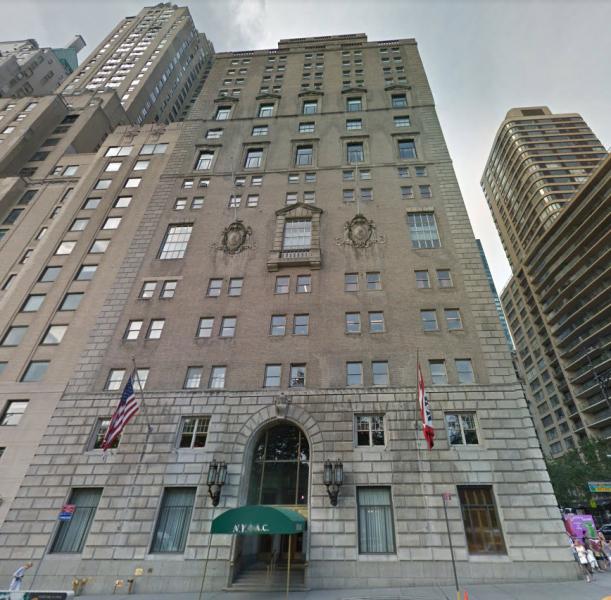



322-foot, 24-story Renaissance-Revival club building completed in 1930. Designed by York & Sawyer with interiors by the Barnet Phillips Co., it replaced a section of the Spanish Flats, an innovative, ahead-of-its-time apartment complex built in 1883 by José F. de Navarro. The New York Athletic Club is a private social club and athletic club in New York City. It was founded in 1868 and has approximately 8,600 members. The club has two facilities, the City House here, located at 180 Central Park South, and Travers Island, the summer home, located in Westchester County. The club introduced the sport of fencing, bicycle racing and squash courts to the United States. Heavyweight champ Jack Dempsey was a member, as is George Steinbrenner. The club's members have subsequently won at least 123 Olympic gold medals. Today the club organizes many sports, including rowing, wrestling, boxing, judo, fencing, swimming, basketball, rugby union, soccer, tennis, handball, squash, snooker, lacrosse and water polo.
The cavernous main building on Central Park South includes two restaurants, a cocktail lounge, library, ballroom, billiard room, meeting rooms, rooftop solarium, and eight floors of guest rooms for members and club guests. The athletic training floors include a swimming pool, basketball courts, boxing rings, a fencing and wrestling room, judo floor, and squash courts.
The building is clad in buff-colored brick with limestone trim and a 2-story rusticated limestone base above a grey granite water table. The main entrance is centered on the 5-bay north facade, through a 2-story round-arch edged by a spiral molding. Bronze-and-glass doors are deeply recessed in an alcove, up a few low steps, with a rounded, black canvas canopy extending out over the sidewalk. Above the doors, the arch has glass infill that is also slightly recessed; the inner edges of the arch in front of the glass have carved panels depicting various classical figures. The arch is topped by a scrolled keystone with helmeted head, and is flanked by a pair of iron double-light fixtures mounted to the wall at the top of the ground floor. There are tall windows in the other four bays at the ground floor, and square window openings at the 2nd floor. A pair of projecting flagpoles are mounted between these outer bays at the 2nd floor, and the base is capped by a band course with a wave motif.
The upper floors have rusticated limestone piers at the ends, and there are paired windows on the 3rd-5th floors. The 6th floor has 2-story, multi-paned windows at the center and end bays; those at the end bays have splayed stone lintels, while the center bay has a much more elaborate treatment, consisting of a rusticated stone enframement rising from a balustraded balcony and capped by a triangular pediment. At the other two bays, the windows are replaced by large cartouches with projecting flagpoles on top. The simple paired windows return on the 8th & 9th floors. A string course sets off the 10th floor, which has 2-story windows in stone surrounds in all five bays. The 12th floor has triple-windows without ornamentation, and another string course sets off the 13th-14th floors, which feature another set of double-height windows in stone surrounds; these are topped by triangular pediments. Finally, the 15th-18th floors have simple paired windows. Here there is a large setback marked by balusters at each bay.
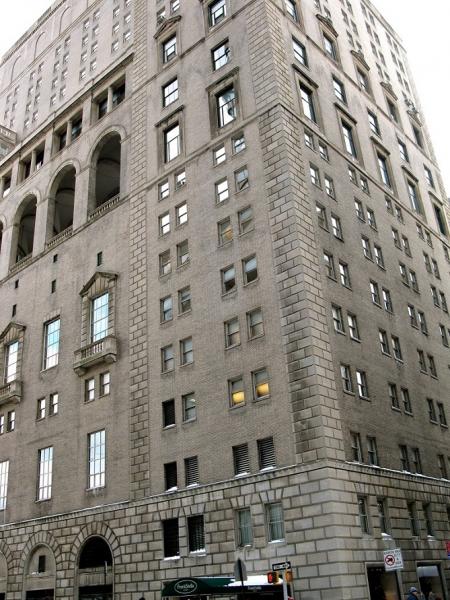
The wider west facade along the avenue spans nine bays, with five large, double-height round-arches in the center. The middle three have stone infill at the 2nd floor with small single-windows (replaced by a metal vent in the southern arch), while the outer two have metal grilles over vents. All five arches have plate-glass windows at the ground floor, with glass doors in the south end of the center and southern arch. The two northern bays have windows like those at the ends of the north facade. The two southern bays have paired windows at the 2nd floor (replaced by metal vents at the northern of these two bays), and plate-glass show-windows in rounded stone moldings at the ground floor (with a glass door in the southernmost bay). A rounded, green canvas canopy cover the bay with the door and extends out over the sidewalk. The base-capping band course from the north facade continues onto this side.
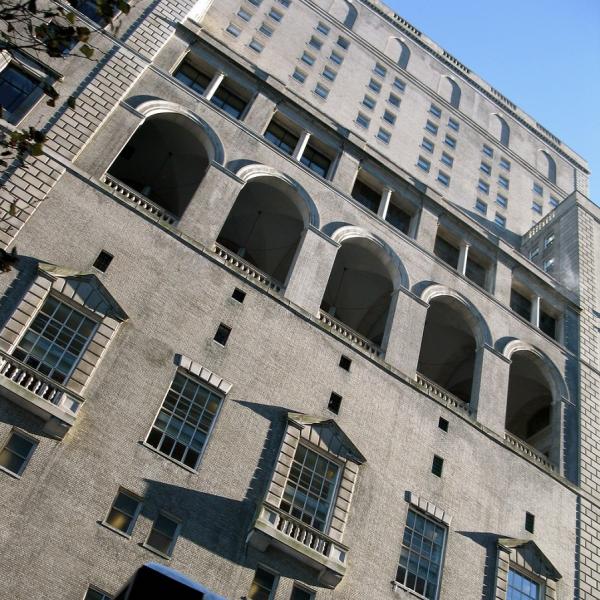
The upper floors have rusticated limestone piers framing the outer-bay sections, which have paired windows at the 3rd-5th floors. The five middle bays have double-height, multi-pane windows at the 3rd-4th floors, and paired windows at the 5th floor. More 2-story, multi-pane windows are found at the 6th-7th floors in the northern bays and the center bays. The middle and end bays of the center section have the same projecting balustrades, surrounds, and pediments as on the north facade, and the other bays have the same splayed lintels. The 8th & 9th floors at the two north bays have paired windows, while the center section has only very small vent openings. The south two bays have paired windows at every floor up through the 9th. A string course sets off the 10th floor, where there is an open-air loggia at the center section of the 10th-12th floors, overlooking the avenue, and consisting of five large arches with vaulted ceilings behind. The north and south end bays have double-height windows in stone surrounds at the 10th-11th floors, and square window openings at the 12th. String courses set off the 13th floor at the north and south bays, where there is another set of 2-story windows in stone surrounds, these topped by triangular pediments. The 15th-18th floors have paired windows, and the lower roof line at the 18th floor is marked by balusters at each bay. The center section has large recessed windows at the 13th-14th floors, set behind paired openings at each bay, separated by round columns. A dentiled cornice caps the 14th floor, where the center section sets back to the upper tower.
The south facade on 58th Street is very similar to the north facade, but somewhat simpler. The ground floor has a secondary entrance in the center bay, and plate-glass show-windows in the west two bays. The eastern bay has a loading dock with a large splayed lintel, and there are stone moldings around the other bays. The upper floors lack any of the north facade's design elements at the 6th floor, instead simply continuing the paired windows. There are however the 2-story stone-enframed windows at the higher floors.
The set-back upper tower has five bays of paired windows at the 15th-18th floors, between the north and south wings, and seven such bays at the 19th-22nd floors. The rusticated end piers continue the frame the facades on the upper tower, and a string course sets off the 23rd-24th floors, which are windowless. They instead have double-height blind arches with keystones. The north and south facades of the upper tower have three bays of paired windows (and arches at the top two floors). A dentiled parapet with balusters at each bay mark the upper roof line.
The roof line at the 24th floor is topped at the center by a 42-by-62-foot solarium lit through quartz glass windows; this area houses a spacious dining room, and there are roof decks to the north and south. At the east end there is a projecting section topped by a mechanical penthouse that rises above the solarium. It has narrow, 2-story blind arches on each side, with a parapet and balusters along the top edges.
www.nyac.org/web/pages/home
archive.org/details/architecturalfor1929unse/page/n603/...
The cavernous main building on Central Park South includes two restaurants, a cocktail lounge, library, ballroom, billiard room, meeting rooms, rooftop solarium, and eight floors of guest rooms for members and club guests. The athletic training floors include a swimming pool, basketball courts, boxing rings, a fencing and wrestling room, judo floor, and squash courts.
The building is clad in buff-colored brick with limestone trim and a 2-story rusticated limestone base above a grey granite water table. The main entrance is centered on the 5-bay north facade, through a 2-story round-arch edged by a spiral molding. Bronze-and-glass doors are deeply recessed in an alcove, up a few low steps, with a rounded, black canvas canopy extending out over the sidewalk. Above the doors, the arch has glass infill that is also slightly recessed; the inner edges of the arch in front of the glass have carved panels depicting various classical figures. The arch is topped by a scrolled keystone with helmeted head, and is flanked by a pair of iron double-light fixtures mounted to the wall at the top of the ground floor. There are tall windows in the other four bays at the ground floor, and square window openings at the 2nd floor. A pair of projecting flagpoles are mounted between these outer bays at the 2nd floor, and the base is capped by a band course with a wave motif.
The upper floors have rusticated limestone piers at the ends, and there are paired windows on the 3rd-5th floors. The 6th floor has 2-story, multi-paned windows at the center and end bays; those at the end bays have splayed stone lintels, while the center bay has a much more elaborate treatment, consisting of a rusticated stone enframement rising from a balustraded balcony and capped by a triangular pediment. At the other two bays, the windows are replaced by large cartouches with projecting flagpoles on top. The simple paired windows return on the 8th & 9th floors. A string course sets off the 10th floor, which has 2-story windows in stone surrounds in all five bays. The 12th floor has triple-windows without ornamentation, and another string course sets off the 13th-14th floors, which feature another set of double-height windows in stone surrounds; these are topped by triangular pediments. Finally, the 15th-18th floors have simple paired windows. Here there is a large setback marked by balusters at each bay.
The wider west facade along the avenue spans nine bays, with five large, double-height round-arches in the center. The middle three have stone infill at the 2nd floor with small single-windows (replaced by a metal vent in the southern arch), while the outer two have metal grilles over vents. All five arches have plate-glass windows at the ground floor, with glass doors in the south end of the center and southern arch. The two northern bays have windows like those at the ends of the north facade. The two southern bays have paired windows at the 2nd floor (replaced by metal vents at the northern of these two bays), and plate-glass show-windows in rounded stone moldings at the ground floor (with a glass door in the southernmost bay). A rounded, green canvas canopy cover the bay with the door and extends out over the sidewalk. The base-capping band course from the north facade continues onto this side.
The upper floors have rusticated limestone piers framing the outer-bay sections, which have paired windows at the 3rd-5th floors. The five middle bays have double-height, multi-pane windows at the 3rd-4th floors, and paired windows at the 5th floor. More 2-story, multi-pane windows are found at the 6th-7th floors in the northern bays and the center bays. The middle and end bays of the center section have the same projecting balustrades, surrounds, and pediments as on the north facade, and the other bays have the same splayed lintels. The 8th & 9th floors at the two north bays have paired windows, while the center section has only very small vent openings. The south two bays have paired windows at every floor up through the 9th. A string course sets off the 10th floor, where there is an open-air loggia at the center section of the 10th-12th floors, overlooking the avenue, and consisting of five large arches with vaulted ceilings behind. The north and south end bays have double-height windows in stone surrounds at the 10th-11th floors, and square window openings at the 12th. String courses set off the 13th floor at the north and south bays, where there is another set of 2-story windows in stone surrounds, these topped by triangular pediments. The 15th-18th floors have paired windows, and the lower roof line at the 18th floor is marked by balusters at each bay. The center section has large recessed windows at the 13th-14th floors, set behind paired openings at each bay, separated by round columns. A dentiled cornice caps the 14th floor, where the center section sets back to the upper tower.
The south facade on 58th Street is very similar to the north facade, but somewhat simpler. The ground floor has a secondary entrance in the center bay, and plate-glass show-windows in the west two bays. The eastern bay has a loading dock with a large splayed lintel, and there are stone moldings around the other bays. The upper floors lack any of the north facade's design elements at the 6th floor, instead simply continuing the paired windows. There are however the 2-story stone-enframed windows at the higher floors.
The set-back upper tower has five bays of paired windows at the 15th-18th floors, between the north and south wings, and seven such bays at the 19th-22nd floors. The rusticated end piers continue the frame the facades on the upper tower, and a string course sets off the 23rd-24th floors, which are windowless. They instead have double-height blind arches with keystones. The north and south facades of the upper tower have three bays of paired windows (and arches at the top two floors). A dentiled parapet with balusters at each bay mark the upper roof line.
The roof line at the 24th floor is topped at the center by a 42-by-62-foot solarium lit through quartz glass windows; this area houses a spacious dining room, and there are roof decks to the north and south. At the east end there is a projecting section topped by a mechanical penthouse that rises above the solarium. It has narrow, 2-story blind arches on each side, with a parapet and balusters along the top edges.
www.nyac.org/web/pages/home
archive.org/details/architecturalfor1929unse/page/n603/...
Wikipedia article: http://en.wikipedia.org/wiki/New_York_Athletic_Club
Nearby cities:
Coordinates: 40°45'58"N 73°58'44"W
- New York Athletic Club at Travers Island 21 km
- Franklin D. Roosevelt Boardwalk 21 km
- Arthur J. Hendrickson Park and Pool 25 km
- Bangor Memorial Park 105 km
- Lake Shore Athletic Complex 284 km
- Peninsula Park 295 km
- Pullen Field 355 km
- Sky Master Field 461 km
- VSU Athletic fields 492 km
- Rocky Mount Athletic Complex 629 km
- Midtown (North Central) 1 km
- Hell's Kitchen (Clinton) 1.4 km
- Manhattan 1.7 km
- Midtown (Manhattan, NY) 1.9 km
- Central Park 2.1 km
- Upper East Side 2.1 km
- Upper West Side 2.3 km
- Hudson County, New Jersey 8.8 km
- Queens 16 km
- The Palisades 22 km