
Friedland Gate (Kaliningrad)
Russia /
Kaliningrad /
Kaliningrad /
prospekt Kalinina
World
/ Russia
/ Kaliningrad
/ Kaliningrad
, 3 km from center (Калининград)
World / Russia / Kaliningrad
museum, fortification, Gothic revival (architecture), city gate, historic landmark
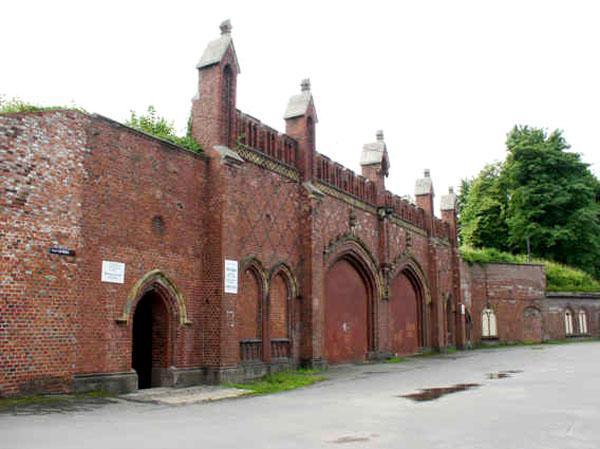
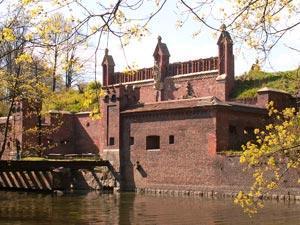
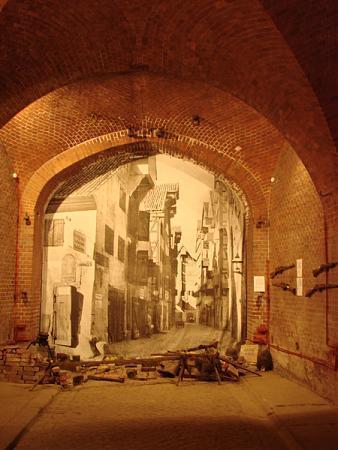
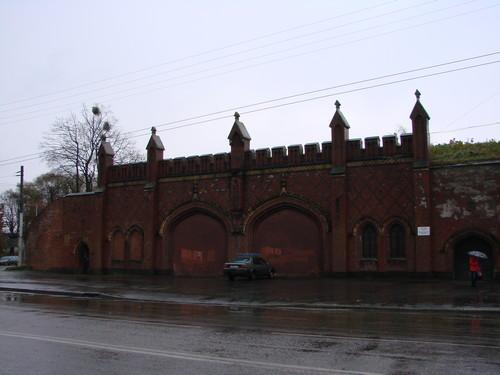
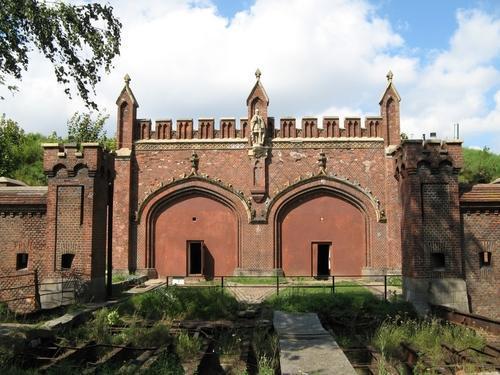
The Friedland Gate is one of eight surviving city gates in Kaliningrad.
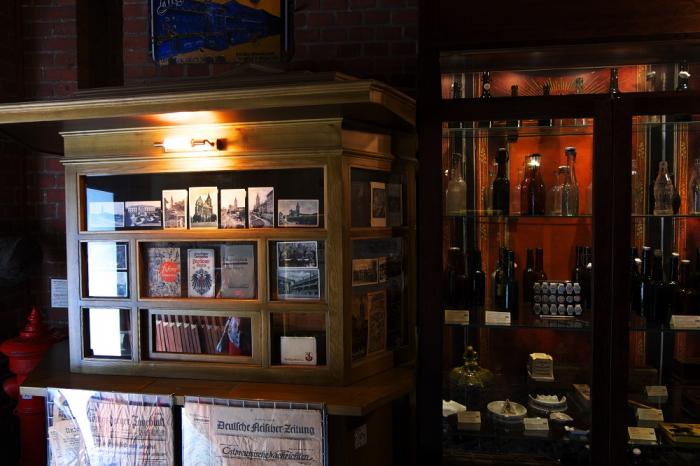
Current Use: Exhibition and meeting spaces; a private museum featuring artifacts from old Königsberg.
Construction Period: approx. 1857–1862.
The Friedland Gate was completed last. Its commissioning marked the completion — with the exception of the meadow front — of Königsberg's rampart line. The design shows a return to elements from Stüler's projects. However, it cannot be said with certainty that Stüler himself designed them. It is more likely that military engineers adapted these elements from other structures.
The Friedland Gate has a wider profile than other city gates. It is even wider than the Brandenburg Gate, which is structurally very similar with its two passages and Gothic decoration.
Architectural Description:
Compared to earlier gates, the Friedland Gate features two passages, each 4.39 m wide (with an arch height of 4.24 m). It is believed that over time it became apparent that a single passage led to congestion with increasing traffic, so a second passage was added. Apart from the second passage, the structure is very similar to all previously described gates.
Two challenges arose during the design of the facade. At the Rossgarten Gate, a wall built on the city side created the impression of a higher passage, giving it a more elegant appearance. The Friedland Gate lacks this wall, so the passages appear exactly as defined by the shape of the vault.
The second challenge was the absence of a central section. Typically, a window or gate is located along the central axis of a building. If this opening is emphasized through enlargement or ornamentation, the design problem is essentially solved. However, when two completely identical large openings must be placed in the center — as in this case — highlighting the center becomes very difficult. Nevertheless, an attempt was made: the buttress was lowered, and both openings were combined into a single large field treated as the center. Above the openings, however, the concept was abandoned: if the buttress is absent below, it was reintroduced above through a different console. A niche was even created here, housing a sculpture. Thus, the facade was stretched lengthwise — rather monotonously.
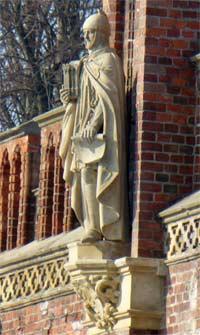
In the aforementioned columned niche stood a statue of Grand Commander Friedrich von Zollern; it has since disappeared. On the identically designed outer facade, in a niche in the same location, stands a statue of Grand Master Siegfried von Feuchtwangen (it survived the war, but like many others, its head was knocked off after 1945).
On the city side, the gate is in good condition. The bricking up of the large gate, carried out during the German era, appears unsatisfactory. On the outer side of the Friedland Gate, a bridge still exists — a feature that has disappeared at other gates. However, this is not the former drawbridge from the Teutonic Order period, but a long, modern steel bridge from the German era. Unfortunately, it is in a dilapidated condition.
Website: www.museum.gazinter.net
Current Use: Exhibition and meeting spaces; a private museum featuring artifacts from old Königsberg.
Construction Period: approx. 1857–1862.
The Friedland Gate was completed last. Its commissioning marked the completion — with the exception of the meadow front — of Königsberg's rampart line. The design shows a return to elements from Stüler's projects. However, it cannot be said with certainty that Stüler himself designed them. It is more likely that military engineers adapted these elements from other structures.
The Friedland Gate has a wider profile than other city gates. It is even wider than the Brandenburg Gate, which is structurally very similar with its two passages and Gothic decoration.
Architectural Description:
Compared to earlier gates, the Friedland Gate features two passages, each 4.39 m wide (with an arch height of 4.24 m). It is believed that over time it became apparent that a single passage led to congestion with increasing traffic, so a second passage was added. Apart from the second passage, the structure is very similar to all previously described gates.
Two challenges arose during the design of the facade. At the Rossgarten Gate, a wall built on the city side created the impression of a higher passage, giving it a more elegant appearance. The Friedland Gate lacks this wall, so the passages appear exactly as defined by the shape of the vault.
The second challenge was the absence of a central section. Typically, a window or gate is located along the central axis of a building. If this opening is emphasized through enlargement or ornamentation, the design problem is essentially solved. However, when two completely identical large openings must be placed in the center — as in this case — highlighting the center becomes very difficult. Nevertheless, an attempt was made: the buttress was lowered, and both openings were combined into a single large field treated as the center. Above the openings, however, the concept was abandoned: if the buttress is absent below, it was reintroduced above through a different console. A niche was even created here, housing a sculpture. Thus, the facade was stretched lengthwise — rather monotonously.
In the aforementioned columned niche stood a statue of Grand Commander Friedrich von Zollern; it has since disappeared. On the identically designed outer facade, in a niche in the same location, stands a statue of Grand Master Siegfried von Feuchtwangen (it survived the war, but like many others, its head was knocked off after 1945).
On the city side, the gate is in good condition. The bricking up of the large gate, carried out during the German era, appears unsatisfactory. On the outer side of the Friedland Gate, a bridge still exists — a feature that has disappeared at other gates. However, this is not the former drawbridge from the Teutonic Order period, but a long, modern steel bridge from the German era. Unfortunately, it is in a dilapidated condition.
Website: www.museum.gazinter.net
Nearby cities:
Coordinates: 54°41'43"N 20°31'18"E
- Königsberg Castle 1.9 km
- Musem of the World Ocean 2.3 km
- Kaliningrad Zoo 4.1 km
- Fort Nr. 5 (Friedrich Wilhelm III) 8.3 km
- Gvardeysk Prison 36 km
- Fortress Pillau 41 km
- усадьба Маера. 118 km
- Old fishing ships field 119 km
- Remains of Klaipeda Castle 119 km
- Neringa fort 120 km
- Yuzhny park 0.6 km
- Lomse 0.9 km
- Second Estakadny bridge 0.9 km
- Old town 1.5 km
- Tramway depot 1.6 km
- Тролебусный парк 1.7 km
- Moskovsky District 4 km
- Leningradsky District 4.7 km
- Guryevsky municipal district 7.8 km
- Tsentralny District 8.7 km