Temple Mount complex (Jerusalem)

Israel / Jerusalem / Jerusalem
 islam, holy site / sacred place

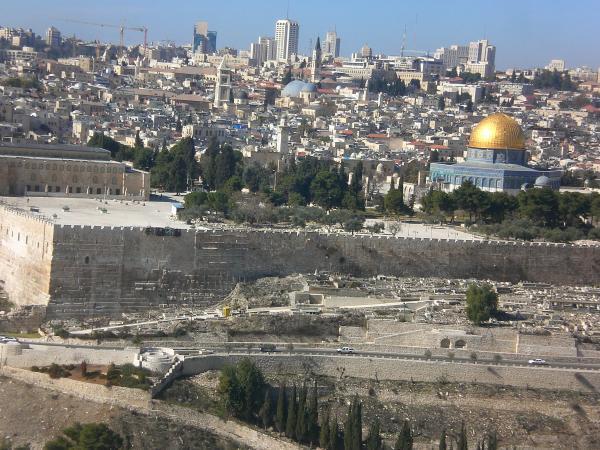
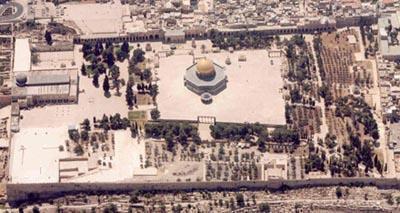
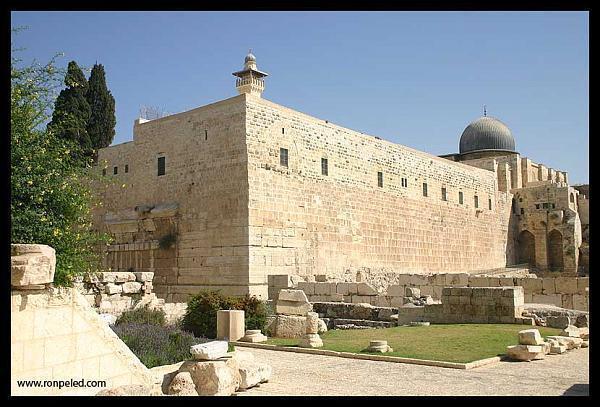
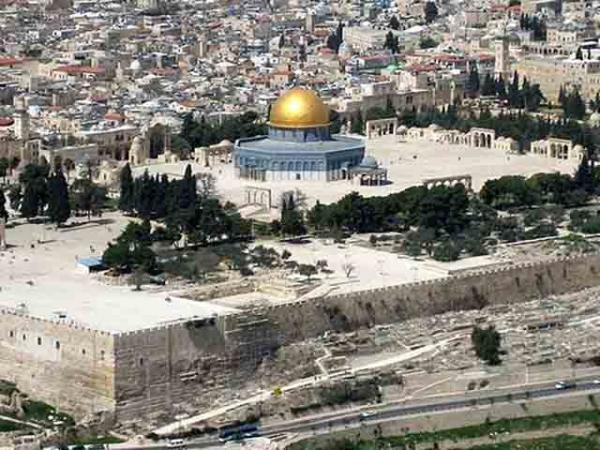
The Temple Mount is the site of First and Second temples in Jerusalem. The present site is a flat plaza surrounded by retaining walls (including the Western Wall) which was built during the reign of Herod the Great for an expansion of the temple

www.youtube.com/watch?v=h3W9iX0SnCo

www.youtube.com/watch?v=uP4-LTyLTZM
Nearby cities:
Coordinates:   31°46'40"N   35°14'8"E

Comments

  • PD (Any change of the title of this place will be considered vandalism, so if you change the name without any valid reason you could be limited or banned, and remember wikimapia is not a political or religious forum)
  • Who are these walls and when it built?
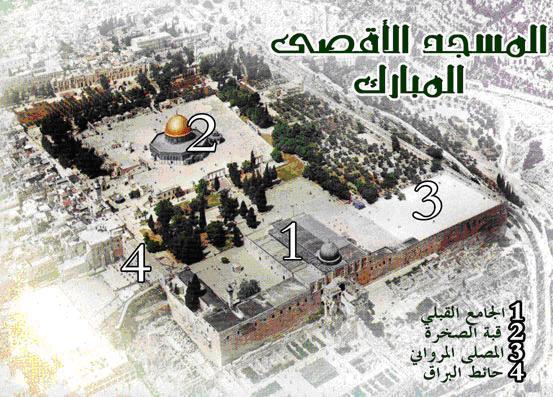
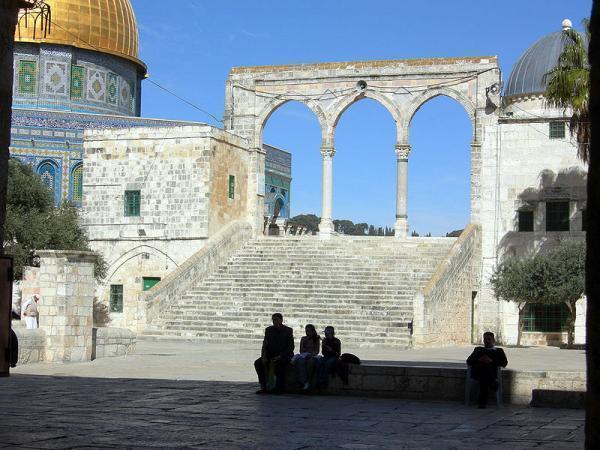
  • Isn't the Masjid Al-Aqsa just the mosque with the brown dome, south of the Dome of the Rock?
  • You can find you answer here. http://www.smallkhadem.com/2009/10/dont-confuse-with-al-aqsa-mosque.html
  • NO the mosque with brown dome is almusalla alqebli mosque but almasjid al aqsa is all the area including this mosque and dome of the rock with area around both (noble sanctuary)
  • First Temple Main article: Solomon's Temple Model of the First Temple, included in a Bible manual for teachers (1922) The Hebrew Bible says that the First Temple was built by King Solomon,[9] completed in 957 BCE.[10] According to the Book of Deuteronomy, as the sole place of Israelite korban (sacrifice),[11] the Temple replaced the Tabernacle constructed in the Sinai under the auspices of Moses, as well as local sanctuaries, and altars in the hills.[12] This Temple was sacked a few decades later by Shoshenq I, Pharaoh of Egypt.[13] Although efforts were made at partial reconstruction, it was only in 835 BCE when Jehoash, King of Judah, in the second year of his reign invested considerable sums in reconstruction, only to have it stripped again for Sennacherib, King of Assyria c. 700 BCE.[citation needed] The First Temple was totally destroyed in the Siege of Jerusalem by the Neo-Babylonian Empire in 586 BCE.[c]
  • According to the Book of Ezra, construction of the Second Temple was called for by Cyrus the Great and began in 538 BCE,[14] after the fall of the Neo-Babylonian Empire the year before.[15] According to some 19th-century calculations, work started later, in April 536 BCE[16] and was completed on 21 February, 515 BCE, 21 years after the start of the construction. This date is obtained by coordinating Ezra 3:8–10[17] (the third day of Adar, in the sixth year of the reign of Darius the Great) with historical sources.[18] The accuracy of these dates is contested by some modern researchers, who consider the biblical text to be of later date and based on a combination of historical records and religious considerations, leading to contradictions between different books of the Bible and making the dates unreliable.[19] The new temple was dedicated by the Jewish governor Zerubbabel. However, with a full reading of the Book of Ezra and the Book of Nehemiah, there were four edicts to build the Second Temple, which were issued by three kings: Cyrus in 536 BCE (Ezra ch. 1), Darius I of Persia in 519 BCE (ch. 6), and Artaxerxes I of Persia in 457 BCE (ch. 7), and finally by Artaxerxes again in 444 BCE (Nehemiah ch. 2).[20] According to classical Jewish sources, another demolition of the Temple was narrowly avoided in 332 BCE when the Jews refused to acknowledge the deification of Alexander the Great of Macedonia, but Alexander was placated at the last minute by astute diplomacy and flattery.[21] After the death of Alexander on 13 June 323 BCE, and the dismembering of his empire, the Ptolemies came to rule over Judea and the Temple. Under the Ptolemies, the Jews were given many civil liberties and lived content under their rule. However, when the Ptolemaic army was defeated at Panium by Antiochus III of the Seleucids in 200 BCE, this policy changed. Antiochus wanted to Hellenise the Jews, attempting to introduce the Greek pantheon into the temple. Moreover, a rebellion ensued and was brutally crushed, but no further action by Antiochus was taken, and when Antiochus died in 187 BCE at Luristan, his son Seleucus IV Philopator succeeded him. However, his policies never took effect in Judea, since he was assassinated the year after his ascension to the throne.[citation needed] Antiochus IV Epiphanes succeeded his older brother to the Seleucid throne and immediately adopted his father's previous policy of universal Hellenisation. The Jews rebelled again and Antiochus, in a rage, retaliated in force. Considering the previous episodes of discontent, the Jews became incensed when the religious observances of Sabbath and circumcision were officially outlawed. When Antiochus erected a statue of Zeus in their temple and Hellenic priests began sacrificing pigs (the usual sacrifice offered to the Greek gods in the Hellenic religion), their anger began to spiral. When a Greek official ordered a Jewish priest to perform a Hellenic sacrifice, the priest (Mattathias) killed him. In 167 BCE, the Jews rose up en masse behind Mattathias and his five sons to fight and won their freedom from Seleucid authority. Mattathias' son Judah Maccabee, now called "The Hammer", re-dedicated the temple in 164 BCE and the Jews celebrate this event to this day as the central theme of the non-biblical festival of Hanukkah.[9] During the Roman era, Pompey entered (and thereby desecrated) the Holy of Holies in 63 BCE, but left the Temple intact.[22][23][24] In 54 BCE, Crassus looted the Temple treasury.[25][26] Around 20 BCE, the building was renovated and expanded by Herod the Great, and became known as Herod's Temple. It was destroyed by the Romans in 70 CE during the Siege of Jerusalem. During the Bar Kokhba revolt against the Romans in 132–135 CE, Simon bar Kokhba and Rabbi Akiva wanted to rebuild the Temple, but bar Kokhba's revolt failed and the Jews were banned from Jerusalem (except for Tisha B'Av) by the Roman Empire. The emperor Julian allowed the Temple to be rebuilt, but the Galilee earthquake of 363 ended all attempts ever since.[citation needed]
  • = Jews came to this place ~1500 years earlier then arabs. It's scientific fact.
  • than, not then, ffs )
  • Show all comments