
HAARP Research Station
USA /
Alaska /
Gakona /
Tok Cut-Off (Gakona-Tok)
World
/ USA
/ Alaska
/ Gakona
World / United States / Alaska
science, research, transmitter

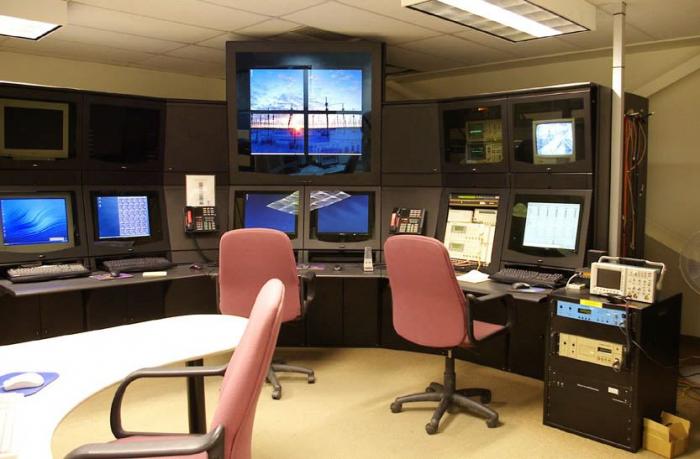
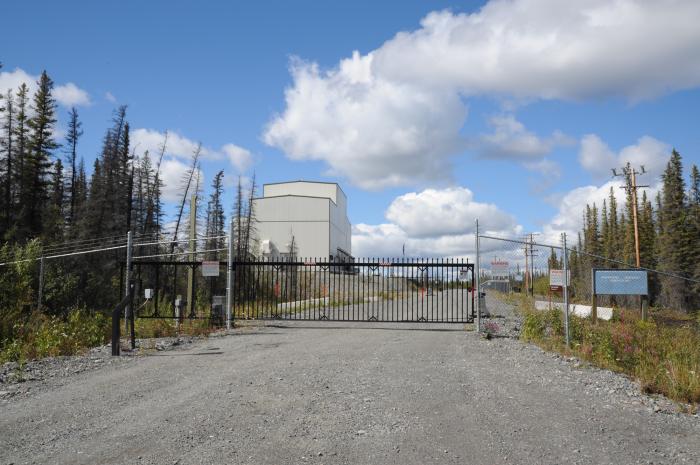

Gakona, Alaska, USA
www.haarp.alaska.edu/
Program Purpose
HAARP is a scientific endeavor aimed at studying the properties and behavior of the ionosphere, with particular emphasis on being able to understand and use it to enhance communications and surveillance systems for both civilian and defense purposes.
The HAARP program is committed to developing a world class ionospheric research facility consisting of:
The Ionospheric Research Instrument (IRI), a high power transmitter facility operating in the High Frequency (HF) range. The IRI will be used to temporarily excite a limited area of the ionosphere for scientific study.
A sophisticated suite of scientific (or diagnostic) instruments that will be used to observe the physical processes that occur in the excited region.
Observation of the processes resulting from the use of the IRI in a controlled manner will allow scientists to better understand processes that occur continuously under the natural stimulation of the sun.
Scientific instruments installed at the HAARP Observatory will be useful for a variety of continuing research efforts which do not involve the use of the IRI but are strictly passive. Among these studies include ionospheric characterization using satellite beacons, telescopic observation of the fine structure in the aurora, and documentation of long-term variations in the ozone layer
For More Information About HAARP
Visit: Frequently Asked Questions about HAARP at www.haarp.alaska.edu/ firt!
Please contact:
Office of Public Affairs
Air Force Research Laboratory
3550 Aberdeen Ave S.E.
Kirtland AFB NM 87117-5776
E-Mail
You may submit questions of a technical nature to:
infohaarp@haarp.alaska.edu
www.haarp.alaska.edu/
Program Purpose
HAARP is a scientific endeavor aimed at studying the properties and behavior of the ionosphere, with particular emphasis on being able to understand and use it to enhance communications and surveillance systems for both civilian and defense purposes.
The HAARP program is committed to developing a world class ionospheric research facility consisting of:
The Ionospheric Research Instrument (IRI), a high power transmitter facility operating in the High Frequency (HF) range. The IRI will be used to temporarily excite a limited area of the ionosphere for scientific study.
A sophisticated suite of scientific (or diagnostic) instruments that will be used to observe the physical processes that occur in the excited region.
Observation of the processes resulting from the use of the IRI in a controlled manner will allow scientists to better understand processes that occur continuously under the natural stimulation of the sun.
Scientific instruments installed at the HAARP Observatory will be useful for a variety of continuing research efforts which do not involve the use of the IRI but are strictly passive. Among these studies include ionospheric characterization using satellite beacons, telescopic observation of the fine structure in the aurora, and documentation of long-term variations in the ozone layer
For More Information About HAARP
Visit: Frequently Asked Questions about HAARP at www.haarp.alaska.edu/ firt!
Please contact:
Office of Public Affairs
Air Force Research Laboratory
3550 Aberdeen Ave S.E.
Kirtland AFB NM 87117-5776
You may submit questions of a technical nature to:
infohaarp@haarp.alaska.edu
Wikipedia article: http://en.wikipedia.org/wiki/Haarp
Nearby cities:
Coordinates: 62°23'28"N 145°7'52"W
- Alaska Botanical Garden 279 km
- Georgeson Botanic Garden 306 km
- West Ridge Research Building 306 km
- Arctic Health Research Building 306 km
- UAF West Ridge 306 km
- Mars Base Zero 307 km
- Large Animal Research Station 309 km
- Poker Flat Research Range 325 km
- Kodiak SuperDARN Radar 661 km
- King Salmon SuperDARN Radar 752 km
- Mount Drum (12,010ft) 40 km
- Tazlina Lake 87 km
- Klutina Lake 89 km
- Nabesna Glacier 111 km
- Kennicott Glacier 141 km
- Tetlin Lake 144 km
- Gerstle River Arctic Test Site 155 km
- Donnelly Training Area, AK 175 km
- Fort Greely, AK 177 km
- Carden Hills 204 km