
Pirita klooster (Tallinn)
Estonia /
Harju /
Viimsi /
Tallinn /
Merivälja tee, 9
World
/ Estonia
/ Harju
/ Viimsi
World / Estonia / Harju / Tallinn
museum, school, ruins, place with historical importance, monastery, interesting place, concert hall, listed building / architectural heritage, historical building, tourist attraction


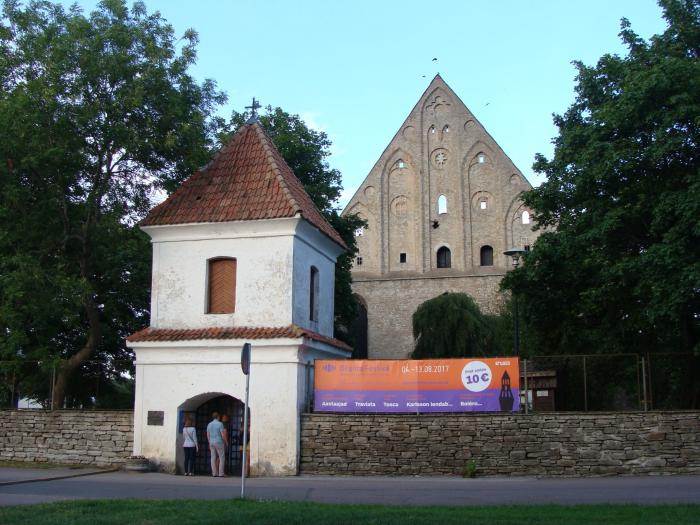

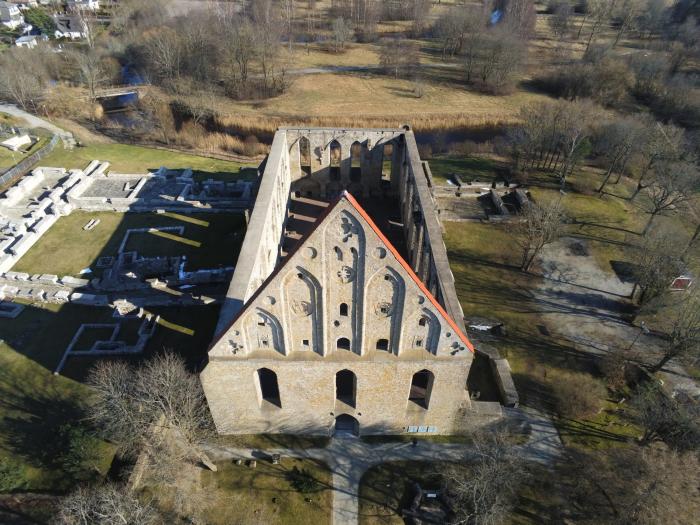
The construction of the Pirita (Order of St. Bridget) Monastery began in 1417, led by Hinrich Swalbart, who is also the architect of the master plan of the monastery buildings and the church. The plot of land was donated to the monastery by the Livonian Order. Pirita Monastery was the largest in Old Livonia at the time, and its church, with its 1,360 square meters of area, was the largest church building in medieval Estonia. The first four nuns arrived in Pirita as early as 1412, and the monastery church was completed and consecrated in 1436. A distinctive feature of the Birgitta Order was the twin monasteries, which meant that both monks and nuns could live in the monastery, but they were strictly separated from each other and did not meet face to face, even during prayer or worship. The spiritual ideal of the monastery congregation was the first Jerusalem congregation, where, following the example of Jesus Christ and his 12 apostles, there were 13 priests and 72 students, with the nuns' example being the Virgin Mary, and the brothers' example being the Apostle Peter. In the Middle Ages, the Order of Saint Birgitta had dozens of monasteries.
According to the rule of St. Bridget, a twin monastery could have a maximum of 85 sisters and 25 brothers (of whom 13 were priests, 4 were deacons and 8 were lay brothers). The nuns and monks were located on opposite sides of the church building, which was common to both. In the middle of both the women's and men's cloisters of the monastery was a rectangular courtyard, which was a place of contemplation and around which were located residential buildings. The courtyard was surrounded by an “endless path” symbolizing eternity – a crosswalk, a place of gathering and walking. There was a separate entrance to the monastery church from the men's and women's cloisters, and the brothers and sisters also had separate and secluded prayer places in the church.
According to the rule of St. Bridget, a twin monastery could have a maximum of 85 sisters and 25 brothers (of whom 13 were priests, 4 were deacons and 8 were lay brothers). The nuns and monks were located on opposite sides of the church building, which was common to both. In the middle of both the women's and men's cloisters of the monastery was a rectangular courtyard, which was a place of contemplation and around which were located residential buildings. The courtyard was surrounded by an “endless path” symbolizing eternity – a crosswalk, a place of gathering and walking. There was a separate entrance to the monastery church from the men's and women's cloisters, and the brothers and sisters also had separate and secluded prayer places in the church.
Wikipedia article: https://en.wikipedia.org/wiki/Pirita_Convent
Nearby cities:
Coordinates: 59°28'0"N 24°50'10"E
- Estonian Maritime Museum 5.9 km
- Lennus Seaplane Harbour + Port 5.9 km
- Estonian Open Air Museum 12 km
- Kuivasaari 72 km
- Seurasaari 80 km
- Herttoniemi manor 82 km
- Fagervik 85 km
- Railway and Communications Museum 95 km
- Billnäs ironworks 96 km
- Hanko Front Line Museum 102 km
- Pirita 0.6 km
- Lillepi Park 0.8 km
- Maarjamäe 1.1 km
- Pirita Forest 1.3 km
- Kloostrimets Forest 1.5 km
- Pirita 1.8 km
- Kose 1.9 km
- Lasnamäe 3.7 km
- Tallinn Bay 14 km
- Harju County 16 km