
Guryongpo Japanese Houses Street (Pohang)
Korea (South) /
Kyongsangbuk /
Ochon /
Pohang
World
/ Korea (South)
/ Kyongsangbuk
/ Ochon
historic district
Add category


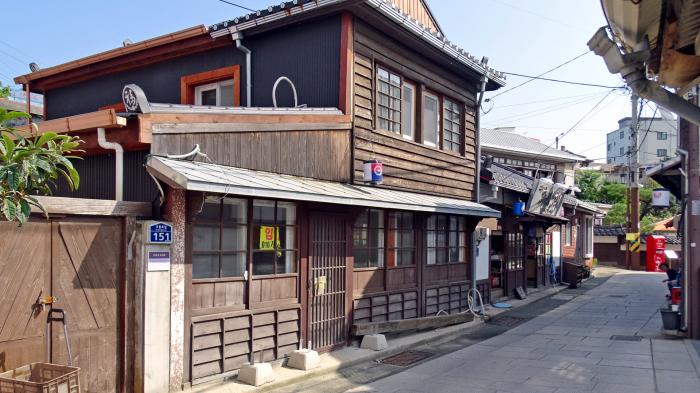


Guryongpo Japanese Houses Street;
In the 1920s, during the time of the Japanese occupation, Japan established Guryongpo Port, tuning Guryongpo into the largest fishery base in the East Sea region. As Japan controlled the fishing industry, Japanese fishermen began to flock to Guryongpo.
The site of the current Guryongpo Japanese Houses Street served as a residential zone as well as a commercial center that was packed with hospitals, restaurants, stores and inns.
After the Japanese residents left, the houses they inhabited were demolished in a process of urban development, or had been neglected over the years.
In order to prevent a painful time in history from being forgotten, the Guryongpo Japanese Houses Street project was launched in March 2011. The city government decide to repair 28 buildings located along a 457m/712ft long alley, now known as the Guryongpo Japanese Houses Street.
Guryongpo Modern Culture & History Street vividly showcases the economic affluence that the people of Japan enjoyed over Koreans as a result of the exploitation, and is widely recognized as an exemplary case of urban regeneration.
In the 1920s, during the time of the Japanese occupation, Japan established Guryongpo Port, tuning Guryongpo into the largest fishery base in the East Sea region. As Japan controlled the fishing industry, Japanese fishermen began to flock to Guryongpo.
The site of the current Guryongpo Japanese Houses Street served as a residential zone as well as a commercial center that was packed with hospitals, restaurants, stores and inns.
After the Japanese residents left, the houses they inhabited were demolished in a process of urban development, or had been neglected over the years.
In order to prevent a painful time in history from being forgotten, the Guryongpo Japanese Houses Street project was launched in March 2011. The city government decide to repair 28 buildings located along a 457m/712ft long alley, now known as the Guryongpo Japanese Houses Street.
Guryongpo Modern Culture & History Street vividly showcases the economic affluence that the people of Japan enjoyed over Koreans as a result of the exploitation, and is widely recognized as an exemplary case of urban regeneration.
Nearby cities:
Coordinates: 35°59'27"N 129°33'36"E
- Gunseomyeon 299 km
- Russky Island 809 km
- Lüshunkou District 818 km
- Old city of Chenjia 964 km
- Tanggu District 1106 km
- Ruins of Wuguotou city wall (Jin dynasty) 1152 km
- Ust'-Ilimsk 3142 km
- Angkor 3593 km
- Japanese Occupation Site, Kiska Island 4133 km
- Kuala Selangor 4650 km
- Pohang Blue Valley Development Project (National Industrial Complex) 6.1 km
- 해병대 1사단 12 km
- Ilwol-dong 12 km
- Pohang Airport (G-815/K-3) 13 km
- POSCO Pohang Works 14 km
- Hyeongsan-gang(river.) 20 km
- G A M P O eup,,,the solodarity of work from INA 21 km
- Baekdusan 26 km
- Hyeongjesan 29 km
- Ohjeongsan 31 km