
Rubin Museum of Art (New York City, New York)
| interesting place
USA /
New Jersey /
Hoboken /
New York City, New York /
West 17th Street, 150
World
/ USA
/ New Jersey
/ Hoboken
museum, interesting place
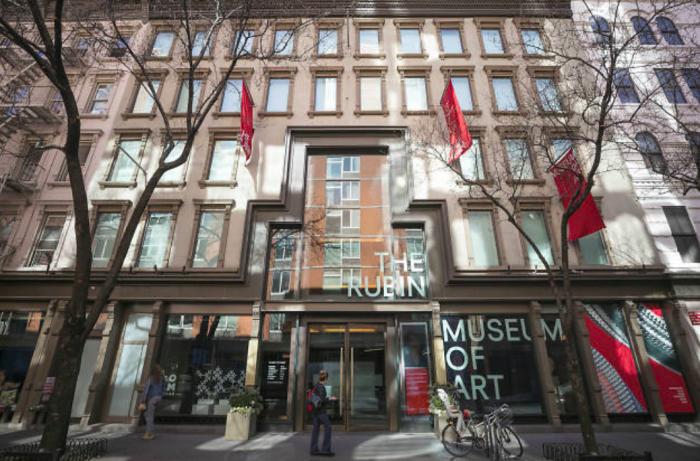
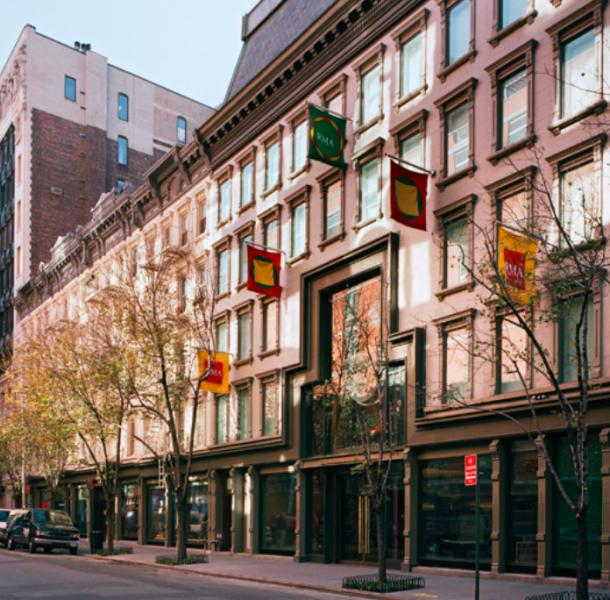
Art museum housed in several joined buildings that were originally separate structures along 17th Street. The museum originated from a private collection of Himalayan art which Donald and Shelley Rubin had been assembling since 1974. In 1998, the Rubins paid $22 million for the building that had been occupied by the flagship of Barneys New York, a high-end department store that had filed for bankruptcy.
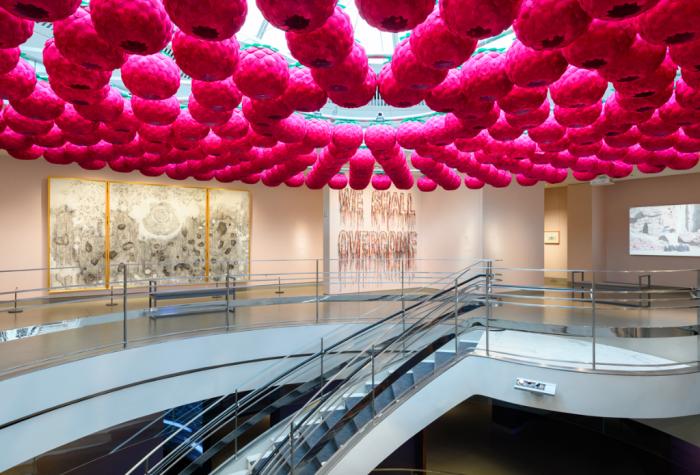
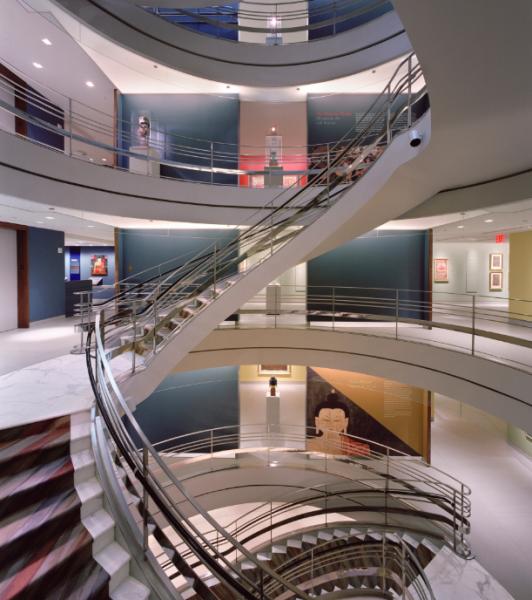
The building was remodeled as a museum by Beyer Blinder Belle Architects & Planners. The 1980's 6-story spiral staircase by Andrée Putman was left intact to become the center of the 25,000 square feet of exhibition space. The museum opened in October 2004, and displays more than 1,000 objects including paintings, sculpture, and textiles, as well as ritual objects from the 2nd to the 20th centuries.
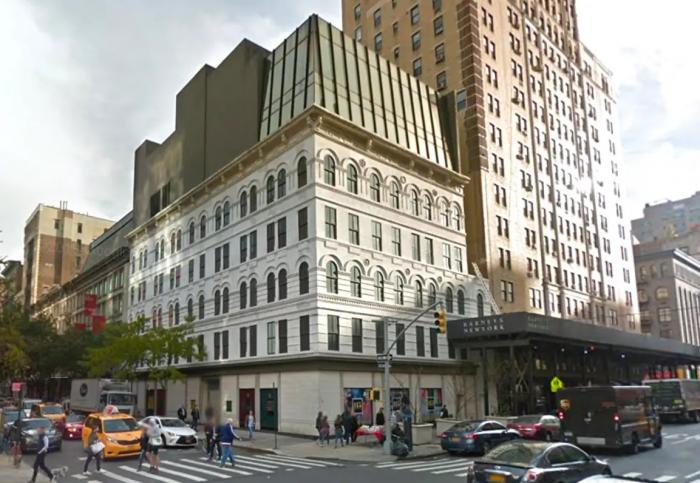
The westernmost building, also fronting on 7th Avenue, was originally five stories tall and completed in 1924. A modernist rooftop addition was built in 2000, consisting of a tall section of brown-painted concrete toward the east, and an angled curtain wall of black metal and glass at the 7th Avenue side. The original building is clad in white-painted stone, with seven bays of paired windows, along with two single-window end bays on 17th Street, and two bays of paired windows at the south end of the west facade, with four single-windows at the north end. There is a black metal cornice above the ground floor, which has small, fluted grey iron piers. The 2nd & 3rd floor have horizontal banding, and a dentiled band course between them. The windows on the 3rd & 5th floors are round-arched, and the 5th floor is topped by a white cornice with brackets, dentils and panels.
To the east is a 5-story building that contains the main entrance to the museum. It was originally completed in 1885, ten windows across, with a cast-iron and glass ground floor. During the renovation for the museum, a staggered cutout above the main entrance was taken out of the 2nd & 3rd floors, framed in brown metal. The remaining windows have stone surrounds and cornices. The facade is topped by a dark brown roof cornice with modillions and dentils.
Farther east is a long facade very similar in design to the building to the west. It also has a cast-iron and glass ground floor and the same type of surrounds at the windows. It also has a matching roof cornice.
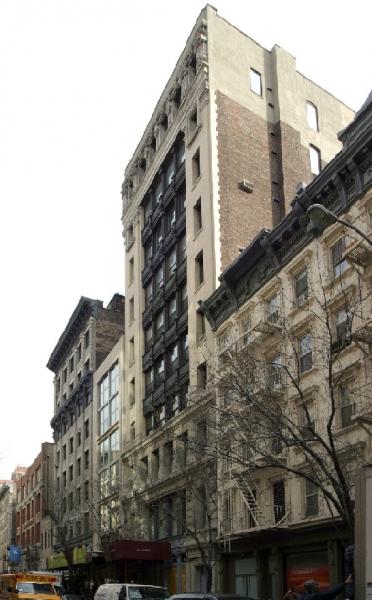
The easternmost facade is a 123-foot, 10-story Italian-Renaissance building completed in 1910 as a commercial loft building. It has a 2-story base with limestone end bays with grey cast-iron in the middle. There are twin entrances in the end bays, with recessed doors. There are cartouches bearing the numbers 138 and 140 between the framing pilasters, and a multi-level entablature above. The 3rd floor is transitional, and also clad in limestone, with four windows in the center bays. The upper floors have beige brick-clad end bays, with a black cast-iron middle section that has four windows per floor, divided by fluted piers. At the 9th floor the end bays have projecting stone surrounds, breaking dentiled cornices. Another cornice runs across the top of the 9th floor. The top floor is all stone with six even bays of windows and ornamented piers. The ground floor was occupied by the Rubin Museum of Art Gift Shop. The museum's exhibits were closed to visitors at this location at the end of 2024.
The building was remodeled as a museum by Beyer Blinder Belle Architects & Planners. The 1980's 6-story spiral staircase by Andrée Putman was left intact to become the center of the 25,000 square feet of exhibition space. The museum opened in October 2004, and displays more than 1,000 objects including paintings, sculpture, and textiles, as well as ritual objects from the 2nd to the 20th centuries.
The westernmost building, also fronting on 7th Avenue, was originally five stories tall and completed in 1924. A modernist rooftop addition was built in 2000, consisting of a tall section of brown-painted concrete toward the east, and an angled curtain wall of black metal and glass at the 7th Avenue side. The original building is clad in white-painted stone, with seven bays of paired windows, along with two single-window end bays on 17th Street, and two bays of paired windows at the south end of the west facade, with four single-windows at the north end. There is a black metal cornice above the ground floor, which has small, fluted grey iron piers. The 2nd & 3rd floor have horizontal banding, and a dentiled band course between them. The windows on the 3rd & 5th floors are round-arched, and the 5th floor is topped by a white cornice with brackets, dentils and panels.
To the east is a 5-story building that contains the main entrance to the museum. It was originally completed in 1885, ten windows across, with a cast-iron and glass ground floor. During the renovation for the museum, a staggered cutout above the main entrance was taken out of the 2nd & 3rd floors, framed in brown metal. The remaining windows have stone surrounds and cornices. The facade is topped by a dark brown roof cornice with modillions and dentils.
Farther east is a long facade very similar in design to the building to the west. It also has a cast-iron and glass ground floor and the same type of surrounds at the windows. It also has a matching roof cornice.
The easternmost facade is a 123-foot, 10-story Italian-Renaissance building completed in 1910 as a commercial loft building. It has a 2-story base with limestone end bays with grey cast-iron in the middle. There are twin entrances in the end bays, with recessed doors. There are cartouches bearing the numbers 138 and 140 between the framing pilasters, and a multi-level entablature above. The 3rd floor is transitional, and also clad in limestone, with four windows in the center bays. The upper floors have beige brick-clad end bays, with a black cast-iron middle section that has four windows per floor, divided by fluted piers. At the 9th floor the end bays have projecting stone surrounds, breaking dentiled cornices. Another cornice runs across the top of the 9th floor. The top floor is all stone with six even bays of windows and ornamented piers. The ground floor was occupied by the Rubin Museum of Art Gift Shop. The museum's exhibits were closed to visitors at this location at the end of 2024.
Wikipedia article: https://en.wikipedia.org/wiki/Rubin_Museum_of_Art
Nearby cities:
Coordinates: 40°44'24"N 73°59'51"W
- Museum Mile 6.6 km
- Snug Harbor Cultural Center & Botanical Garden 14 km
- Teaneck Creek conservancy 16 km
- Salt Marsh Nature Center 16 km
- Floyd Bennett Field Park 17 km
- Greenbelt Conservancy of Staten Island 20 km
- Untermyer Park & Gardens 27 km
- Greenwood Gardens 27 km
- Frelinghuysen Arboretum 40 km
- Fosterfields Living Historical Farm 44 km
- West Village 0.7 km
- Chelsea 0.8 km
- Greenwich Village 0.8 km
- West Chelsea 1 km
- Lower (Downtown) Manhattan 2.1 km
- Manhattan 5.1 km
- Hudson County, New Jersey 6.4 km
- Brooklyn 12 km
- Queens 15 km
- The Palisades 25 km