
Vonitsa Castle
Greece /
Aitolia kai Akarnania /
Vynitsa /
World
/ Greece
/ Aitolia kai Akarnania
/ Vynitsa
, 1 km from center (Βόνιτσα)
World / Greece / Ionioi Nisoi
castle, fortification, Medieval / Middle Ages, interesting place

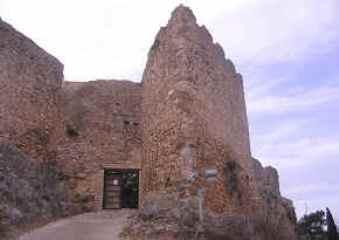
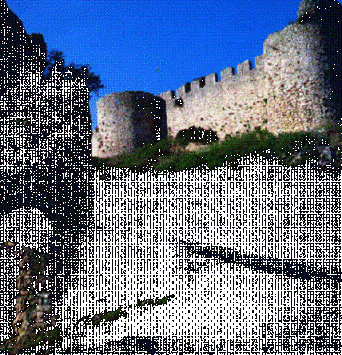


The first evidence for the existence of the Byzantine city that existed since the end of the 10th century.
The castle was built in the 11th century (circa 1070) for Comnenian emperors by the Venetians, who received from Byzantium the privilege to build the fort (and to commercially exploit the harbor).
After 1204, Vonitsa was part of Epirus. In 1294 was the prince of Taranto as part of the dowry of his daughter Despot of Epirus. To 1362 the house was acquired Tocco of Cephalonia and lose it again in 1448 at the hands of the Venetians.
For the Venetian fortresses Vonitsa and Lepanto were strategically located, serving the financial and military policy in the Ionian Sea. The three forts at the entrance of Amvrakikos, Preveza, Vonitsa and St. Maura (Lefkada) headed by Venetian Intendant.
The Turks conquered Vonitsa in 1479, after the end of the First Tourkovenetikou war.
The Venetians returned under Morosini in 1684 and the Turks retook 1714.
The final configuration of the castle was currently mainly by the Venetians and the Turks.
In 1800 he spent a while in the possession of French but who lost to Ali Pasha, who at that time began to build castles with frantic pace in the region.
The Greeks occupied castle in the revolution of 1821 but seems not kept it because it is stated that it remained a small Turkish force in it. Eventually Vonitsa became Greek in 1829.
The most important historical event connected with the castle Vonitsa is death in this Norman conqueror of Sicily, Robert Guiscard, in 1085 (although the prevailing opinion is that he died in Lixouri).
The castle was built in the 11th century (circa 1070) for Comnenian emperors by the Venetians, who received from Byzantium the privilege to build the fort (and to commercially exploit the harbor).
After 1204, Vonitsa was part of Epirus. In 1294 was the prince of Taranto as part of the dowry of his daughter Despot of Epirus. To 1362 the house was acquired Tocco of Cephalonia and lose it again in 1448 at the hands of the Venetians.
For the Venetian fortresses Vonitsa and Lepanto were strategically located, serving the financial and military policy in the Ionian Sea. The three forts at the entrance of Amvrakikos, Preveza, Vonitsa and St. Maura (Lefkada) headed by Venetian Intendant.
The Turks conquered Vonitsa in 1479, after the end of the First Tourkovenetikou war.
The Venetians returned under Morosini in 1684 and the Turks retook 1714.
The final configuration of the castle was currently mainly by the Venetians and the Turks.
In 1800 he spent a while in the possession of French but who lost to Ali Pasha, who at that time began to build castles with frantic pace in the region.
The Greeks occupied castle in the revolution of 1821 but seems not kept it because it is stated that it remained a small Turkish force in it. Eventually Vonitsa became Greek in 1829.
The most important historical event connected with the castle Vonitsa is death in this Norman conqueror of Sicily, Robert Guiscard, in 1085 (although the prevailing opinion is that he died in Lixouri).
Nearby cities:
Coordinates: 38°55'14"N 20°53'3"E
- Αncient Nicopolis 18 km
- Kanali 25 km
- Zalongo Cliff 31 km
- Fortress Forest 84 km
- Ligiades, Ioannina 86 km
- Southernmost point of Albania 99 km
- "Stone Forest" 110 km
- Perama 113 km
- Old Town of Corfu 115 km
- Butrint 119 km
- Voulkaria Lake 7.5 km
- Ambracian Gulf 8.4 km
- Aktio - Vonitsa Municipality 12 km
- Peratia Aktion-Vonitsa 14 km
- Pogonia Aktion - Vonitsa 14 km
- Plagia - Aktion Vonitsa 15 km
- Πάλαιρος Ακτίου - Βόνιτσας Δημοτικό Διαμέρισμα Παλαίρου του Δήμου Ακτίου-Βόνιτσας 15 km
- Akarnanika Mountains 18 km
- Prefecture of Preveza 35 km
- Peripheral unit of Aetolia-Acarnania 48 km