
City Palace Complex
India /
Rajasthan /
Jaipur /
World
/ India
/ Rajasthan
/ Jaipur
World / India / Rajasthan / Jaipur
hotel, museum, place with historical importance, fortification, interesting place, historical building
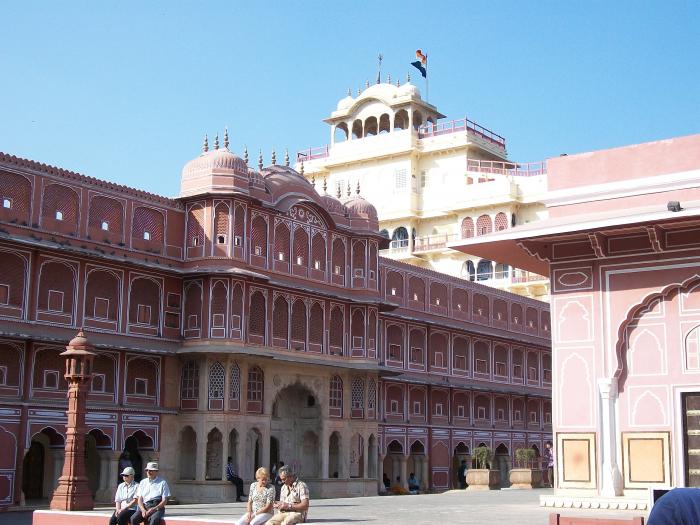
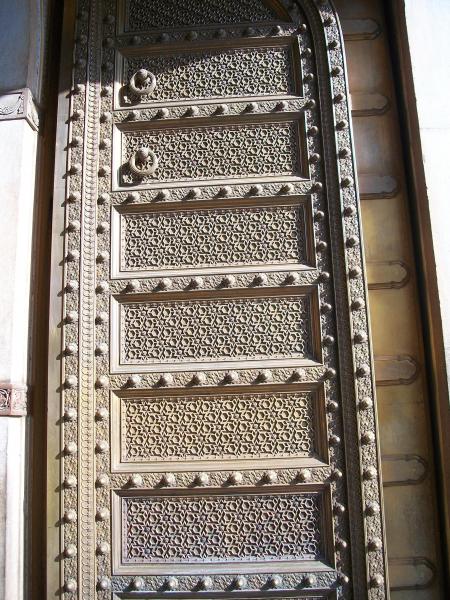
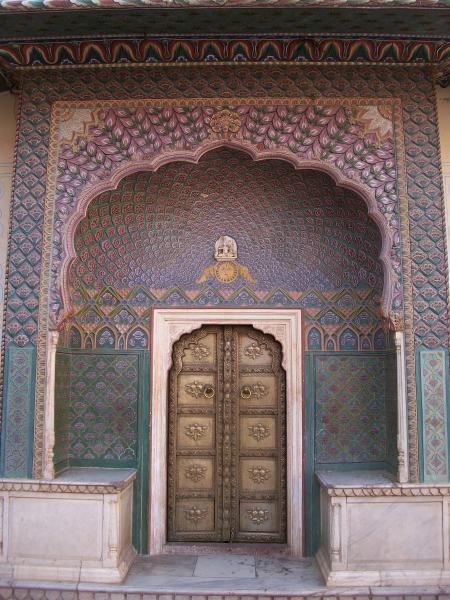
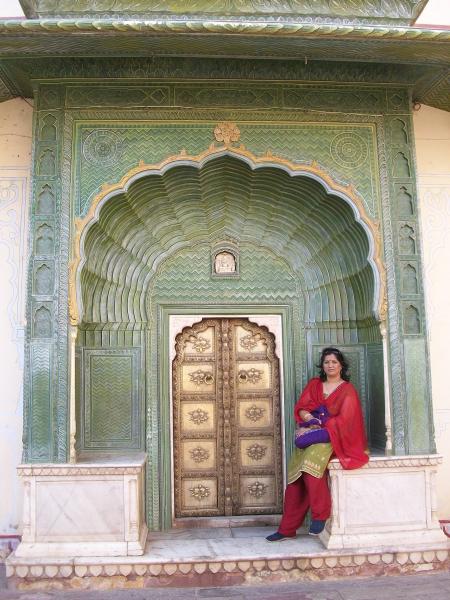
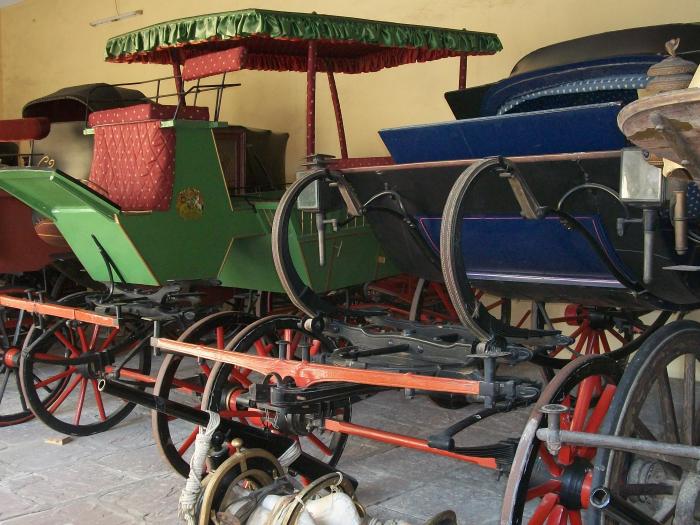


Palace of Jaipur Royal Family, now a Museum.
City Palace, Jaipur, which includes the Chandra Mahal and Mubarak Mahal palaces and other buildings, is a palace complex in Jaipur, the capital of the Rajasthan state, India. It was the seat of the Maharaja of Jaipur, the head of the Kachwaha Rajput clan. The Chandra Mahal palace now houses a museum but the greatest part of it is still a royal residence. The palace complex, which is located northeast of the centre of the grid patterned Jaipur city, incorporates an impressive and vast array of courtyards, gardens and buildings. The palace was built between 1729 and 1732, initially by Sawai Jai Singh II, the ruler of Amber. He planned and built the outer walls, and later additions were made by successive rulers right up to the 20th century. The credit for the urban layout of the city and its structures is attributed to two architects namely, Vidyadar Bhattacharya, the chief architect in the royal court and Sir Samuel Swinton Jacob, apart from the Sawai himself who was a keen architectural enthusiast. The architects achieved a fusion of the Shilpa Shastra of Indian architecture with Rajput, Mughal and European styles of architecture.
City Palace, Jaipur, which includes the Chandra Mahal and Mubarak Mahal palaces and other buildings, is a palace complex in Jaipur, the capital of the Rajasthan state, India. It was the seat of the Maharaja of Jaipur, the head of the Kachwaha Rajput clan. The Chandra Mahal palace now houses a museum but the greatest part of it is still a royal residence. The palace complex, which is located northeast of the centre of the grid patterned Jaipur city, incorporates an impressive and vast array of courtyards, gardens and buildings. The palace was built between 1729 and 1732, initially by Sawai Jai Singh II, the ruler of Amber. He planned and built the outer walls, and later additions were made by successive rulers right up to the 20th century. The credit for the urban layout of the city and its structures is attributed to two architects namely, Vidyadar Bhattacharya, the chief architect in the royal court and Sir Samuel Swinton Jacob, apart from the Sawai himself who was a keen architectural enthusiast. The architects achieved a fusion of the Shilpa Shastra of Indian architecture with Rajput, Mughal and European styles of architecture.
Wikipedia article: http://en.wikipedia.org/wiki/City_Palace,_Jaipur
Nearby cities:
Coordinates: 26°55'33"N 75°49'25"E
- Walled city of Jaipur 2.8 km
- Tughlakabad Inner Fort 226 km
- Tilla Joggiyan (Koh-e-Balnath) 716 km
- Historical Sar Jalal and Shrine of Syed Jahan Shah Badshah residuary of Village Karonta Sikandar 731 km
- Kathmandu Nepal 941 km
- Chitrakot 1047 km
- METAL AND STEEL FACTORY, ICHAPUR (M. S. F.) 1345 km
- Chandragiri Fort 1528 km
- Sivaganga 1918 km
- Sadabad Complex of Palaces 2513 km
- Jaleb Chowk 0.2 km
- Walled city of Jaipur 0.3 km
- Jai Niwas Garden 0.4 km
- chaugan stadium 0.6 km
- Johari Bazar 0.8 km
- Tal Katora 0.8 km
- NARSING DEV KI BAGICHI ,MOHAN NAGAR (PUNEET) 1.5 km
- Nahargarh Fort 1.7 km
- KHATDI HOUSE and Grounds 1.7 km
- Shastri Nagar 3.3 km