
Carnegie Library/Hazlett Theater (Pittsburgh, Pennsylvania)
USA /
Pennsylvania /
Pittsburgh /
Pittsburgh, Pennsylvania
World
/ USA
/ Pennsylvania
/ Pittsburgh
World / United States / Pennsylvania
theatre, library, carnegie, NRHP - National Register of Historic Places, 1890_construction, Richardsonian Romanesque (architecture)

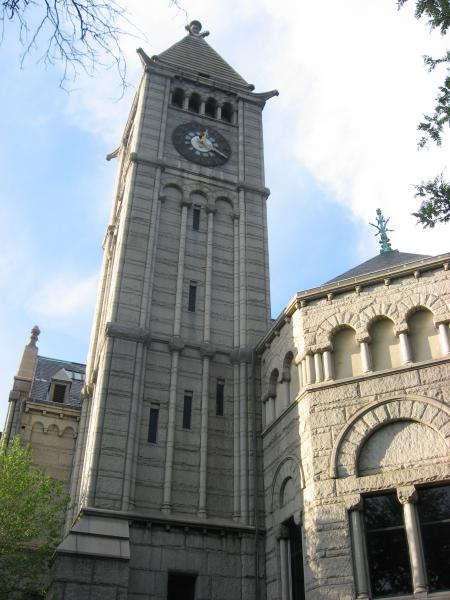
The very first municipally owned and operated of all the Carnegie Libraries in the United States. It was located in the City of Allegheny, which through annexation is now part Pittsburgh's North Side. The library was formally opened February 20, 1890, and was known as the Carnegie Free Library of Allegheny.
www.carnegielibrary.org/locations/pennsylvania/carnegie...
The first tax-supported Carnegie Library in the Americas (second in the world--first in the world was Victoria Library in Grangemouth, Scotland), dedicated by U.S. President Benjamin Harrison on 1890 February 20. Originally known as the Carnegie Free Library of Allegheny, it is now the Allegheny Regional Branch of The Carnegie Library of Pittsburgh located at 5 Allegheny Square in the Allegheny Center section of Pittsburgh's Lower North Side. This section of the North Side is where Andrew Carnegie spent much of his youth, and it is where he met his mentor, Col. James Anderson, who built the city's first public library. In 1904, Andrew Carnegie had a memorial to Col. Anderson constructed (by architect Henry Bacon and sculptor Daniel Chester French, who had collaborated on the Lincoln Memorial on the Washington Mall) adjacent to the Library building, at the corner of Federal Street and East Ohio Street (today, this memorial sits near Pittsburgh's original Buhl Planetarium and Institute of Popular Science building, directly across the way from the Allegheny Regional Branch Library entrance). The Library building (including the adjoining Carnegie Hall) was designed and built by Smithmeyer and Pelz, the architects of the Library of Congress in Washington, D.C.
With construction of the Library, Andrew Carnegie also constructed the world's first Carnegie Hall (built one year before the public opening of Carnegie Hall in New York City), adjoining the Library building just east of the Library section of the building (located at 6 Allegheny Square). Carnegie Hall was completely renovated in the 1970s and the interior performance space was dedicated as the Theodore Hazlett Theatre on 1980 December 15. From 1974-1999 it was the home of the Pittsburgh Public Theater; after twenty-four years, on 1999 December 11, the Pittsburgh Public Theater began a new era of performances (with the world premiere of August Wilson's "King Hedley II") in the O'Reilly Theater (named for the former Chief Executive Officer of the Heinz Corporation), on Penn Avenue, across from Heinz Hall, in the Downtown Cultural District. After a year-long, $2 million rehabilitation, the performance space inside Carnegie Hall was re-dedicated, during the weekend of 2006 September 15, 16, and 17, as the New Hazlett Theater, to be used by several small and mid-size community, performing arts groups.
On 1890 February 20, Andrew Carnegie and U.S. President Benjamin Harrison dedicated the Carnegie Free Library of Allegheny, which became the Allegheny Regional Branch of The Carnegie Library of Pittsburgh in 1956. The architectural firm of Smithmeyer and Pelz of Washington, D.C., which had designed the Library of Congress in 1889, designed the Carnegie Free Library of Allegheny building.
It was the second public library to be established on Pittsburgh’s North Side (then known as the independent City of Allegheny, before merging with the City of Pittsburgh in December of 1907), the first being the Anderson Library Institute which opened in 1850 as Western Pennsylvania’s first public library.
The Carnegie Free Library of Allegheny was not the very first Carnegie Library constructed; actually, it was the fourth. Earlier Carnegie Libraries were built in Dunfermline, Scotland (Andrew Carnegie’s original home town) on 1883 August 25, Victoria Library in Grangemouth, Scotland on 1889 January 31, and the Carnegie Free Library of Braddock in the Pittsburgh suburb of Braddock, Pennsylvania (where Andrew Carnegie’s Edgar Thomson Works steel mill was located) on 1889 March 30.
However, the Carnegie Free Library of Allegheny was the first publicly-funded Carnegie Library in America, the first of 1,675 American Carnegie Libraries where the local government was required to provide an annual subsidy to the public library. This “annual maintenance pledge,” which usually was no less than ten percent of the cost of building construction, became known as “The Carnegie Formula.”
Only four American libraries (all in Allegheny County, Pennsylvania) were not required to subscribe to “The Carnegie Formula,” each being provided an endowment by Andrew Carnegie: Carnegie Free Library of Braddock (1889 March 30), Carnegie Library of Homestead (1898 November 5), Andrew Carnegie Free Library and Music Hall (1901 May 1), and Carnegie Free Library of Duquesne (1904 to 1968). All of these libraries were located in towns that hosted a Carnegie Steel Company mill, except the Andrew Carnegie Free Library and Music Hall which is located in the borough named after the benefactor, Carnegie, Pennsylvania.
However, from the earliest days of his library philanthropy, Andrew Carnegie believed that the community would not truly feel ownership of their public library, and hence the library would not really be successful, unless the community helped fund it from local taxes. So, “The Carnegie Formula” was a very important part of Andrew Carnegie’s library donation program, and it started in America at the Carnegie Free Library of Allegheny, now known as the Allegheny Regional Branch of The Carnegie Library of Pittsburgh.
www.carnegielibrary.org/locations/pennsylvania/carnegie...
The first tax-supported Carnegie Library in the Americas (second in the world--first in the world was Victoria Library in Grangemouth, Scotland), dedicated by U.S. President Benjamin Harrison on 1890 February 20. Originally known as the Carnegie Free Library of Allegheny, it is now the Allegheny Regional Branch of The Carnegie Library of Pittsburgh located at 5 Allegheny Square in the Allegheny Center section of Pittsburgh's Lower North Side. This section of the North Side is where Andrew Carnegie spent much of his youth, and it is where he met his mentor, Col. James Anderson, who built the city's first public library. In 1904, Andrew Carnegie had a memorial to Col. Anderson constructed (by architect Henry Bacon and sculptor Daniel Chester French, who had collaborated on the Lincoln Memorial on the Washington Mall) adjacent to the Library building, at the corner of Federal Street and East Ohio Street (today, this memorial sits near Pittsburgh's original Buhl Planetarium and Institute of Popular Science building, directly across the way from the Allegheny Regional Branch Library entrance). The Library building (including the adjoining Carnegie Hall) was designed and built by Smithmeyer and Pelz, the architects of the Library of Congress in Washington, D.C.
With construction of the Library, Andrew Carnegie also constructed the world's first Carnegie Hall (built one year before the public opening of Carnegie Hall in New York City), adjoining the Library building just east of the Library section of the building (located at 6 Allegheny Square). Carnegie Hall was completely renovated in the 1970s and the interior performance space was dedicated as the Theodore Hazlett Theatre on 1980 December 15. From 1974-1999 it was the home of the Pittsburgh Public Theater; after twenty-four years, on 1999 December 11, the Pittsburgh Public Theater began a new era of performances (with the world premiere of August Wilson's "King Hedley II") in the O'Reilly Theater (named for the former Chief Executive Officer of the Heinz Corporation), on Penn Avenue, across from Heinz Hall, in the Downtown Cultural District. After a year-long, $2 million rehabilitation, the performance space inside Carnegie Hall was re-dedicated, during the weekend of 2006 September 15, 16, and 17, as the New Hazlett Theater, to be used by several small and mid-size community, performing arts groups.
On 1890 February 20, Andrew Carnegie and U.S. President Benjamin Harrison dedicated the Carnegie Free Library of Allegheny, which became the Allegheny Regional Branch of The Carnegie Library of Pittsburgh in 1956. The architectural firm of Smithmeyer and Pelz of Washington, D.C., which had designed the Library of Congress in 1889, designed the Carnegie Free Library of Allegheny building.
It was the second public library to be established on Pittsburgh’s North Side (then known as the independent City of Allegheny, before merging with the City of Pittsburgh in December of 1907), the first being the Anderson Library Institute which opened in 1850 as Western Pennsylvania’s first public library.
The Carnegie Free Library of Allegheny was not the very first Carnegie Library constructed; actually, it was the fourth. Earlier Carnegie Libraries were built in Dunfermline, Scotland (Andrew Carnegie’s original home town) on 1883 August 25, Victoria Library in Grangemouth, Scotland on 1889 January 31, and the Carnegie Free Library of Braddock in the Pittsburgh suburb of Braddock, Pennsylvania (where Andrew Carnegie’s Edgar Thomson Works steel mill was located) on 1889 March 30.
However, the Carnegie Free Library of Allegheny was the first publicly-funded Carnegie Library in America, the first of 1,675 American Carnegie Libraries where the local government was required to provide an annual subsidy to the public library. This “annual maintenance pledge,” which usually was no less than ten percent of the cost of building construction, became known as “The Carnegie Formula.”
Only four American libraries (all in Allegheny County, Pennsylvania) were not required to subscribe to “The Carnegie Formula,” each being provided an endowment by Andrew Carnegie: Carnegie Free Library of Braddock (1889 March 30), Carnegie Library of Homestead (1898 November 5), Andrew Carnegie Free Library and Music Hall (1901 May 1), and Carnegie Free Library of Duquesne (1904 to 1968). All of these libraries were located in towns that hosted a Carnegie Steel Company mill, except the Andrew Carnegie Free Library and Music Hall which is located in the borough named after the benefactor, Carnegie, Pennsylvania.
However, from the earliest days of his library philanthropy, Andrew Carnegie believed that the community would not truly feel ownership of their public library, and hence the library would not really be successful, unless the community helped fund it from local taxes. So, “The Carnegie Formula” was a very important part of Andrew Carnegie’s library donation program, and it started in America at the Carnegie Free Library of Allegheny, now known as the Allegheny Regional Branch of The Carnegie Library of Pittsburgh.
Wikipedia article: http://en.wikipedia.org/wiki/Carnegie_Free_Library_of_Allegheny
Nearby cities:
Coordinates: 40°27'11"N 80°0'19"W
- Site of Monroeville Drive-In Theater 22 km
- Malden Drive-In Theater 47 km
- Brownsville Drive-In 52 km
- Winter Drive-In Theater 59 km
- Trumpet in the Land 119 km
- LightSpeed Technologies Hot Spot WiFi Civic Center Canton Ohio 122 km
- Springmill Drive-In Theatre 219 km
- Sunset Drive-In Theatre 227 km
- South Drive-In Theater 262 km
- Starlite Drive-In Theatre 391 km
- Golden Triangle 1.5 km
- Spring Hill-City View Neighborhood 1.7 km
- Perry Hilltop Neighborhood 1.9 km
- Strip District Neighborhood 2 km
- Hill District 2.8 km
- Marshall-Shadeland Neighborhood 3 km
- Reserve Township 3.7 km
- Observatory Hill Neighborhood 3.8 km
- Millvale, Pennsylvania 4.2 km
- Shaler Township 7.9 km