
Sri Vishnu Patham Temple (Gaya)
India /
Bihar /
Gaya /
Vishnupad Temple
World
/ India
/ Bihar
/ Gaya
World / India / Bihar / Gaya
temple, hindu temple
Significance: Vishnu Patham is one of the greatest Vaishnavaite Temples and is the most sacred "Pinda Daana Vedi" (site of offerings for the ancestors) in Gaya. Vishnu’s footprint stamped on a rock called "Dharmasila" which is the object of worship here. The footprint lies in a silver trough.
Antiquity: The ritual of offering pindas to the dead has been long associated with Gaya and has been mentioned in the epics. (Vaayupuraana). Terra-cotta seals discovered at Vaishali dating back to the Gupta period (4th to the 5th century CE) place the existence of this temple even during that period. This structure and the brick structure built following its demise do not exist today. What is seen now is a relatively modern temple, built by Queen Ahilyabai Holkar of Indore in 1783.
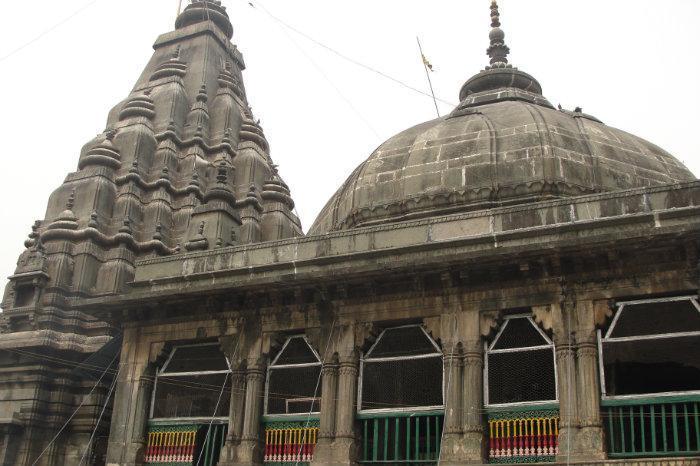
Architecture: This temple faces the East and it is octagonal in plan with its tower reaching a height of 100 feet. The temple is built of gray granite blocks joined with iron clamps. The sides of the octagons of the pyramidal tower, are alternately plain and indented - each angle while reaching the pyramidal roof, culminating in a series of peaks, one above the other until they all merge in a single tall pinnacle, crossed by the lotus shaped Amalaka and the golden Kalasha.
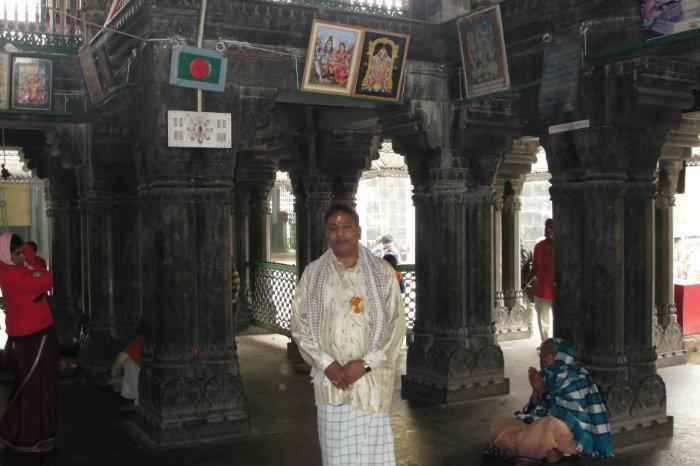
In front of the shrine is the spacious Sabha Mandapa - or an open pillared hall. It is a double height space accessed by galleries all around. This hall has 42 pillars disposed in two stories. Over the central portion is a graceful dome, 80 feet high formed by overlapping of stones. The pillars contain various artistically executed motifs. The beautiful style of this temple, with its impressive Sabha Mandap represents the Indian architectural glory of a comparatively recent date.
Antiquity: The ritual of offering pindas to the dead has been long associated with Gaya and has been mentioned in the epics. (Vaayupuraana). Terra-cotta seals discovered at Vaishali dating back to the Gupta period (4th to the 5th century CE) place the existence of this temple even during that period. This structure and the brick structure built following its demise do not exist today. What is seen now is a relatively modern temple, built by Queen Ahilyabai Holkar of Indore in 1783.
Architecture: This temple faces the East and it is octagonal in plan with its tower reaching a height of 100 feet. The temple is built of gray granite blocks joined with iron clamps. The sides of the octagons of the pyramidal tower, are alternately plain and indented - each angle while reaching the pyramidal roof, culminating in a series of peaks, one above the other until they all merge in a single tall pinnacle, crossed by the lotus shaped Amalaka and the golden Kalasha.
In front of the shrine is the spacious Sabha Mandapa - or an open pillared hall. It is a double height space accessed by galleries all around. This hall has 42 pillars disposed in two stories. Over the central portion is a graceful dome, 80 feet high formed by overlapping of stones. The pillars contain various artistically executed motifs. The beautiful style of this temple, with its impressive Sabha Mandap represents the Indian architectural glory of a comparatively recent date.
Wikipedia article: http://en.wikipedia.org/wiki/Vishnupad_Temple
Nearby cities:
Coordinates: 24°46'37"N 85°0'33"E
- VIEN GIAC INSTITUTE (VIETNAM TEMPLE) 9 km
- Bodhgaya Maha Bodhi Temple,Park & Pond 9 km
- Pretshila Hill 10 km
- ART OF LIVING BODH GAYA ASHRAM 15 km
- NAUGHARH MATHIYAPUR 39 km
- Murla Pahadi 47 km
- Surya Temple , Gahna 59 km
- Surya temple 60 km
- Rampur Konikuti 63 km
- Doo-Muhan 65 km
- ghughari tand 0.9 km
- Property of King Dariyaochandlal of Maranpur (swadariyapur) 0.9 km
- The Brahmyoni 1.1 km
- SHAHMIR TAKIYA 1.1 km
- Maranpur 1.2 km
- Madhusadan Colony 1.2 km
- Maran Pur 1.3 km
- Gandhi Maidan 1.8 km
- Police Line 2 km
- WHITE HOUSE COMPOUND 2.2 km
Comments