
Kokorevsky farmstead (Moscow)
Russia /
Moscow /
Moscow /
Sofiyskaya naberezhnaya
World
/ Russia
/ Moscow
/ Moscow
, 0 km from center (Москва)
World / Russia / Moscow City / Central
office building, listed building / architectural heritage, nonresidential building, 19th century construction, revealed object of cultural heritage (Russia)
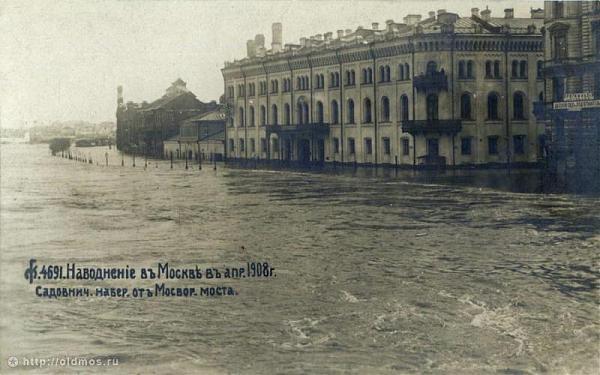


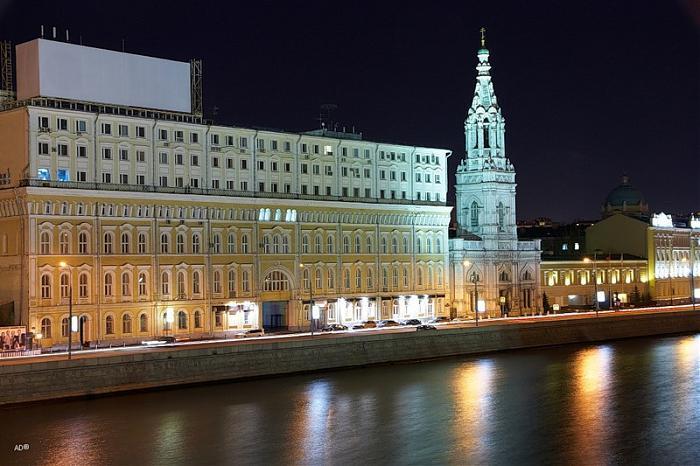
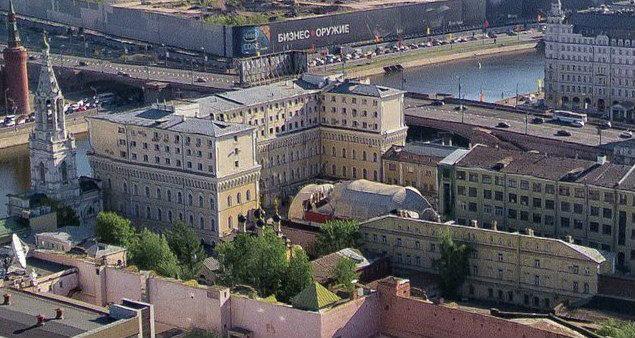
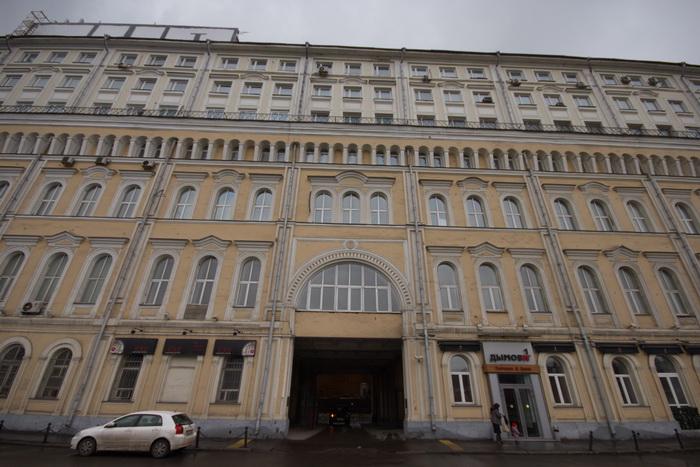

Vasiliy Aleksandrovich Kokorev (1817-1889) came from an Old Believers family like many other wealthy merchants and industrialists of his day. Although uneducated, Kokorev made his money initially in salt trading and became a well-known public figure in his later years. In the 1850s Kokorev purchased land of the former Tsar's Gardens on which his architect, I. D. Chernik, constructed in 1860-1864 a three-story rooming house and several trade warehouse buildings. The complex occupied a large area between the embankment and the canal. The architectural style combined features of the food pantries of medieval Russian monasteries with those of European big city warehouses of the mid 19th century. It included many features previously unknown in Moscow, including new heating and ventilation systems, mechanical cargo lifts using steam and telegraph equipment.
The warehouses were made of iron to prevent fires and were used to store grain, flour, tea, confectionery products, furs and other manufactured items. The rooming house, with its view of the Kremlin, was the part-time residence of many famous persons including the writer P. Melnikov-Pechersky, painters Ivan Kramskoy (1837-1887), Vasiliy Vereshchagin (1842 1904), Ilia Repin, Apollinary Vasnetsov (1856-1933) and composers Pyotr Tchaikovsky and Anton Arensky (1861-1906). Unfortunately, the buildings were constructed on porous limestone and wet sand, without proper supports or bases, and thus cannot be safely used today.
The warehouses were made of iron to prevent fires and were used to store grain, flour, tea, confectionery products, furs and other manufactured items. The rooming house, with its view of the Kremlin, was the part-time residence of many famous persons including the writer P. Melnikov-Pechersky, painters Ivan Kramskoy (1837-1887), Vasiliy Vereshchagin (1842 1904), Ilia Repin, Apollinary Vasnetsov (1856-1933) and composers Pyotr Tchaikovsky and Anton Arensky (1861-1906). Unfortunately, the buildings were constructed on porous limestone and wet sand, without proper supports or bases, and thus cannot be safely used today.
Nearby cities:
Coordinates: 55°44'53"N 37°37'21"E
- Rosneft headquarters 0.2 km
- House of the free apartments - historic monument 0.2 km
- Bolshoy Moskvoretsky Bridge 0.3 km
- MOGES-1 (Raushskaya) now GES-1 in the name of P.G. Smidovich 0.4 km
- Cathedral Square 0.5 km
- Tretyakov Gallery 0.7 km
- Main Student Building (GUK) of the VA RVSN 0.8 km
- Moscow Orphanage 0.8 km
- Moscow State University of Design and Technology 0.9 km
- Moscow Kremlin 1 km
- Zemlyanoy Gorod 0.4 km
- Kremlin (Borovitsky) Hill 0.6 km
- Kitay-gorod 0.7 km
- Bely Gorod ('The White Town') 0.8 km
- Tsentralny Administrative Okrug 0.8 km
- Balchug Island 1 km
- Zamoskvorechye District 1.7 km
- Yakimanka District 2.4 km
- Tverskoy District 2.6 km
- Basmanny District 3.6 km