
The Insect Museum and the Butterfly Park (Jakarta)
Indonesia /
Jawa Barat /
Depok /
Jakarta
World
/ Indonesia
/ Jawa Barat
/ Depok
World / Indonesia / Jakarta Raya
museum, wildlife protection/conservation, insectarium
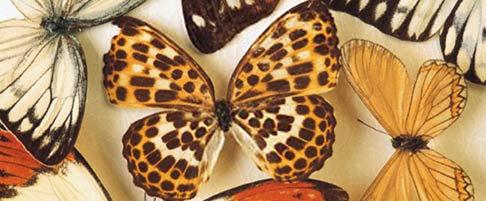
The Board of the Indonesia Zoo Association and the Bogoriense Zoologicum Museum with the support of Madame Tien Soeharto founded the Insects Museum with the objective to introduce the treasure variety of insects and to stimulate the curiosity and attention of the community to the role and potential of insects in nature.
The Museum occupies an area of 500 m2, has the form of a grasshopper and was officially opened by President Soeharto on april 20, 1993. In 1998 with the donation of Dr. Soedjarwo through the "Sarana Wana Jaya" Foundation, a new vehicle was added namely the Butterfly Park with a fodder garden, a breeding stall and a laboratory expected to become a breeding and preservation effort of protected and rare butterflies. Afterwards in 2004 another animal collection means has been added besides that of the insects.
16 % of the insect species of the world is estimated to be in Indonesia. About 500 species consisting of butterflies (about 250 species), beetles (about 150 species) and other groups of insects (about 100 species) became the collection of the Insect Museum and Butterfly Park. Dioramas that can be observed consist of the enchantment of the Archipelago beetle, the role of land insects in the ecosystem and its preservation, an insect map of Indonesia, destroying and rebuilding insects, a butterfly map of Indonesia, "Batimurung" butterflies, and insects found in the yard as well as collection boxes presenting other insect groups.
Besides the collection of dead insects there is also a collection of living insects that can directly be observed by the visitors among others the horn beetle, the water beetle, the honey bee, the twig grasshopper, the leaf grasshopper and the rhinoceros beetle. There are about 20 kinds of flowery plants in the Butterfly Park that are often visited by the butterflies. Moreover there are several kinds of animals that are taken care off there, among others the Sumatra squirrel, the Bali squirrel, the flying "oppusum", the blue tongued lizard, the mouse deer and the "tarsius". The laboratory is used as a breeding means and is open for university students and students to learn how to collect, preserve insects, identify the insects, and take care of living and dead insects.
The museum also provides services to increase the knowledge on various matters connected with insects, for example general guidance on insects and their life, the showing of film of the life of insects and the explanation in the audio-visual room, guidance on how to preserve insects, and the breeding of insects (butterflies, twig grasshoppers and leaf grasshoppers) completed with a library.
The Museum occupies an area of 500 m2, has the form of a grasshopper and was officially opened by President Soeharto on april 20, 1993. In 1998 with the donation of Dr. Soedjarwo through the "Sarana Wana Jaya" Foundation, a new vehicle was added namely the Butterfly Park with a fodder garden, a breeding stall and a laboratory expected to become a breeding and preservation effort of protected and rare butterflies. Afterwards in 2004 another animal collection means has been added besides that of the insects.
16 % of the insect species of the world is estimated to be in Indonesia. About 500 species consisting of butterflies (about 250 species), beetles (about 150 species) and other groups of insects (about 100 species) became the collection of the Insect Museum and Butterfly Park. Dioramas that can be observed consist of the enchantment of the Archipelago beetle, the role of land insects in the ecosystem and its preservation, an insect map of Indonesia, destroying and rebuilding insects, a butterfly map of Indonesia, "Batimurung" butterflies, and insects found in the yard as well as collection boxes presenting other insect groups.
Besides the collection of dead insects there is also a collection of living insects that can directly be observed by the visitors among others the horn beetle, the water beetle, the honey bee, the twig grasshopper, the leaf grasshopper and the rhinoceros beetle. There are about 20 kinds of flowery plants in the Butterfly Park that are often visited by the butterflies. Moreover there are several kinds of animals that are taken care off there, among others the Sumatra squirrel, the Bali squirrel, the flying "oppusum", the blue tongued lizard, the mouse deer and the "tarsius". The laboratory is used as a breeding means and is open for university students and students to learn how to collect, preserve insects, identify the insects, and take care of living and dead insects.
The museum also provides services to increase the knowledge on various matters connected with insects, for example general guidance on insects and their life, the showing of film of the life of insects and the explanation in the audio-visual room, guidance on how to preserve insects, and the breeding of insects (butterflies, twig grasshoppers and leaf grasshoppers) completed with a library.
Nearby cities:
Coordinates: 6°18'20"S 106°53'43"E
- Siu Lang Shui Butterfly Reserve 3283 km
- Butterfly Park 3699 km
- Butterfly Park 3878 km
- NSG Am Hornpottweg 11254 km
- Farfalla 13934 km
- Monarch Butterfly Nature Preserve 14025 km
- Pismo Beach Monarch Butterfly Grove 14220 km
- Perry's Cave Family Fun Center 15986 km
- National Butterfly Center 16561 km
- Peveto Woods Bird and Butterfly Sanctuary 16656 km
- Ceger 0.5 km
- Taman Mini Indonesia Indah (TMII) 0.8 km
- Bambu Apus 1.2 km
- Lubang Buaya 1.6 km
- Wilayah RW 06 Kel. Rambutan 1.7 km
- Rambutan 2.2 km
- Ciracas 3.2 km
- Cilangkap 3.4 km
- Jakarta 11 km
- Citarik Fault 1 (Sesar Citarik-1) 19 km