
Point Montara Lighthouse
| hotel, hostel
USA /
California /
Montara /
World
/ USA
/ California
/ Montara
World / United States / California
hotel, lighthouse, hostel




lighthouse at it's original location in 1915 on Kendrick Avenue at Mayo's Beach, Wellfleet Harbor on Cape Cod. (The original lighhouse keeper's house is still there, now a private beach house.)
Yerba Buena (California) Light House Depot in 1927. On the back of the photo was written: "This tower fomally used at Mayo Beach, 2nd District."
It had been at this location since 1928.
Never the biggest or brightest, this lighthouse which guides mariners towards San Francisco Bay has become famous (at least amongst lighthouse fanciers) as the only bi-coastal beacon in North America.
For 80 years the Point Montara light has scanned the cold waters off the California coast, warning sailors away from rocky shoals, but in an earlier life, so to speak, it ushered fishermen into foggy Wellfleet Harbor on Cape Cod.
How the cast-iron structure, now known to be 127 years old, made its way from coast to coast is still a mystery, but it is now clear that Point Montara’s light has swung over both the Atlantic and the Pacific Oceans.
Disclosed in the June 2008 issue of the Maine-based Lighthouse Digest, the startling find is based on recently found government documents in the National Archives.
Colleen MacNeney is the researcher who followed a complicated paper trail to nail down the lighthouse’s provenance.
Some of the confusion surrounding its fate may come from the existence of several lighthouses at different times in the same area of Cape Cod. The lighthouse now in California was first erected in Wellfleet in 1881 and was the last one to be built in the harbor area.
The lighthouse has at least one other distinction: It was the first to have a female lighthouse keeper. Her name was Sarah Atwood and she served from 1876 to 1891, following in the job of her late husband, William.
The tower was first built in 1881 in a foundry in Chelsea, north of Boston. It could easily have been taken apart bolt by bolt and moved by rail in pieces.
Visible from 12 miles off the coast, the Point Montara light is operated by the Coast Guard but is the centerpiece of a hostel catering to travelers wandering California's Highway One between San Francisco and Half Moon Bay.
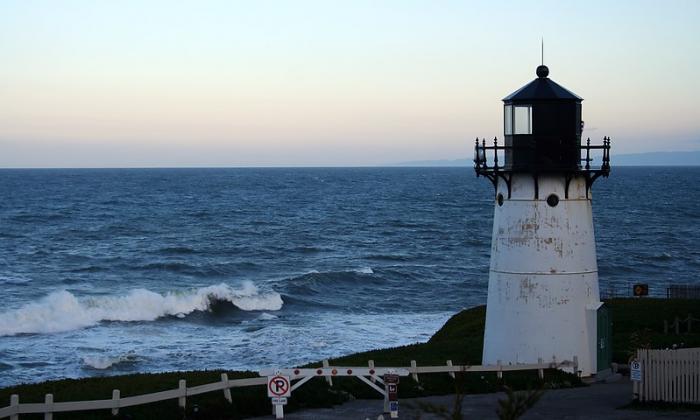
Its white paint peeling and its windows frosted with salt spray, the 30-foot-tall all metal lighthouse sits on a cliff thick with ice plant. Far below, waves crash on rocks, sea birds dive for fish and seals occasionally sun themselves in a secluded cove.
The old harbor light at Wellfleet was dismantled in the 1920s becuase over the years the harbor had silted in and became too shallow for fishing boats. The fishing fleet went elsewhere. So did the lighthouse.
The first clue was uncovered by Colleen MacNeney's parents, Bob and Sandra Shanklin, a couple from Fort Walton Beach who call themselves “the lighthouse people.” During 18 years of travel, the Shanklins photographed every one of America’s roughly 670 lighthouses, hopping aboard ferries and small planes to capture the most remote.
Rummaging through lighthouse materials in the National Archives, the Shanklins found a 1928 photo with a notation indicating that the new Point Montara light had operated at Mayo Beach in the U.S. Lighthouse Service’s District Two, which included Cape Cod. The service, now mostly forgotten, had existed for 150 years before being absorbed by the Coast Guard in 1939.
Seeking some explanation, the Shanklins’ daughter plowed through lighthouse station logs, annual reports and Lighthouse Service bulletins.
Eventually, she found a 1928 note from J.S. Conway, the acting commissioner of lighthouses, confirming the tower’s transfer.
Such lighthouse relocations weren’t entirely unknown in those days.
The Lighthouse Service was always struggling for money so they’d want to save a few bucks and reuse a lighthouse, if possible, but transporting a lighthouse across the U.S.A. was most unusual.
How the Point Montara lighthouse made the trip is still an open question. Experts speculate that it could have been loaded on a ship, taken through the Panama Canal and deposited in pieces at a Lighthouse Service facility on Yerba Buena Island in San Francisco Bay.
Youth Hostel
The lighthouse keeper's housing has been turned into a youth hostel.
At the 50-bed hostel, bicyclists and budget travelers pay as little as $20 a night for a berth in one of the converted barracks occupied by the Coast Guard before the light was automated decades ago. They sip espresso as they gaze out a huge kitchen window with a hypnotic view of mountains tumbling into the sea. Meditation sessions are offered every Wednesday night.
www.lighthousefriends.com/light.asp?ID=78
Yerba Buena (California) Light House Depot in 1927. On the back of the photo was written: "This tower fomally used at Mayo Beach, 2nd District."
It had been at this location since 1928.
Never the biggest or brightest, this lighthouse which guides mariners towards San Francisco Bay has become famous (at least amongst lighthouse fanciers) as the only bi-coastal beacon in North America.
For 80 years the Point Montara light has scanned the cold waters off the California coast, warning sailors away from rocky shoals, but in an earlier life, so to speak, it ushered fishermen into foggy Wellfleet Harbor on Cape Cod.
How the cast-iron structure, now known to be 127 years old, made its way from coast to coast is still a mystery, but it is now clear that Point Montara’s light has swung over both the Atlantic and the Pacific Oceans.
Disclosed in the June 2008 issue of the Maine-based Lighthouse Digest, the startling find is based on recently found government documents in the National Archives.
Colleen MacNeney is the researcher who followed a complicated paper trail to nail down the lighthouse’s provenance.
Some of the confusion surrounding its fate may come from the existence of several lighthouses at different times in the same area of Cape Cod. The lighthouse now in California was first erected in Wellfleet in 1881 and was the last one to be built in the harbor area.
The lighthouse has at least one other distinction: It was the first to have a female lighthouse keeper. Her name was Sarah Atwood and she served from 1876 to 1891, following in the job of her late husband, William.
The tower was first built in 1881 in a foundry in Chelsea, north of Boston. It could easily have been taken apart bolt by bolt and moved by rail in pieces.
Visible from 12 miles off the coast, the Point Montara light is operated by the Coast Guard but is the centerpiece of a hostel catering to travelers wandering California's Highway One between San Francisco and Half Moon Bay.
Its white paint peeling and its windows frosted with salt spray, the 30-foot-tall all metal lighthouse sits on a cliff thick with ice plant. Far below, waves crash on rocks, sea birds dive for fish and seals occasionally sun themselves in a secluded cove.
The old harbor light at Wellfleet was dismantled in the 1920s becuase over the years the harbor had silted in and became too shallow for fishing boats. The fishing fleet went elsewhere. So did the lighthouse.
The first clue was uncovered by Colleen MacNeney's parents, Bob and Sandra Shanklin, a couple from Fort Walton Beach who call themselves “the lighthouse people.” During 18 years of travel, the Shanklins photographed every one of America’s roughly 670 lighthouses, hopping aboard ferries and small planes to capture the most remote.
Rummaging through lighthouse materials in the National Archives, the Shanklins found a 1928 photo with a notation indicating that the new Point Montara light had operated at Mayo Beach in the U.S. Lighthouse Service’s District Two, which included Cape Cod. The service, now mostly forgotten, had existed for 150 years before being absorbed by the Coast Guard in 1939.
Seeking some explanation, the Shanklins’ daughter plowed through lighthouse station logs, annual reports and Lighthouse Service bulletins.
Eventually, she found a 1928 note from J.S. Conway, the acting commissioner of lighthouses, confirming the tower’s transfer.
Such lighthouse relocations weren’t entirely unknown in those days.
The Lighthouse Service was always struggling for money so they’d want to save a few bucks and reuse a lighthouse, if possible, but transporting a lighthouse across the U.S.A. was most unusual.
How the Point Montara lighthouse made the trip is still an open question. Experts speculate that it could have been loaded on a ship, taken through the Panama Canal and deposited in pieces at a Lighthouse Service facility on Yerba Buena Island in San Francisco Bay.
Youth Hostel
The lighthouse keeper's housing has been turned into a youth hostel.
At the 50-bed hostel, bicyclists and budget travelers pay as little as $20 a night for a berth in one of the converted barracks occupied by the Coast Guard before the light was automated decades ago. They sip espresso as they gaze out a huge kitchen window with a hypnotic view of mountains tumbling into the sea. Meditation sessions are offered every Wednesday night.
www.lighthousefriends.com/light.asp?ID=78
Wikipedia article: http://en.wikipedia.org/wiki/Point_Montara_Light
Nearby cities:
Coordinates: 37°32'11"N 122°31'9"W
- Santa Cruz (Gull Island) Aid to Navigation 467 km
- Lantern Point 655 km
- Heceta Head Lighthouse, Devils Elbow State Park 748 km
- Merry Island 1333 km
- Beacon Hill 1387 km
- Lake Minatare State Recreation Area and Historic Lake Minatare Lighthouse 1695 km
- Playa de la Isla de la Piedra 2217 km
- Smoky Point Lighthouse 3395 km
- USCG Molokai Light 3774 km
- USCG La’au Point 3809 km
- Frenchman's Reef 1.2 km
- Moss Beach, California 2.2 km
- Fitzgerald Marine Reserve 2.6 km
- Devil's Slide 5.3 km