
St. Trinity Cathedral (Chernihiv)
Ukraine /
Chernihivska /
Chernihiv
World
/ Ukraine
/ Chernihivska
/ Chernihiv
, 3 km from center (Чернігів)
World / Ukraine / Chernihiv
cathedral, Baroque (architecture), listed building / architectural heritage, 17th century construction, Ukrainian Orthodox Church - Moscow Patriarchate
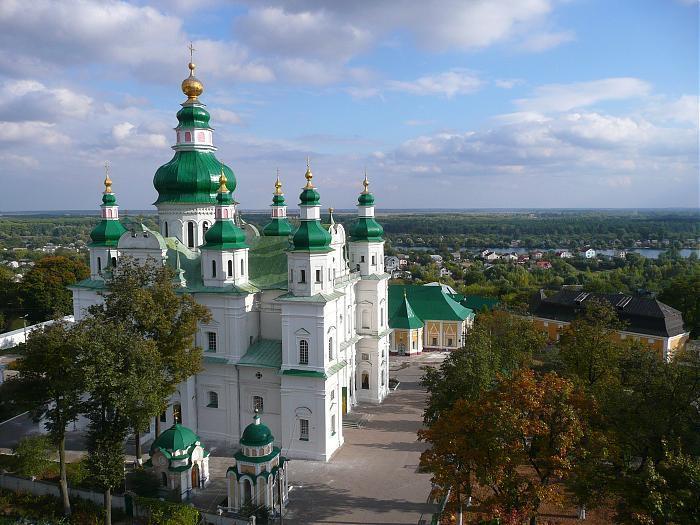
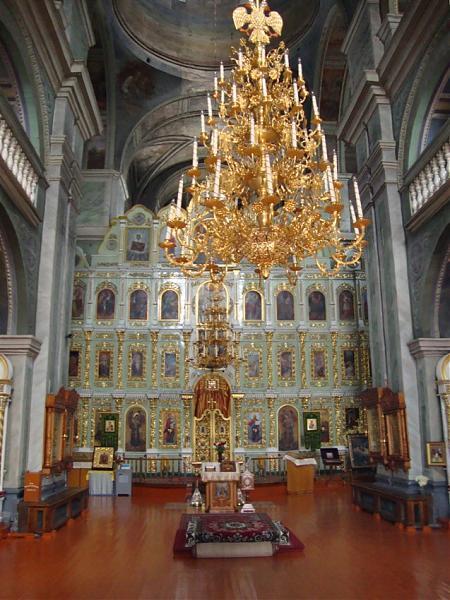

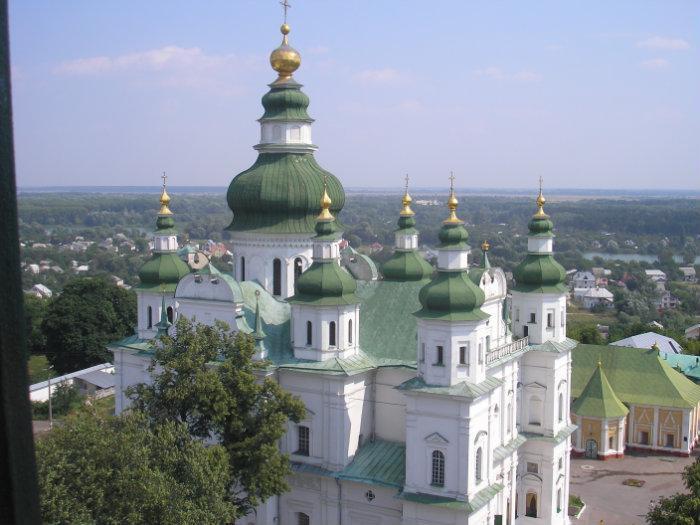
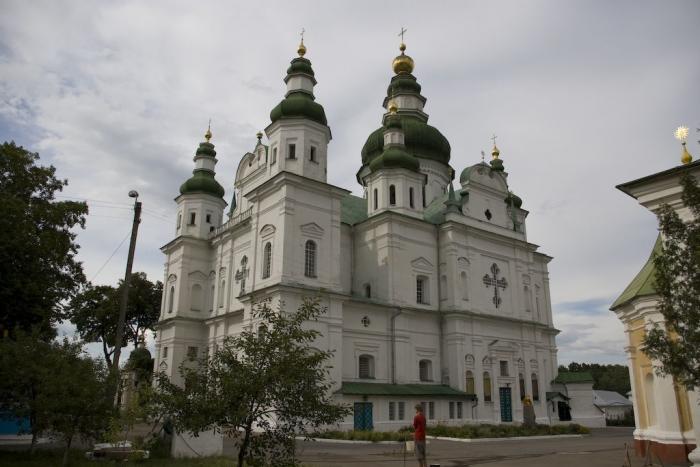
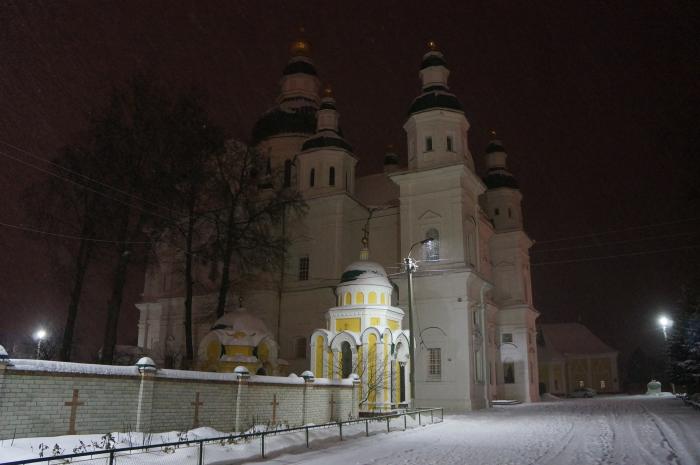
It was founded in 1679 through a direct participation of archbishop Lazar Baranovych and financial support of hetman Ivan Mazepa according to the project of architect Johann Baptist Zauer. The construction of the temple lasted for 10 years, and the finishing works ended in 1695; the same year it was consecrated by the follower of Lazar Baranovych - Chernihiv archbishop Theodosius of Uhlych.
The peculiarity of the architecture of the cathedral is the combination of space-volume composition of Old-Russ temple with elements of Ukrainian baroque and early classicism. From outside the cathedral have common features with western religious buildings – kostels with obligatory square in basis towers at the corners of western façade.
The cathedral is three-nave, six-pillar, three-conch with a clearly designed transept and seven domes: two over the stairs towers, that flank the western façade. The cathedral is covered with the system of torispherical and cross vaults.
St. Trinity cathedral refers to a unique type of cathedrals of so called state or hetman genre, which revitalizes space – planning structures of stone temples of the Prince Period combined with evident influence of western (Lithuanian and Polish) baroque. Such temples are known only in brickwork buildings and are neither prototyped nor followed in folk wooden architecture. This typological group started with Our Saviour’s Transfiguration Cathedral of the Monastery of Maksaky in Chernihiv region founded in 1646.
St. Trinity cathedral has some more characteristic features important for further development of this architectural type. In the exterior – it is the liveliness of the silhouette where seven domes are compositionally supported by witty pediments, and also the façade plastic which is a free composition of symbolically interpreted Renaissance-Baroque order forms with pilasters, semi-pillars, canopies, etc. used. St. Trinity cathedral served as an example for building Our Saviour’s Transfiguration Cathedral of the Monastery of Mhar that is near Lubny town.
The cathedral is plastered and whitewashed, that underlines the plastic of décor, processed in order system with niches, windows, frames and canopies, pilasters and cornices of different forms used.
The baroque style decoration of the cathedral underlines the festive look of the central part of the cathedral. Deep semi-circular niches situated in both tiers strengthen the dynamism and contrast of architectural forms of the cathedral. In Roman church temples sculptures were put in such niches, but in Orthodox ones they served only as a décor elements, local and state saints are usually depicted in them. The painting refers to the early 20th century.
The cathedral suffered fires, reconstructions, but during the restoration works in 1980s it was restored in its primordial look. The author of restoration project – Kyiv architect M.M. Hovdenko.
Gorgeous and festive is the interior of the cathedral. It is decorated by the iconostasis of 1942-1949 created after the WW 2nd by local artist Pimen Portnyi, and by the whole complex of wall painting of the 17th – 20th centuries.
Saint relics of saint Theodosius of Uhlych and saint Lawrence are now in the cathedral; and under the floor there is a burial vault that proves that the cathedral is the burial place of ecclesiastic hierarchs, feudal nobles of the 18th – beginning of the 20th centuries.
Since 1988 St Trinity cathedral is an operative Orthodox church, and the religious school of regents-psalm-singers operates on the territory of St. Trinity monastery.
The peculiarity of the architecture of the cathedral is the combination of space-volume composition of Old-Russ temple with elements of Ukrainian baroque and early classicism. From outside the cathedral have common features with western religious buildings – kostels with obligatory square in basis towers at the corners of western façade.
The cathedral is three-nave, six-pillar, three-conch with a clearly designed transept and seven domes: two over the stairs towers, that flank the western façade. The cathedral is covered with the system of torispherical and cross vaults.
St. Trinity cathedral refers to a unique type of cathedrals of so called state or hetman genre, which revitalizes space – planning structures of stone temples of the Prince Period combined with evident influence of western (Lithuanian and Polish) baroque. Such temples are known only in brickwork buildings and are neither prototyped nor followed in folk wooden architecture. This typological group started with Our Saviour’s Transfiguration Cathedral of the Monastery of Maksaky in Chernihiv region founded in 1646.
St. Trinity cathedral has some more characteristic features important for further development of this architectural type. In the exterior – it is the liveliness of the silhouette where seven domes are compositionally supported by witty pediments, and also the façade plastic which is a free composition of symbolically interpreted Renaissance-Baroque order forms with pilasters, semi-pillars, canopies, etc. used. St. Trinity cathedral served as an example for building Our Saviour’s Transfiguration Cathedral of the Monastery of Mhar that is near Lubny town.
The cathedral is plastered and whitewashed, that underlines the plastic of décor, processed in order system with niches, windows, frames and canopies, pilasters and cornices of different forms used.
The baroque style decoration of the cathedral underlines the festive look of the central part of the cathedral. Deep semi-circular niches situated in both tiers strengthen the dynamism and contrast of architectural forms of the cathedral. In Roman church temples sculptures were put in such niches, but in Orthodox ones they served only as a décor elements, local and state saints are usually depicted in them. The painting refers to the early 20th century.
The cathedral suffered fires, reconstructions, but during the restoration works in 1980s it was restored in its primordial look. The author of restoration project – Kyiv architect M.M. Hovdenko.
Gorgeous and festive is the interior of the cathedral. It is decorated by the iconostasis of 1942-1949 created after the WW 2nd by local artist Pimen Portnyi, and by the whole complex of wall painting of the 17th – 20th centuries.
Saint relics of saint Theodosius of Uhlych and saint Lawrence are now in the cathedral; and under the floor there is a burial vault that proves that the cathedral is the burial place of ecclesiastic hierarchs, feudal nobles of the 18th – beginning of the 20th centuries.
Since 1988 St Trinity cathedral is an operative Orthodox church, and the religious school of regents-psalm-singers operates on the territory of St. Trinity monastery.
Nearby cities:
Coordinates: 51°28'38"N 31°16'49"E
- Saint Sophia Cathedral 126 km
- Uspenskij Cathedral (The Great Church) 127 km
- St. Nicholas Catholic Cathedral 129 km
- Holy Transfiguration Cathedral 229 km
- Catholic church of St. Stanislaus 277 km
- Uspeniya Blessed Virgin Mary cathedral (Uspensky cathedral) 372 km
- Cathedral of the Immaculate Conception of the Blessed Virgin Mary 456 km
- Vilnius Cathedral Basilica of St. Stanislaus and St. Ladislaus 536 km
- Cathedral basillica of St. Peter and St. Paul 622 km
- Przemyśl Cathedral 630 km
- Trinity-Elias Monastery
- "Boldyni Hory" park 0.2 km
- Kholodny gully 0.5 km
- Liskovytsia 0.6 km
- Kholodni Yary 0.7 km
- Liskovytske lake 0.9 km
- Sandpit 1.2 km
- Holy tract (Proletarskiy Gay) 1.5 km
- Sherstianka microdistrict 1.5 km
- Summer cottage area 1.5 km