
Begumpur Masjid (Delhi)
India /
Delhi /
Tigri /
Delhi
World
/ India
/ Delhi
/ Tigri
World / India / Delhi / Delhi
mosque
Add category

Begampur Mosque
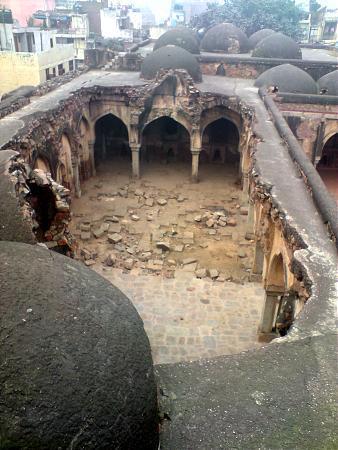
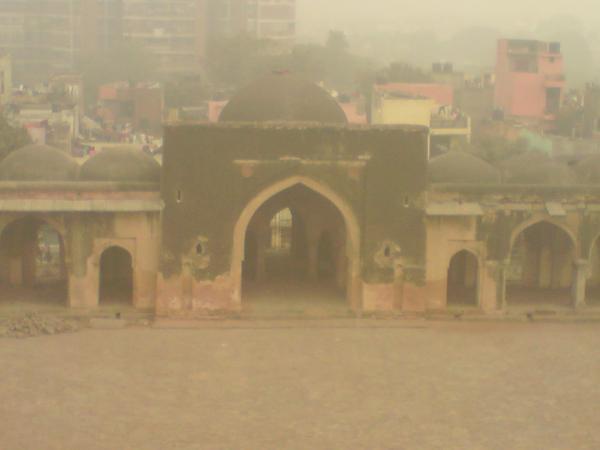
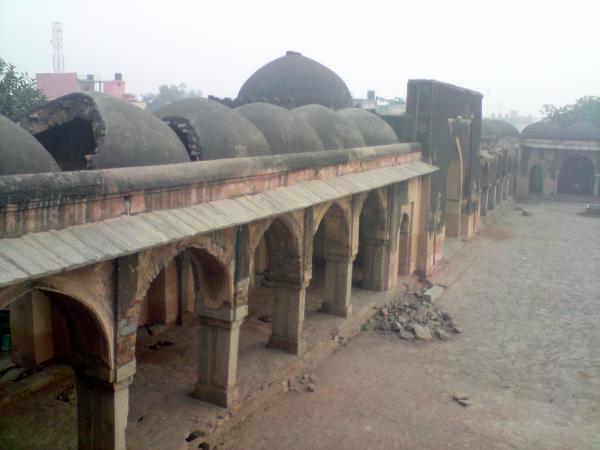
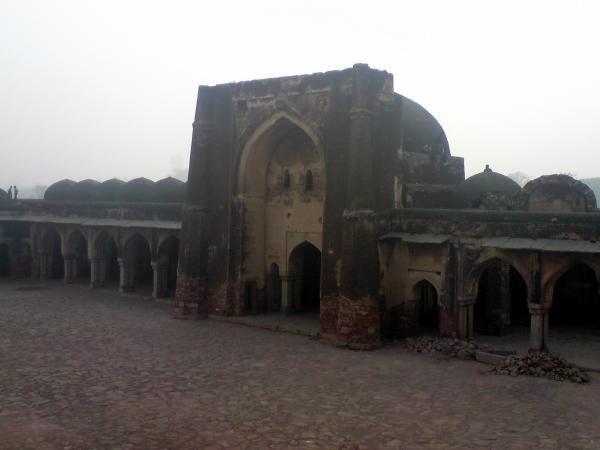
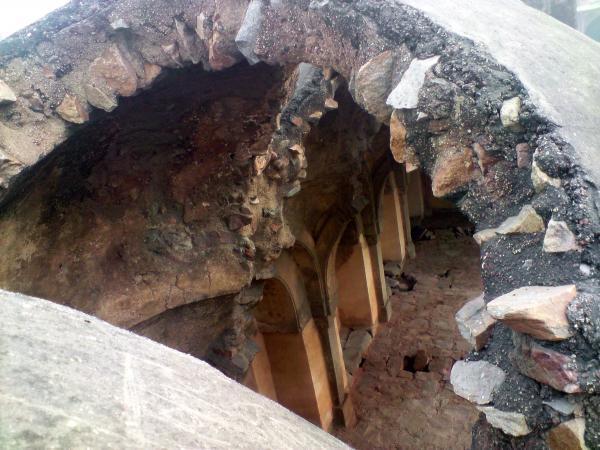
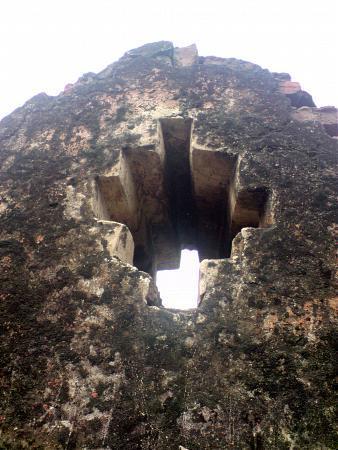
The Begumpur Mosque, a vestige of the old city, of overall layout plan of 90 m (295.3 ft)x94 m (308.4 ft) size with the inner courtyard measuring 75 m (246.1 ft)x80 m (262.5 ft), is said to be patterned on an Iranian design planned by the Iranian architect Zahir al-Din al-Jayush. A majestic building in the heart of the city with a pride of place played a pivotal role of serving as a madrasa, an administrative centre with the treasury and a mosque of large proportions serving as a social community hub surrounded by a market area. It has an unusual layout with three arch covered passages with a “three by eight” deep nine bay prayer hall on the west. Construction of this mosque is credited to two sources. One view is that it was built by Khan-i-Jahan Maqbul Tilangani, Prime Minister during Feroz Shah Tughlaq’s rule, who was also builder of six more masjids (two of them in the close vicinity). The other view is that it was built by Tughlaq because of its proximity to Bijay Mandal and could probably be dated to 1351 A.D., the year Tughlaq died here. In support of the second view, it is said that Ibn Batuta, the chronicler of the period (till his departure from Delhi in 1341 A.D.) had not recorded this monument. The Mosque considered an architectural masterpiece (see pictures in gallery) has three gates, one in each of the three covered passages, in North, East (main gate) and South directions. The west wall which has the Mihrab, has Toghluqi style tapering minarets flanking the central high opening covered by a big dome. The entire passageway of the west wall has twenty five arched openings. The Mihrab wall depicts five projections. The prayer hall has modest decorative carvings but the columns and walls are bland. The eastern gate approach is from the road level up a flight of steps to negotiate the raised plinth on which this unique mosque has been built with a four Iwan layout. Stone chajjas or eaves can also be seen on all the four arcades. The Northern entry with 1 m (3.3 ft) raised entrance, probably linked the Mosque to the Bijayamandal Palace. The stucco plastering work on the mosque walls have lasted for centuries and even now show some tiles fixed on them at a few locations. The mosque was under occupation during Jahanpanah’s existence till the 17th century. In the later period, encroachers had occupied the mosque but were cleared by the ASI in 1921. A shuttered by lane entry from the north has been interpreted as an approach that was used by the womenfolk of the Sultan’s family for attending prayers in the mosque.[4][11][5][6]
The Begumpur Mosque, a vestige of the old city, of overall layout plan of 90 m (295.3 ft)x94 m (308.4 ft) size with the inner courtyard measuring 75 m (246.1 ft)x80 m (262.5 ft), is said to be patterned on an Iranian design planned by the Iranian architect Zahir al-Din al-Jayush. A majestic building in the heart of the city with a pride of place played a pivotal role of serving as a madrasa, an administrative centre with the treasury and a mosque of large proportions serving as a social community hub surrounded by a market area. It has an unusual layout with three arch covered passages with a “three by eight” deep nine bay prayer hall on the west. Construction of this mosque is credited to two sources. One view is that it was built by Khan-i-Jahan Maqbul Tilangani, Prime Minister during Feroz Shah Tughlaq’s rule, who was also builder of six more masjids (two of them in the close vicinity). The other view is that it was built by Tughlaq because of its proximity to Bijay Mandal and could probably be dated to 1351 A.D., the year Tughlaq died here. In support of the second view, it is said that Ibn Batuta, the chronicler of the period (till his departure from Delhi in 1341 A.D.) had not recorded this monument. The Mosque considered an architectural masterpiece (see pictures in gallery) has three gates, one in each of the three covered passages, in North, East (main gate) and South directions. The west wall which has the Mihrab, has Toghluqi style tapering minarets flanking the central high opening covered by a big dome. The entire passageway of the west wall has twenty five arched openings. The Mihrab wall depicts five projections. The prayer hall has modest decorative carvings but the columns and walls are bland. The eastern gate approach is from the road level up a flight of steps to negotiate the raised plinth on which this unique mosque has been built with a four Iwan layout. Stone chajjas or eaves can also be seen on all the four arcades. The Northern entry with 1 m (3.3 ft) raised entrance, probably linked the Mosque to the Bijayamandal Palace. The stucco plastering work on the mosque walls have lasted for centuries and even now show some tiles fixed on them at a few locations. The mosque was under occupation during Jahanpanah’s existence till the 17th century. In the later period, encroachers had occupied the mosque but were cleared by the ASI in 1921. A shuttered by lane entry from the north has been interpreted as an approach that was used by the womenfolk of the Sultan’s family for attending prayers in the mosque.[4][11][5][6]
Nearby cities:
Coordinates: 28°32'21"N 77°12'22"E
- masjid sarita vihar=jan m y 8.2 km
- GOBIND SADAN 9 km
- Jamia Islamia Sanabil 10 km
- Shahi Eidgah 13 km
- Jama Masjid 13 km
- Eidgah 17 km
- Qabristan & Masjid 20 km
- Eidgah Loni 25 km
- Taj Heights 25 km
- Idgah Colony Masjid 55 km
- Begumpur 0.2 km
- park 0.4 km
- shivalik block A B C 0.5 km
- Sarvodaya Enclave 0.5 km
- Malviya Nagar 0.8 km
- Panchsheel Park South Block 0.9 km
- Panchsheel Park 1 km
- Hauz Khas 1.2 km
- Safdarjang Development Area 1.3 km
- Indian Institute of Technology Delhi 1.8 km
Comments