
Ngorongoro Conservation Area
Tanzania /
Arusha /
Ngorongoro /
World
/ Tanzania
/ Arusha
/ Ngorongoro
World / Tanzania / Arusha / Ngorongoro
conservation, nature conservation park / area, UNESCO World Heritage Site

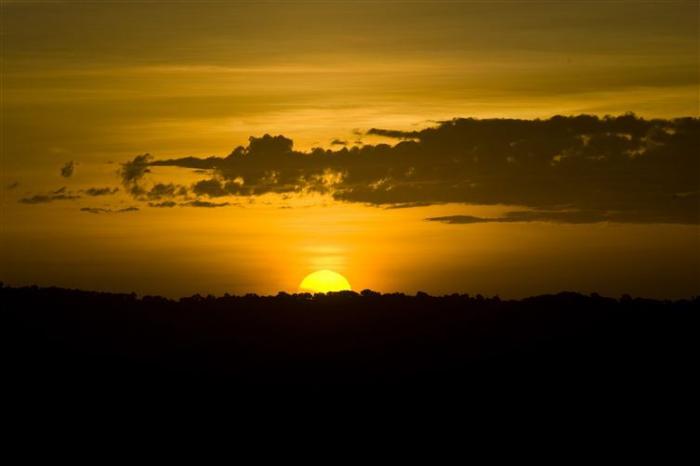
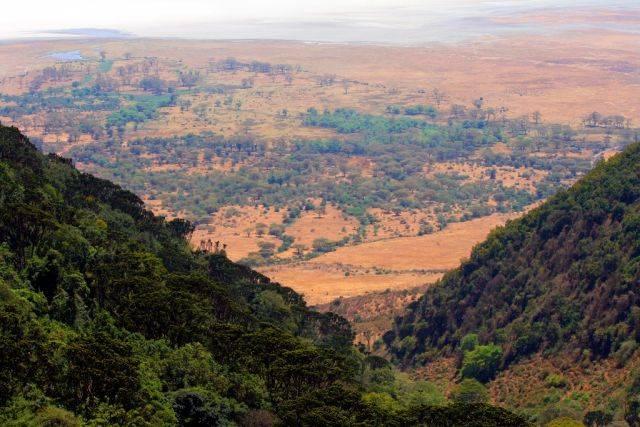
The Ngorongoro Conservation Area or NCA is a conservation area situated 180 km west of Arusha in the Crater Highlands area of Tanzania. The conservation area's boundaries follow the boundary of the Ngorongoro Division of Ngorongoro District. It is 8,288 km² - about the size of Crete.
History and Geography
Ngorongoro was declared a conservation area in 1959 and at that point it was separated from the Serengeti National Park. The Ngorongoro Conservation Area Authority is the governing body regulating use and access to the NCA. The area became a UNESCO World Heritage Site in 1979.
Land in the conservation area is multi-use, it is unique in Tanzania as the only conservation area, providing protection status for wildlife whilst allowing human habitation. As such land use is controlled to prevent negative effects on the wildlife population, for example cultivation is prohibited at all but subsistence levels.
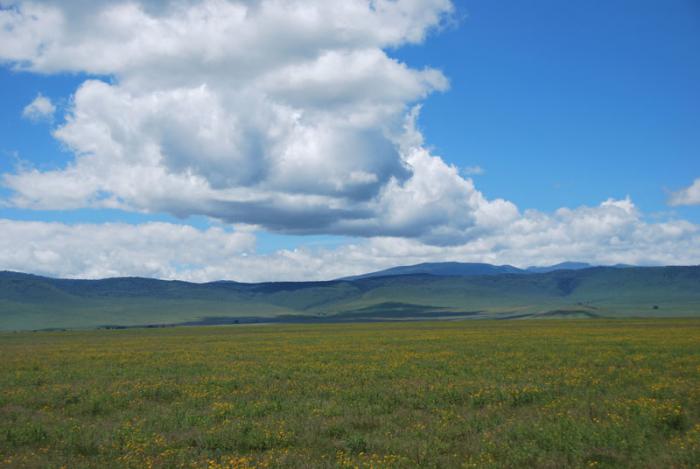
The area is part of the Serengeti ecosystem, and to the north-west it adjoins the Serengeti National Park and is contiguous with the southern Serengeti plains, these plains also extend to the north into unprotected Loliondo division and are kept open to wildlife through transhumant pastoralism practiced by Maasai. The south and west of the area are volcanic highlands, including the famous Ngorongoro Crater and the lesser known Empakai. The southern and eastern boundaries are approximately defined by the rim of the Great Rift Valley wall, which also prevents animal migration in these directions.
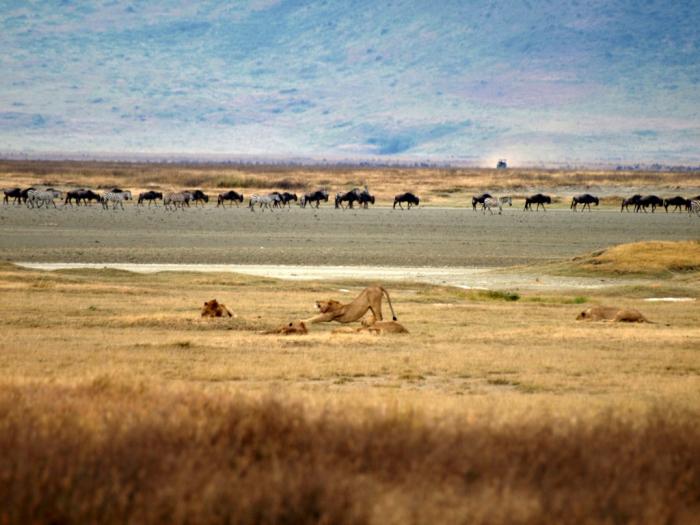
The annual ungulate migration passes through the NCA, with wildebeest and zebra moving south into the area in December and moving north in June. This movement changes seasonally with the rains, but the migration will traverse almost the entire plains in search of food. The NCA has a healthy resident population of most species of wildlife, in particular the Ndutu Lake area to the west has a strong cheetah and lion population.
Wildlife
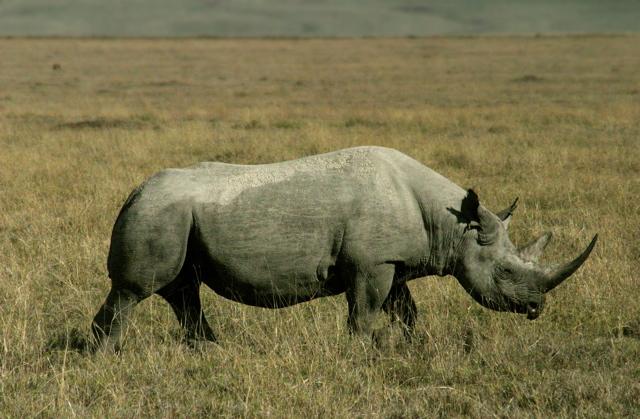
A population of about 25,000 large animals, largely ungulates along with the highest density of mammalian predators in Africa, lives in the crater. These include black rhinoceros, which have declined from about 108 in 1964-66 to between 11-14 in 1995, and hippopotamus which are very uncommon in the area. There are also many other ungulates: wildebeest (7,000 estimated in 1994), zebra (4,000), eland, Grant’s and Thomson’s gazelles (3,000). The crater has the densest known population of lion numbering 62 in 2001. On the crater rim are leopard, elephant numbering 42 in 1987 but only 29 in 1992, mountain reedbuck and buffalo (4,000 in 1994). However, since the 1980s the crater’s wildebeest population has fallen by a quarter to about 19,000 and the numbers of eland and Thomson’s gazelle have also declined while buffalos increased greatly, probably due to the long prevention of fire which favors high fibrous grasses over shorter less fibrous types.
In summer enormous numbers of Serengeti migrants pass through the plains of the reserve, including 1.7 million wildebeest, 260,000 zebra and 470,000 gazelles. Waterbuck mainly occur mainly near Lerai Forest; servals occur widely in the crater and on the plains to the west. Common in the reserve are lion, hartebeest, spotted hyena and jackal. Cheetah, though common in the reserve, are scarce in the crater itself. Wild dog has recently disappeared from the crater and may have declined elsewhere in the Conservation Area as well.
Ngorongoro Crater
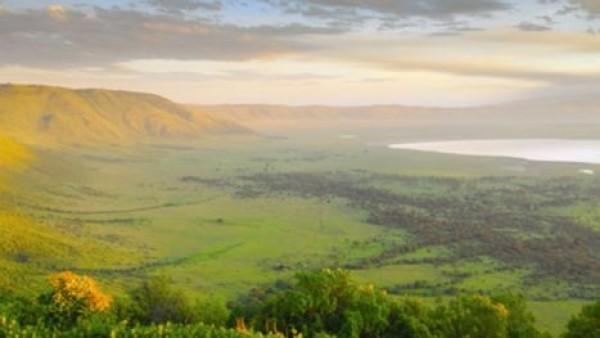
The main feature of the NCA is the Ngorongoro Crater, which is the world's largest unbroken volcanic caldera. The crater is 610m deep and the floor is 260km squared. The steep sides of the crater mean that it has become a natural enclosure for a very wide variety of wildlife, including most of the species found in East Africa.
Aside from herds of zebra, gazelle and wildebeest, the crater is home to the "big five" of rhinoceros, lion, leopard, elephant and buffalo. The crater plays host to almost every individual specicies of wildlife in East Africa, and there are an estimated 25,000 animals within the crater. Lake Magadi in the centre of the crater is, like many in the rift valley, a soda lake supporting flocks of flamingo.
History and Geography
Ngorongoro was declared a conservation area in 1959 and at that point it was separated from the Serengeti National Park. The Ngorongoro Conservation Area Authority is the governing body regulating use and access to the NCA. The area became a UNESCO World Heritage Site in 1979.
Land in the conservation area is multi-use, it is unique in Tanzania as the only conservation area, providing protection status for wildlife whilst allowing human habitation. As such land use is controlled to prevent negative effects on the wildlife population, for example cultivation is prohibited at all but subsistence levels.
The area is part of the Serengeti ecosystem, and to the north-west it adjoins the Serengeti National Park and is contiguous with the southern Serengeti plains, these plains also extend to the north into unprotected Loliondo division and are kept open to wildlife through transhumant pastoralism practiced by Maasai. The south and west of the area are volcanic highlands, including the famous Ngorongoro Crater and the lesser known Empakai. The southern and eastern boundaries are approximately defined by the rim of the Great Rift Valley wall, which also prevents animal migration in these directions.
The annual ungulate migration passes through the NCA, with wildebeest and zebra moving south into the area in December and moving north in June. This movement changes seasonally with the rains, but the migration will traverse almost the entire plains in search of food. The NCA has a healthy resident population of most species of wildlife, in particular the Ndutu Lake area to the west has a strong cheetah and lion population.
Wildlife
A population of about 25,000 large animals, largely ungulates along with the highest density of mammalian predators in Africa, lives in the crater. These include black rhinoceros, which have declined from about 108 in 1964-66 to between 11-14 in 1995, and hippopotamus which are very uncommon in the area. There are also many other ungulates: wildebeest (7,000 estimated in 1994), zebra (4,000), eland, Grant’s and Thomson’s gazelles (3,000). The crater has the densest known population of lion numbering 62 in 2001. On the crater rim are leopard, elephant numbering 42 in 1987 but only 29 in 1992, mountain reedbuck and buffalo (4,000 in 1994). However, since the 1980s the crater’s wildebeest population has fallen by a quarter to about 19,000 and the numbers of eland and Thomson’s gazelle have also declined while buffalos increased greatly, probably due to the long prevention of fire which favors high fibrous grasses over shorter less fibrous types.
In summer enormous numbers of Serengeti migrants pass through the plains of the reserve, including 1.7 million wildebeest, 260,000 zebra and 470,000 gazelles. Waterbuck mainly occur mainly near Lerai Forest; servals occur widely in the crater and on the plains to the west. Common in the reserve are lion, hartebeest, spotted hyena and jackal. Cheetah, though common in the reserve, are scarce in the crater itself. Wild dog has recently disappeared from the crater and may have declined elsewhere in the Conservation Area as well.
Ngorongoro Crater
The main feature of the NCA is the Ngorongoro Crater, which is the world's largest unbroken volcanic caldera. The crater is 610m deep and the floor is 260km squared. The steep sides of the crater mean that it has become a natural enclosure for a very wide variety of wildlife, including most of the species found in East Africa.
Aside from herds of zebra, gazelle and wildebeest, the crater is home to the "big five" of rhinoceros, lion, leopard, elephant and buffalo. The crater plays host to almost every individual specicies of wildlife in East Africa, and there are an estimated 25,000 animals within the crater. Lake Magadi in the centre of the crater is, like many in the rift valley, a soda lake supporting flocks of flamingo.
Wikipedia article: http://en.wikipedia.org/wiki/Ngorongoro_Conservation_Area
Nearby cities:
Coordinates: 3°4'14"S 35°25'35"E
- Hranitno-Stepove Pobuzhzhia 5706 km
- Hutan Adat 8987 km
- Deep Creek Conservation Park 10964 km
- The Dutchmans Stern Conservation Park 11003 km
- Cleland Conservation Park 11023 km
- Brookfield Conservation Park 11105 km
- Eagle Bluffs Conservation Area 13440 km
- Perry Memorial Conservation Area 13519 km
- Kapiti Island (Entry Island) 13650 km
- Elkhorn Slough 15611 km
- Ngorongoro Crater 20 km
- Lake Eyasi 71 km
- FOREST RESERVE ARUSHA AND MANYARA 72 km
- Landscape full of craters 75 km
- Lake Manyara 76 km
- BONDE LA YAEDA CHINI 99 km
- DRIED YAEDA CHINI LAKE 102 km
- Nouw forest reserve 108 km
- Serengeti National Park 124 km
- Tangire National Park 138 km