
Chattogram
Bangladesh /
Chattagam /
World
/ Bangladesh
/ Chattagam
/ Chattagam
city
Add category
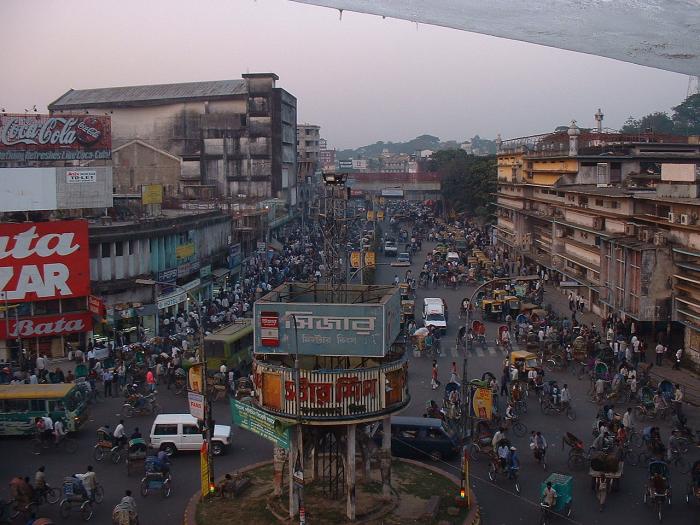
Chittagong (Bengali: চট্টগ্রাম Chôṭṭôgram) is the second-largest city and principal seaport of Bangladesh. It is located at the estuary of the Karnaphuli River in southeastern Bangladesh. It faces the Bay of Bengal to its west. The city has a population of over 6.5 million people. It is the administrative capital of Chittagong Division and the main city of Chittagong District.
With an ancient natural harbour, Chittagong has served as a gateway of Bengal since antiquity. It was described by the Roman geographer Claudius Ptolemy as one of the great harbours of Asia. For centuries, it was an important port on the maritime Silk Road— attracting merchants and travelers from Arabia, Persia, China and Southeast Asia. The Sultanate of Bengal and the Kingdom of Arakan ruled the region during the Middle Ages. The Portuguese established merchant settlements in the area during the 16th-century. Following Mughal conquest in 1666, the port city was renamed as Islamabad. In the late-18th century, it was ceded to the British East India Company after the fall of the last independent Nawab of Bengal.
By the late 1800s, Chittagong was a major administrative, transportation and commercial centre in the Bengal Presidency in British India. It was a focal point of the anti-colonial movement and witnessed the Chittagong armoury raid in 1930. It was a key base for Allied Forces during the Burma Campaign in World War II. After the Partition of British India in 1947, Chittagong became part of East Pakistan. During the Bangladesh Liberation War in 1971, the declaration of Bangladesh’s independence was proclaimed from the Free Bengal Radio Station in Chittagong. The port city witnessed heavy fighting, air raids and naval blockades during the war.
Chittagong is regarded as the commercial and industrial capital of Bangladesh, being home to many of the country's oldest and largest companies and its most diversified industrial base.[8] The Port of Chittagong handles 80% of Bangladesh's foreign trade. In recent years, the metropolitan region of Chittagong has emerged as one of the fastest-growing cities in the world. With the development and expansion of port facilities and the opening of new trade routes, Chittagong has ambitions of emerging as a leading regional and global economic hub. It is seen as crucial to the economic development of landlocked southern Asia, including North East India, Southwest China, Nepal, Bhutan and parts of Burma.
The port city accounts for 12% of the national economy; generating 40% of heavy industrial output, 85% of foreign trade and 60% of revenue earnings. The Port of Chittagong handled an estimated $60 billion in annual trade in 2011.[56] The city is also one of the twin financial centers of Bangladesh, being home to the Chittagong Stock Exchange, which has a combined market capitalization of $26.6 billion as of 2013.
Endowed with the largest and most diversified industrial base in the country, Chittagong is the centre of industries in steel, petroleum, chemicals, shipbuilding, ship-repair and scrappage, glass manufacturing, cement, ceramics, fertilizer, automotive components and motor vehicle assembly. It hosts numerous light industrial zones which specialize in garments, leather products, food processing, tea, sports goods and jute products. The Chittagong Export Processing Zone, which is the largest export processing zone in Bangladesh, was ranked by the Financial Times as one of the world's best special economic zones. The Karnaphuli Export Processing Zone in North Patenga is also one of the largest manufacturing hubs in Bangladesh. The billion dollar under-construction Korean EPZ, being set up by investors from South Korea, will feature the world’s largest garments and shoe factories.
The major companies based in Chittagong include M. M. Ispahani Limited, A K Khan & Company,[60] BSRM, the Habib Group, the PHP Group, Western Marine Shipyard, the T K Group of Industries. the KDS Group, Clewiston Group, James Finlay Bangladesh and the Bangladesh Shipping Corporation. There are over 50 banks and financial institutions in Chittagong, including HSBC, Standard Chartered and Citigroup. Chittagong is also home to the three main petroleum distribution companies of Bangladesh, including the Jamuna Oil Company, the Padma Oil Company and Meghna Petroleum. Founded in 1959, the Chittagong Chamber of Commerce & Industry serves as the main chamber of commerce in the city.
The textile industry in Chittagong exported $4.5 billion worth of garments in the fiscal year 2011-12. Chittagong has also led the Bangladeshi shipbuilding boom, exporting ocean-going vessels worth $400 million as of 2012. It hosts several major pharmaceutical companies and their manufacturing plants.
The port city is home to many of the oldest and largest conglomerates in Bangladesh, including some of the oldest corporate houses in the country. Several conglomerates are owned by wealthy Muslim immigrant families from Persia and India.
The region was a centre of the medieval shipbuilding industry in Asia; and was the site of the construction of Mughal and Ottoman naval fleets. The shipbuilding industry also flourished under colonial rule. Sailing ships built in Chittagong include the Betsey, the Argo, and the Mersey.
Chittagong is the centre of the commodity trade in Bangladesh. The vibrant wholesale bazaars in Khatunganj, Asadganj and Chatkai are the main supply point for imported commodities and raw materials for the entire Bangladeshi market. These bazaars are dominated by traditional Chittagonian traders who are known as swadagars. The Chittagong Tea Auction was set up by Commonwealth investors in 1949. With the growth of tea exports from East Pakistan and later Bangladesh, it became one of the leading auction houses of the international tea trade. Today, however, the auction mainly caters to the domestic market.
Many major banks, both international and local, are present in Chittagong; most of them being located in Agrabad, the chief commercial district of the city. Numerous investments have allowed for a construction boom similar to Dhaka. Over the years numerous hotels, shopping malls, and other commercial buildings have been constructed. Ongoing developments include various multi-story shopping malls and the World Trade Centre Chittagong.
Among major British businesses with a strong heritage in Chittagong include Lloyds, Standard Chartered Bank (formerly the Chartered Bank of India, Australia and China), Burmah Oil (present-day Padma Oil Company), Unilever Bangladesh (formerly Lever Brothers), British Oxygen, the P&O Group (formerly Mckenzie and Mckenzie), British American Tobacco, and Royal Dutch Shell. Historic trading companies of the British Empire with their roots in Chittagong include James Finlay, Duncan Brothers, Turner Morrison, James Warren, and Raleigh Brothers.
Chittagong has attracted people from around the world. The various waves of settlements left a lasting impact on the language and culture of the city. The origins of the people of the city are diverse and multi-ethnic. The majority of the urban people are involved in the import-export, trade-commerce, and various industrial and business activities along with many other private and government sector occupations like other port cities of the globe. Mezbaan is a traditional feast that originated in this region and is usually hosted by rich people mainly on the occasion of the observance of the birth and death of Islamic prophet Muhammad. Other occasions include the death anniversary of an individual, the birth of a child, any special achievement by someone, inauguration of a new business or celebration of the entrance to a new residence. Lungi or panjabi-payjama is the most common costume for men and Saree for women. Rice and fish is the staple food of the people. Because of close affinity to the sea, seafood is quite popular. Vegetables commonly found in the market are gourds, pumpkins, various legumes, etc. Fruits include jackfruits, ice apples, coconuts, bananas, custard apple, etc. Shutki mach/dried fish is a specialty.
Being home to some of the oldest and most popular bands of the country including Souls, LRB etc., Chittagong is often regarded as the "birthplace of Bangladeshi rock music".
Chittagong is the home town of Mohammad Yunus, founder of Grameen Bank, the pioneer of Microcredit, who won the Nobel Prize in Peace in 2006.
With an ancient natural harbour, Chittagong has served as a gateway of Bengal since antiquity. It was described by the Roman geographer Claudius Ptolemy as one of the great harbours of Asia. For centuries, it was an important port on the maritime Silk Road— attracting merchants and travelers from Arabia, Persia, China and Southeast Asia. The Sultanate of Bengal and the Kingdom of Arakan ruled the region during the Middle Ages. The Portuguese established merchant settlements in the area during the 16th-century. Following Mughal conquest in 1666, the port city was renamed as Islamabad. In the late-18th century, it was ceded to the British East India Company after the fall of the last independent Nawab of Bengal.
By the late 1800s, Chittagong was a major administrative, transportation and commercial centre in the Bengal Presidency in British India. It was a focal point of the anti-colonial movement and witnessed the Chittagong armoury raid in 1930. It was a key base for Allied Forces during the Burma Campaign in World War II. After the Partition of British India in 1947, Chittagong became part of East Pakistan. During the Bangladesh Liberation War in 1971, the declaration of Bangladesh’s independence was proclaimed from the Free Bengal Radio Station in Chittagong. The port city witnessed heavy fighting, air raids and naval blockades during the war.
Chittagong is regarded as the commercial and industrial capital of Bangladesh, being home to many of the country's oldest and largest companies and its most diversified industrial base.[8] The Port of Chittagong handles 80% of Bangladesh's foreign trade. In recent years, the metropolitan region of Chittagong has emerged as one of the fastest-growing cities in the world. With the development and expansion of port facilities and the opening of new trade routes, Chittagong has ambitions of emerging as a leading regional and global economic hub. It is seen as crucial to the economic development of landlocked southern Asia, including North East India, Southwest China, Nepal, Bhutan and parts of Burma.
The port city accounts for 12% of the national economy; generating 40% of heavy industrial output, 85% of foreign trade and 60% of revenue earnings. The Port of Chittagong handled an estimated $60 billion in annual trade in 2011.[56] The city is also one of the twin financial centers of Bangladesh, being home to the Chittagong Stock Exchange, which has a combined market capitalization of $26.6 billion as of 2013.
Endowed with the largest and most diversified industrial base in the country, Chittagong is the centre of industries in steel, petroleum, chemicals, shipbuilding, ship-repair and scrappage, glass manufacturing, cement, ceramics, fertilizer, automotive components and motor vehicle assembly. It hosts numerous light industrial zones which specialize in garments, leather products, food processing, tea, sports goods and jute products. The Chittagong Export Processing Zone, which is the largest export processing zone in Bangladesh, was ranked by the Financial Times as one of the world's best special economic zones. The Karnaphuli Export Processing Zone in North Patenga is also one of the largest manufacturing hubs in Bangladesh. The billion dollar under-construction Korean EPZ, being set up by investors from South Korea, will feature the world’s largest garments and shoe factories.
The major companies based in Chittagong include M. M. Ispahani Limited, A K Khan & Company,[60] BSRM, the Habib Group, the PHP Group, Western Marine Shipyard, the T K Group of Industries. the KDS Group, Clewiston Group, James Finlay Bangladesh and the Bangladesh Shipping Corporation. There are over 50 banks and financial institutions in Chittagong, including HSBC, Standard Chartered and Citigroup. Chittagong is also home to the three main petroleum distribution companies of Bangladesh, including the Jamuna Oil Company, the Padma Oil Company and Meghna Petroleum. Founded in 1959, the Chittagong Chamber of Commerce & Industry serves as the main chamber of commerce in the city.
The textile industry in Chittagong exported $4.5 billion worth of garments in the fiscal year 2011-12. Chittagong has also led the Bangladeshi shipbuilding boom, exporting ocean-going vessels worth $400 million as of 2012. It hosts several major pharmaceutical companies and their manufacturing plants.
The port city is home to many of the oldest and largest conglomerates in Bangladesh, including some of the oldest corporate houses in the country. Several conglomerates are owned by wealthy Muslim immigrant families from Persia and India.
The region was a centre of the medieval shipbuilding industry in Asia; and was the site of the construction of Mughal and Ottoman naval fleets. The shipbuilding industry also flourished under colonial rule. Sailing ships built in Chittagong include the Betsey, the Argo, and the Mersey.
Chittagong is the centre of the commodity trade in Bangladesh. The vibrant wholesale bazaars in Khatunganj, Asadganj and Chatkai are the main supply point for imported commodities and raw materials for the entire Bangladeshi market. These bazaars are dominated by traditional Chittagonian traders who are known as swadagars. The Chittagong Tea Auction was set up by Commonwealth investors in 1949. With the growth of tea exports from East Pakistan and later Bangladesh, it became one of the leading auction houses of the international tea trade. Today, however, the auction mainly caters to the domestic market.
Many major banks, both international and local, are present in Chittagong; most of them being located in Agrabad, the chief commercial district of the city. Numerous investments have allowed for a construction boom similar to Dhaka. Over the years numerous hotels, shopping malls, and other commercial buildings have been constructed. Ongoing developments include various multi-story shopping malls and the World Trade Centre Chittagong.
Among major British businesses with a strong heritage in Chittagong include Lloyds, Standard Chartered Bank (formerly the Chartered Bank of India, Australia and China), Burmah Oil (present-day Padma Oil Company), Unilever Bangladesh (formerly Lever Brothers), British Oxygen, the P&O Group (formerly Mckenzie and Mckenzie), British American Tobacco, and Royal Dutch Shell. Historic trading companies of the British Empire with their roots in Chittagong include James Finlay, Duncan Brothers, Turner Morrison, James Warren, and Raleigh Brothers.
Chittagong has attracted people from around the world. The various waves of settlements left a lasting impact on the language and culture of the city. The origins of the people of the city are diverse and multi-ethnic. The majority of the urban people are involved in the import-export, trade-commerce, and various industrial and business activities along with many other private and government sector occupations like other port cities of the globe. Mezbaan is a traditional feast that originated in this region and is usually hosted by rich people mainly on the occasion of the observance of the birth and death of Islamic prophet Muhammad. Other occasions include the death anniversary of an individual, the birth of a child, any special achievement by someone, inauguration of a new business or celebration of the entrance to a new residence. Lungi or panjabi-payjama is the most common costume for men and Saree for women. Rice and fish is the staple food of the people. Because of close affinity to the sea, seafood is quite popular. Vegetables commonly found in the market are gourds, pumpkins, various legumes, etc. Fruits include jackfruits, ice apples, coconuts, bananas, custard apple, etc. Shutki mach/dried fish is a specialty.
Being home to some of the oldest and most popular bands of the country including Souls, LRB etc., Chittagong is often regarded as the "birthplace of Bangladeshi rock music".
Chittagong is the home town of Mohammad Yunus, founder of Grameen Bank, the pioneer of Microcredit, who won the Nobel Prize in Peace in 2006.
Nearby cities:
Coordinates: 22°19'46"N 91°49'3"E
- Madar Bari 0.5 km
- Agrabad Commercial Area (আগ্রাবাদ বানিজ্যিক এলাকা) 0.6 km
- Hazi Para 1.1 km
- CGS Colony 1.1 km
- Bepari Para 1.5 km
- Chittagong Port 3.3 km
- HALISHAHAR 4 km
- Chattogram Port, Airport & EPZ Area 6.2 km
- Patiya Upazila (পটিয়া) 13 km
- Chattogram District Area 14 km