
The Sphinx Of Banat
Romania /
Caras-Severin /
Toplet /
World
/ Romania
/ Caras-Severin
/ Toplet
formation, megalith, interesting place

THE SPHINX OF BANAT
The trip starts in "Baile Herculane" resort. From the railway station you go south on the european road E70 heading towards the city of Orsova. You pass over Cerna river on the second concrete bridge you see. Continue your hike for another 2-3 km, walking first over a field and then on the trail going thru people's gardens.
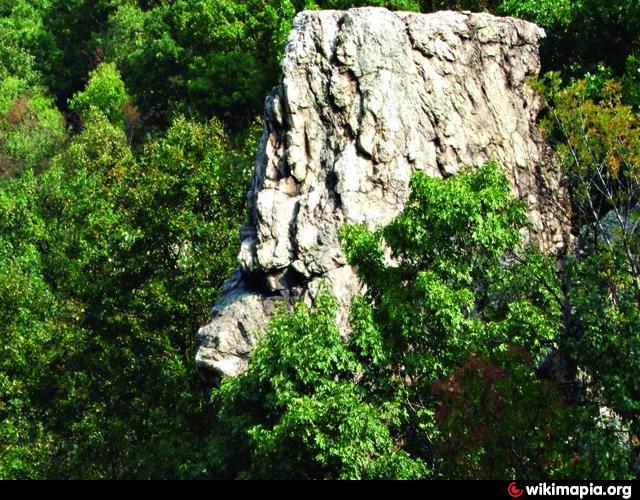
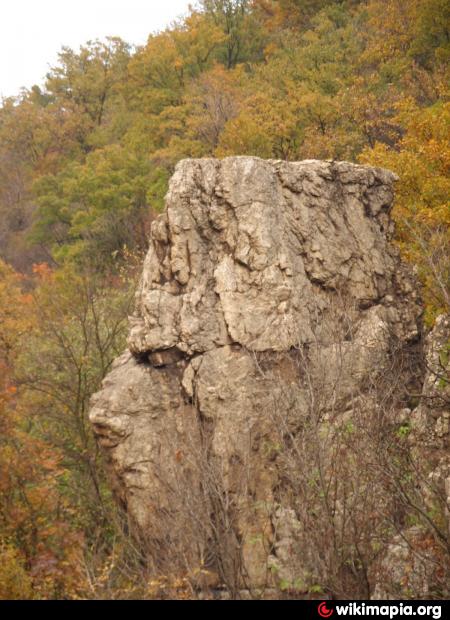
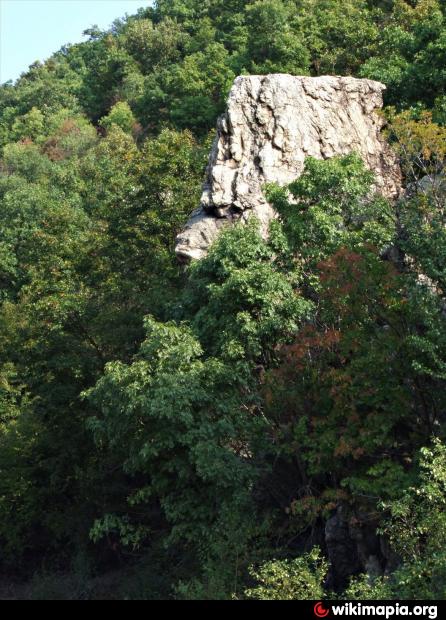
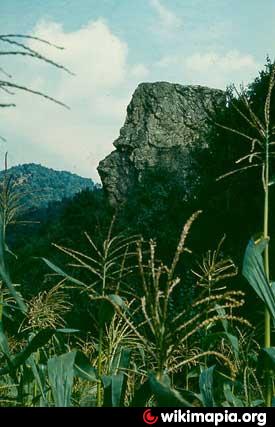
This is the official name of this monolith, enlisted as a tourist attraction within the territory of the Toplet village, in the Caras-Severin county.
Other names given to it are “Sfinxul de pe Valea Cemei” = “The Sphinx from the Cerna Valley (as it lies on the left bank of the Cerna river) or “Capul Turcului” = “The Turk’s Head (the exact location being a place called “Podul Turcilor”= the Turks” bridge). This place has its own story: after the peace treaty signed at Belgrade, in 1739, the Turks built a bridge, under French guidance, at the new borders (Paul Decei - “Pe plaiuri si vai carpatine”, Editura Albatros, Bucuresti, 1983). Somebody is supposed to have thought of shaping this stone, but there are no written records of it and the researchers don’t confirm this hypothesis. Taking into account the numerous legends from Banat, having as hero a certain Iovan Iorgovan (alias Hercules), we feel inclined to trust Nicolae Densusianu who presents it as “an inanimate shape of Hercules, not carved by human hand” or “the idol of the power of Hercules”. (“Dacia preistorica” – Ed. Meridiane, 1986, Bucuresti, p. 308-314).
The trip starts in "Baile Herculane" resort. From the railway station you go south on the european road E70 heading towards the city of Orsova. You pass over Cerna river on the second concrete bridge you see. Continue your hike for another 2-3 km, walking first over a field and then on the trail going thru people's gardens.
This is the official name of this monolith, enlisted as a tourist attraction within the territory of the Toplet village, in the Caras-Severin county.
Other names given to it are “Sfinxul de pe Valea Cemei” = “The Sphinx from the Cerna Valley (as it lies on the left bank of the Cerna river) or “Capul Turcului” = “The Turk’s Head (the exact location being a place called “Podul Turcilor”= the Turks” bridge). This place has its own story: after the peace treaty signed at Belgrade, in 1739, the Turks built a bridge, under French guidance, at the new borders (Paul Decei - “Pe plaiuri si vai carpatine”, Editura Albatros, Bucuresti, 1983). Somebody is supposed to have thought of shaping this stone, but there are no written records of it and the researchers don’t confirm this hypothesis. Taking into account the numerous legends from Banat, having as hero a certain Iovan Iorgovan (alias Hercules), we feel inclined to trust Nicolae Densusianu who presents it as “an inanimate shape of Hercules, not carved by human hand” or “the idol of the power of Hercules”. (“Dacia preistorica” – Ed. Meridiane, 1986, Bucuresti, p. 308-314).
Nearby cities:
Coordinates: 44°50'18"N 22°23'29"E
- Cazanele Mici (“The Small Kettles”) 22 km
- DUCIN RESERVATION 43 km
- Miniș gorge 51 km
- Nera Gorges 52 km
- Anina 54 km
- Oraviţa 61 km
- Vrnjačka Banja 180 km
- Novaci 202 km
- Brusnik 230 km
- Amzici 253 km
- Comuna Toplet 5.8 km
- Coramnic Forest 10 km
- Jupalnic Forest 11 km
- Orşova South 13 km
- Vatra Vechii Ogradene 21 km
- Cazanele Mici (“The Small Kettles”) 23 km
- Cazanele Mari (“The Great Kettles”) 28 km
- Almaj Valley 30 km
- Iron Gates Gorge 31 km
- National park Đerdap 39 km