
Luzzara Municipality
Italy /
Emilia-Romagna /
Luzzara /
World
/ Italy
/ Emilia-Romagna
/ Luzzara
World / Italy / Emilia-Romagna / Reggio Nell'Emilia
municipality, draw only border, third-level administrative division
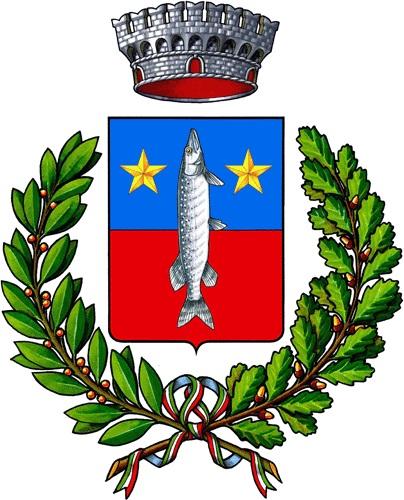
Located in an area 36 km far from Reggio Emilia and 26 km from Mantova, Luzzara is part of a scenic landscape typically Po. The characteristics of the banks of the Po river bordering the land border with Lombardy, choreographed backdrop to the wide expanses of forest and cultivated land that successfully account for 60% of the area Luzzaresi. The landscape presents itself to those who visit Luzzaresi floodplain, is of major importance for the appearance of unspoiled river environment. Access to it is along the characteristic Viale Po , crossed by several long gravel driveway which develops an interesting itinerary planning and natural. The area is rich in fauna, are broadly represented the herons and ducks during the autumn and spring passage, the year many species of sparrows, including breeding, few species of mammals, with the exception of rabbits and moles. In muddy pools are well represented species of freshwater mollusks such as cones and hoods. Natural elements of particular interest are: The artificial lake resulting from a quarry for the extraction of clay, called "Pike Quarry." In his background, predominantly silty, teeming with a rich animal and plant life. This area is a place of respite service for numerous aquatic birds, both resident and migratory. In lake fishing is sport. To visit the ancient riverbed of Crostolina which was until 1932 the bed of the river terminal Crostolo. She remained without water after the operation with constant flow hydraulic excavation carried out from 1929 to 1932 in the locality level, which has diverted the course to the northwest. Here are found some which are successfully grown to 60% of the area Luzzaresi. Recently, the floodplain Luzzaresi was equipped with a small marina called "Port of heronries, opened in 2007.Its origin, according to the most recent historical, is to be placed in the Lombard period, as in the language of the Lombards are to find the roots of its name. For Father Irenaeus Affo Luzzara should instead name the presence of a large number of pike in the water. He says that the Lombards in 604, after the battle of Mantua, who settled where now stands Guastalla, finding plenty of fish for pike Luzzaresi against the island (the first cluster of Luzzara was on an island in the valley also testifies Rio) some call it "Lucciaia", later "Luciaria" and then "Luzzara. For Cluverio, however, the name derives from Luzzara "Nuceria", then "Nucera", "Lucera" and "Luzzara", an ancient Roman city destroyed during the barbarian invasions, its ruins were covered by floods. Lack reliable evidence of its Roman ancestry, although Codisotto and Riva Suzzara in 'Eight hundred were found remains of the imperial era. Based on documents that you have today, the name Luzzara appears for the first time in a diploma of 781 with which Charlemagne , King of the Franks and the Lombards, took under his protection, the High Church Reggiana.
Luzzara is an example of changes in the Lords in this period of political vitality of the Po valley. The Bishop of Reggio buy the Emperor Louis the Pious, Lothair which succeeds to the throne, claiming that they have resumed violent domination. It is then returned to the Bishop of Reggio, back in 840 that the Emperor gives a gift to Angilberga, the wife of his son Louis II . After further vicissitudes of Church and Empire, Luzzara back in the hands of the Bishop of Reggio entrusted with the Guastalla to Boniface of Canossa. Remains in its power until the family and the times of Matilda of Canossa is remembered as among the possessions of the Countess Parish. In 1160 Frederick returned to the Bishop of Reggio, although these can not claim any right, as occupied by Cremonesi, who see it recognized the possession by Henry IV. In 1311 Emperor Henry VII gave Passerino Bonaccolsi, lord of Mantua, the possession of Luzzara. Bonaccolsi the Fallen, the Cremonese, concerned about the growing power of the Gonzaga family, are quick to occupy Luzzara, but are driven by Luigi Gonzaga confirm that it sees the possession by the Emperor Charles IV in 1354 .
During the rule of the Gonzaga, Luzzara was fortified and its topographic map can still be read separately for the squares, the palaces of power and religious buildings, as they were designed in the '400. In 1350 the country is home to Francesco Petrarca . By assigning a Luzzara Rodolfo Gonzaga , son of the Marchese Lodovico , started the branch of Gonzaga Luzzara. Under his rule the residential building is erected Gonzaga, the work of Luca Fancelli , architect to the Court of Mantua . Rudolph died in 1495 during the famous Battle of Fornovo on Taro, the estate passed first to his wife Caterina Pico, then (1501) to his son Gianfrancesco.
The Emperor Charles V in 1502 to elect the Marquis feud immediate transmissible in perpetuity for birthright. In 1524, the death of the domain Gianfrancesco Luzzara passes to his son Maximilian, who assigns the latest (1557) to his cousin Guglielmo Gonzaga. Luzzara in 1630 was annexed to the Duchy of Guastalla , which governs with varying fortune until 1746. Luzzara in 1747 and its territory are incorporated, following the extinction of the branch of the Gonzaga of Guastalla Maria Theresa of the Austrian Empire.
The most striking episode of the story you Luzzaresi August 15, 1702, when fighting in the War of Spanish Succession , a violent battle between the imperial army led by Prince Eugene of Savoy and the Franco-Spanish: it is the famous Battle of Luzzara . Two days later Luzzara surrenders to the Gallo-Spaniards and get serious losses. In 1734, the outbreak of the war for the succession of the Kingdom of Poland , the country is occupied by the Franco-Sardinian troops under the command of King Carlo Emanuele III of Sardinia . A new bloody battle took place on September 17 of that year, in which the Imperialists are once again defeated. With the Treaty of Aachen of 18 October 1748 Luzzara is assigned to Duke Philip of Parma , which makes use of illuminated du Tillot to liven up the economy with incentive grants for the creation of new productive activities. In 1759 , for the sovereign edict was abolished the office of Mayor, being concentrated in Guastalla all the bureaucratic-administrative.
John who died in 1794, the second son of Louis, the heir of the dynasty after the death of his eldest son Basil (1782), dies in the line of descent of the Gonzaga Luzzara.
The French Revolution and Napoleonic lead Luzzara the work in the Cisalpine Republic and then in the compartment of Crostolo. The fall of the Napoleonic Empire, February 9, 1814, is re-occupied by Austrian troops.
Following the Congress of Vienna , the former Bourbon states are assigned to Maria Luisa Habsburg-Lorraine . On the death of the Duchess, January 4, 1848, passed to the Este of Luzzara Francesco V . Following the War of Independence II , August 16, 1860 is declared the forfeiture of Francis V.
With the plebiscite of 11 and 12 March 1860, Luzzara is annexed to the Kingdom of Piedmont, and then to the Kingdom of Italy. Thanks to Francesco Boccalari Luzzara was formed in 1863 in a Society of shooting chaired by President Giuseppe Garibaldi .
Between 1859 and 1866 Luzzara was a frontier country since Oltrepò Mantua had remained subject to ' Austro-Hungarian Empire . A Codisotto there was both the Austrian and Italian customs. The border that ran along a ditch called Po Vecchio, was marked by a fence post to prevent smuggling and the flight on Austrian territory of young draft evaders.
Gonzaga Luzzara
Marquis Rudolph 1494-95
Gian Francesco 1495-1524
Massimiliano 1524-1578, ceding sovereignty in Mantua
Prospero 1578-1614
Frederick 1614-1630
Louis 1630-1666
Frederick II 1666-1698
Louis II 1698-1738
Basil 1738-1782
John 1782-1794.
The battle will move to the front, keeping the country in terms of fighting spirit and liveliness that will be the social heritage of the whole Lower Reggio at the time of Camillo Prampolini , symbolically called "the apostle of socialism."
Four years after the unit was established in Luzzara the first company workers, to which many others will follow, in the constant effort to curb unemployment and poverty and to meet with police repression. For a family with strong socialist traditions belongs Luzzaresi Fortichiari Bruno , one of the founders of the Communist Party.
Fascism now hit hard, and in an exemplary way: May 5, 1921 will be killed in circumstances never fully understood the young anarchist Richard Siliprandi, attacked by a group of squads. The price paid by Luzzara the cause of resistance is very high, and turned into powder in the warehouse of weapons by the Nazis, will have 10 Reggiolo partisans shot in April of '45, 7 others killed during various military operations in the province, dead or missing in the concentration camps, civilians arrested and tortured.
The war will inevitably resume the conflict on the social level - culminating in the strikes "inside out" of the laborers on the banks of the River cable - and will return to the city government of the left.
The Civic Tower
On 23 October 1702 the French army undermined the part of the castle which faced Guastalla, and part of the castle with its imposing tower. The community had Luzzaresi outset expressed his desire to build high tower with the material recovered from the rubble of the old tower of the fortress and fortifications.
In 1724 he began using, to the scaffold, the wood came from Guastalla offered by Duke. The works were suspended for lack of money, leaving the tower at the top, square. In 1780, the community's determination to Luzzara led to the completion of the Tower with the construction of the dome which was placed on a zinc coating. On September 15, 1780 was placed at the top of the cross with the Pike Tower which is considered the height of 55 meters. Originally the tower had only two clock faces, one north and one south, according to the director from the main road Luzzara (by Step), following the construction of the Boulevard Station (via the Philippines) in 1911, is 20 years decided to build a third quadrant to the east and the other two to move higher. The legend, known to many Luzzaresi, wants the tower is the highest of its 55 meters, which is partly true because the tower was built behind the old castle moat of Luzzara, and currently under the floor to ground floor there is a basement depth of about 2.5 m, which was once the floor of the tower. The level of the plaza was raised to street level Avanzi until 1911, filling the old moat of land to build the current Ferrari Square, formerly occupied by the fort and its moat. Not open to visitors, was opened over the years at parties and celebrations, it calls for a resumption of that initiative.
Palazzo della Macina
The old palace of the Gonzaga rulers of Luzzara, was built around 1481 after a design by Luca Fancelli. Originally, with its auxiliary buildings, occupied the whole area south of Castle Luzzara, between the church and the current town hall, but the war, which culminated with the battle of August 15, 1702, not saved that the party is still visible today. Inside the building still stands on the balcony that overlooked the courtyard, consisting of a portico with three open arches and columns that rest on semicircular now walled. Two of these columns, intermediate, are of marble and their capitals are richly decorated with foliage, while the other two columns are brick and have only the capitals of marble patterned leaves much simpler. On the front of the building above the front door, stands the emblem of Gonzaga, in polychrome ceramics made by Luca della Robbia. This round, surrounded by garlands of pine boughs, a symbol of fertility. Are visible traces of frescoes on the upper floors, consisting of fascia in black-ash, once crowned the wooden ceilings, have been lost. The building after the abandonment of Gonzaga, was used for centuries as a public building, was abandoned, while remaining state-owned land and spending of government in the government until the unification of Italy. The name "Palace of the mill" comes from the fact that in the 700 in that building, was levied the tax on flour of cereals. In 1952 it was bought by the then archpriest Mgr Luzzara Dante Freddi parish became the property. It was renovated and used for a few years in the mid-'60s, as the seat of municipal schools. It is currently used as a parish youth of the parish and for different uses such as meetings, catechism, meetings, etc. .. To contact visits in the parish of St. Giorgio, Via Step 3
Parish Church of San Giorgio
The Oratory of St. George was among the eighth and ninth centuries, a small building with a nave. It was most likely rebuilt in the second half of the eleventh century and over the years it underwent several changes and renovations, but still remains in the apse of the Romanesque style of the late eleventh century, under which, in 2000, excavations have effattuati brought to light in a part of the ancient crypt, 2 meters deep, where you can see where the brick columns supported the faces, the Roman paving brick, some stone columns and circular stone pillars. There are traces of frescoes from the Middle Ages. The crypt was certainly already buried in the fifteenth century. In 1652 Don Andrea Bassi, pastor of Luzzara, in his description of the church informs us that the building had three naves, was 10 perches long and wide 6 (about 28 x 17 ml, whereas now the church is long about 38 ml ) and had the roof of planks and tiles in sight in all probability was still building built at the time of Matilda of Canossa, and shortly after that, because of the bad static conditions was partially rebuilt. In 1655, the current dome was built, 22 m high, with an octagonal roof. The Romanesque building, although altered several times from the dome of the facade was demolished in 1676 and rebuilt in its present form by the parish priest Don Andrea Bassi, the project was completed in 1678. The church was consecrated in 1726 as a memorial stone placed in a pillar of the dome towards the chapel of the rosary. The facade, the exterior and the interior is in Baroque style, with three naves and six side chapels, two of which are part of the Renaissance. To the right of the presbytery is the princely Chapel of Our Lady of the Rosary. Of particular bill is the altar stone and stucco was covered with polychrome marbles and Shell in 1794. Behind the altar there is a wonderful painting from 1520 depicting the Madonna and Child seated on a marble bench, with the right figure of Saint George slaying the dragon on the left of San Girolamo Cardinal in clothes. In the first chapel to the right is the baptismal font, made of marble in 1574, and a painting on the background which appears Luzzara view from the ancient gateway to the Castle is also known, the former bell tower of the Church of San Giorgio, built in 1566 and demolished in 1909 because it was unsafe and the current was built in 1911. The church is open weekdays from 8 to 12 and from 15 to 18, on holidays from 9 to 10:30, from 11 to 12 and from 15 to 18
Theatre
The old palace of the Gonzaga Luzzara there was also the small Court Theatre. Towards the end of the eighteenth century it was built in another room then occupied by the art school. Contrary to commonly held, the current theater is not to be identified with that which existed before the nineteenth century . From a deed of 1813 shows that in that year the Society of Theatre Luzzara "bought a rustic building, used as a barn, to transform the current theater. Although the work, for the adaptation of the building began immediately for the opening had to wait 2 October 1852, when it was opened with the opera "I Capuleti ei Montecchi" by Vincenzo Bellini. The theater could hold up to 400 people, with 47 stages divided into three categories. The curtain, dispersed, representing the Fair Luzzara Principles with Gonzaga and was painted by Casali. The building underwent a major restoration in 1919 and this date is engraved in the lunette above the central window of the facade. Were maintained even though the three tiers of boxes, the plant, which was originally flared U, was modified in a semicircular shape. The theater was sold to private owners in 1947 and converted into stock. He was reacquired by the municipality in the 80s of the twentieth century was in 1987 and began a restructuring, discontinued soon after due to lack of funds. For several years there as no activity is taking place, however, have recently been carried out restoration work (the auditorium ceiling, wooden trellis covered with plaster and painted, restored and consolidated in 2006), in preparation for a future opening. Currently not open.
Church and former Convent of the Augustinians
The church of the hospital, or Church of the Convent, belonging to the oldest building that was the Pilgrims' Hospice, was built in the late fifteenth century by Catherine of Pico, Earl of Mirandola, Gianfrancesco daughter and wife of Rodolfo Gonzaga Marchese Luzzara. It was destroyed almost to the foundations and rebuilt between 1764-1771; fortunately remained the apse is the fifteenth. In the sacristy, one can see the remains of a magnificent memorial, dedicated to Luigi Gonzaga died at 32 in 1570, partially destroyed by fire in 1918. At the top of the monument, center, is visible Gonzaga coat of arms supported by two cherubs and topped by an eagle crowned with two heads and two peaks at the sides ending in two globes. This rests on a rich crowning architrave supported by two great figures: a Caryatid is an atlas. From the center, under the eaves, supported by a lion's head, it Splitted a rich garland of fruit, passing over the Caryatid and descending to the outsides of the base to the large shelf on which rest two eagles. In the middle of the monument was placed a plaque dedicated to Luigi Gonzaga. Under the adjoining porch were recently discovered paintings of historical and artistic interest. It was also destroyed the Mausoleum of Antonia Gonzaga, sister of Louis and married to Robert Sanvitale, mausoleum erected in 1572 opposite to that of Louis, and described by Caselli Luzzara in its history published in 1898. As far as the monastery itself, it was built by the Augustinians, in all probability prior to the same church in the Romanesque style: it remains a testimony of what the porch and sometimes "Sailing", saved by the many alterations and unhappy during the centuries. Destroyed by fire in 1918 was a fresco depicting the Madonna with Child and two saints on either side, measuring 1.20 meters x meters. 2 in height, painted by Francesco Monsignori born in Verona in 1487. Parties during the Napoleonic era, the Augustinians, in 1824 the building complex was used for the will of Marie Louise Duchess of Parma, Piacenza and Guastalla as a hospital for sick, then use Lodigiani maintained by the family, who became owner in 1886. It was later donated to charitable Luzzara and managed by that body until 1978, first as a hospital, then as a nursing home. On the south side of a wing spread of new construction (year 1948) which is the one with the oldest part. With the suppression of hospitals, nursing homes became active with the creation of the Hospital of Guastalla area, the building, after a further series of works of adaptation, is the seat of the "National Exhibition and the Museum of Naive Art." The Church is open by appointment. Tel: 0522977216.
National Museum of Arts naive
The museum, designed by Cesare Zavattini and founded by Renato Bolondi in 1967, is a museum in progress, constantly growing, thanks to annual review, the works chosen by jury, in fact, remain on permanent display here. In addition to the works, which have now exceeded 300, the Museum has a rich newspaper, a tape library and video library and a thematic approach. The Museum of Arts naive open from June to December, Tuesday-Saturday: 10-12:30 / 15-19 holidays :15-19. Guided tours by appointment Information: tel.: 0522 977283, fax: 0522224830; website: www.fondazioneunpaese.org
Villa Farm
Located in the homonymous county road about two miles south-east of the capital. This Villa is still, with his beautiful Italian garden and rows of giant Taxodium, one of the most beautiful ornaments Luzzaresi campaign. It was a residence of the Gonzaga, and has retained some of the characters of the nobility, like the garden, the oratory and planting trees. The interior has an interesting reception hall, the north tower with a through-arch loggia has a bay that supports a balustrade with a central tower crowned by a clock. An integral part of the villa is the garden where plants are of high botanical value, on the national territory in limited editions. The villa and its garden were the main set of the film "Novecento" by Bertolucci. Today it is home of the therapeutic community for drug addicts "Mondo X". Not open
Parish Church of Codisotto
The dating of the Parish Church is to be placed around the end of the seventeenth century, and was built on the same spot where he had located the oldest of about 1500. You can admire, in addition to the main altar in marble and stucco quattero original altars in the chapels, fourteen bars of the Emilian school of the fourteenth century depicting scenes of the Gospel. Visits by appointment. Tel: 0522 977216
Parish Church of St. Carlo Borromeo Casoni
Among the artistic heritage that can be admired inside the church you report a wooden choir stalls of exquisite eighteenth century. Visits by appointment. Tel.0522 977216.
Chiavica of Villarotta
It is the oldest artifact that is preserved in Villarotta and witness the most interesting in its history. This hydraulic work with Paraporti, built on the cut wire, plotted on one of the ancient courses of the River Po, was begun in the thirteenth century, had the function of preventing the resurgence of the floods of the river Secchia and his wife as well as reclaim the land to increase agricultural production and fostering the emergence of new towns.
Parish Church of San Rocco
Originally the old church, built on the ancient oratory of San Rocco in the fifteenth century, had to have only three altars: the main and two side respectively dedicated to the Holy Rosary and St. Rocco. It was later built another altar dedicated to St. Francis of Assisi and St. Anthony of Padua. In 1936 the beautiful church was demolished because it was unsafe seventeenth century.
GS Luzzara Football
It is the company that runs the football Luzzara, chaired by the President and Vice President Fausto Filippini Storchi Alessio, who since 1998 have had the great merit of bringing together in one company, projects and teams, including the initial militant Promotion Team Championship (Group B, Emilia-Romagna) School Football. About 200 people make up the soccer movement in Luzzara, including managers, coaches and athletes about 160 members and divided into nine formations, recorded in the Provincial and Regional Championships FIGC. All information, news, history and pictures of club rossoblù are collected on this site www.luzzaracalcio.it [2] , born August 1, 2008 from an idea by Corrado Tirelli Ongari and Alexander, is the container Web Luzzaresi football.
Compagnia Arcieri La Meridiana ASD
Was formed by a group of 10 friends archery enthusiasts on 6/11/1999, which is committed to practice and disseminate this sport in order to find the right place in the context of sports Luzzaresi. Our first president, the constitution in December 2004 was Alberto Dogs, who have succeeded the president, and Alberto Benetti Mirko Sorinari currently in office. The company began to be known nationally as early as 2002 with the first participation of an athlete just Begnardi Dario the Italian championships. Encouraged by the success we begin to engage youth and also as regards the most important competitive results received from this sector. Very soon our athletes make themselves known at the national level, winning titles and achievements. The continuing work performed by the body of society and coaches also supported by internal and external coaches at the national level have both reap the rewards of success and acceptances, down to 2009 where our company already has 35 members, of which and this is our pride, almost all engaged in competitive activity. In January 2009 he was awarded during the National Assembly FITARCO, the bronze star to sign for sporting merit.
Luzzara is an example of changes in the Lords in this period of political vitality of the Po valley. The Bishop of Reggio buy the Emperor Louis the Pious, Lothair which succeeds to the throne, claiming that they have resumed violent domination. It is then returned to the Bishop of Reggio, back in 840 that the Emperor gives a gift to Angilberga, the wife of his son Louis II . After further vicissitudes of Church and Empire, Luzzara back in the hands of the Bishop of Reggio entrusted with the Guastalla to Boniface of Canossa. Remains in its power until the family and the times of Matilda of Canossa is remembered as among the possessions of the Countess Parish. In 1160 Frederick returned to the Bishop of Reggio, although these can not claim any right, as occupied by Cremonesi, who see it recognized the possession by Henry IV. In 1311 Emperor Henry VII gave Passerino Bonaccolsi, lord of Mantua, the possession of Luzzara. Bonaccolsi the Fallen, the Cremonese, concerned about the growing power of the Gonzaga family, are quick to occupy Luzzara, but are driven by Luigi Gonzaga confirm that it sees the possession by the Emperor Charles IV in 1354 .
During the rule of the Gonzaga, Luzzara was fortified and its topographic map can still be read separately for the squares, the palaces of power and religious buildings, as they were designed in the '400. In 1350 the country is home to Francesco Petrarca . By assigning a Luzzara Rodolfo Gonzaga , son of the Marchese Lodovico , started the branch of Gonzaga Luzzara. Under his rule the residential building is erected Gonzaga, the work of Luca Fancelli , architect to the Court of Mantua . Rudolph died in 1495 during the famous Battle of Fornovo on Taro, the estate passed first to his wife Caterina Pico, then (1501) to his son Gianfrancesco.
The Emperor Charles V in 1502 to elect the Marquis feud immediate transmissible in perpetuity for birthright. In 1524, the death of the domain Gianfrancesco Luzzara passes to his son Maximilian, who assigns the latest (1557) to his cousin Guglielmo Gonzaga. Luzzara in 1630 was annexed to the Duchy of Guastalla , which governs with varying fortune until 1746. Luzzara in 1747 and its territory are incorporated, following the extinction of the branch of the Gonzaga of Guastalla Maria Theresa of the Austrian Empire.
The most striking episode of the story you Luzzaresi August 15, 1702, when fighting in the War of Spanish Succession , a violent battle between the imperial army led by Prince Eugene of Savoy and the Franco-Spanish: it is the famous Battle of Luzzara . Two days later Luzzara surrenders to the Gallo-Spaniards and get serious losses. In 1734, the outbreak of the war for the succession of the Kingdom of Poland , the country is occupied by the Franco-Sardinian troops under the command of King Carlo Emanuele III of Sardinia . A new bloody battle took place on September 17 of that year, in which the Imperialists are once again defeated. With the Treaty of Aachen of 18 October 1748 Luzzara is assigned to Duke Philip of Parma , which makes use of illuminated du Tillot to liven up the economy with incentive grants for the creation of new productive activities. In 1759 , for the sovereign edict was abolished the office of Mayor, being concentrated in Guastalla all the bureaucratic-administrative.
John who died in 1794, the second son of Louis, the heir of the dynasty after the death of his eldest son Basil (1782), dies in the line of descent of the Gonzaga Luzzara.
The French Revolution and Napoleonic lead Luzzara the work in the Cisalpine Republic and then in the compartment of Crostolo. The fall of the Napoleonic Empire, February 9, 1814, is re-occupied by Austrian troops.
Following the Congress of Vienna , the former Bourbon states are assigned to Maria Luisa Habsburg-Lorraine . On the death of the Duchess, January 4, 1848, passed to the Este of Luzzara Francesco V . Following the War of Independence II , August 16, 1860 is declared the forfeiture of Francis V.
With the plebiscite of 11 and 12 March 1860, Luzzara is annexed to the Kingdom of Piedmont, and then to the Kingdom of Italy. Thanks to Francesco Boccalari Luzzara was formed in 1863 in a Society of shooting chaired by President Giuseppe Garibaldi .
Between 1859 and 1866 Luzzara was a frontier country since Oltrepò Mantua had remained subject to ' Austro-Hungarian Empire . A Codisotto there was both the Austrian and Italian customs. The border that ran along a ditch called Po Vecchio, was marked by a fence post to prevent smuggling and the flight on Austrian territory of young draft evaders.
Gonzaga Luzzara
Marquis Rudolph 1494-95
Gian Francesco 1495-1524
Massimiliano 1524-1578, ceding sovereignty in Mantua
Prospero 1578-1614
Frederick 1614-1630
Louis 1630-1666
Frederick II 1666-1698
Louis II 1698-1738
Basil 1738-1782
John 1782-1794.
The battle will move to the front, keeping the country in terms of fighting spirit and liveliness that will be the social heritage of the whole Lower Reggio at the time of Camillo Prampolini , symbolically called "the apostle of socialism."
Four years after the unit was established in Luzzara the first company workers, to which many others will follow, in the constant effort to curb unemployment and poverty and to meet with police repression. For a family with strong socialist traditions belongs Luzzaresi Fortichiari Bruno , one of the founders of the Communist Party.
Fascism now hit hard, and in an exemplary way: May 5, 1921 will be killed in circumstances never fully understood the young anarchist Richard Siliprandi, attacked by a group of squads. The price paid by Luzzara the cause of resistance is very high, and turned into powder in the warehouse of weapons by the Nazis, will have 10 Reggiolo partisans shot in April of '45, 7 others killed during various military operations in the province, dead or missing in the concentration camps, civilians arrested and tortured.
The war will inevitably resume the conflict on the social level - culminating in the strikes "inside out" of the laborers on the banks of the River cable - and will return to the city government of the left.
The Civic Tower
On 23 October 1702 the French army undermined the part of the castle which faced Guastalla, and part of the castle with its imposing tower. The community had Luzzaresi outset expressed his desire to build high tower with the material recovered from the rubble of the old tower of the fortress and fortifications.
In 1724 he began using, to the scaffold, the wood came from Guastalla offered by Duke. The works were suspended for lack of money, leaving the tower at the top, square. In 1780, the community's determination to Luzzara led to the completion of the Tower with the construction of the dome which was placed on a zinc coating. On September 15, 1780 was placed at the top of the cross with the Pike Tower which is considered the height of 55 meters. Originally the tower had only two clock faces, one north and one south, according to the director from the main road Luzzara (by Step), following the construction of the Boulevard Station (via the Philippines) in 1911, is 20 years decided to build a third quadrant to the east and the other two to move higher. The legend, known to many Luzzaresi, wants the tower is the highest of its 55 meters, which is partly true because the tower was built behind the old castle moat of Luzzara, and currently under the floor to ground floor there is a basement depth of about 2.5 m, which was once the floor of the tower. The level of the plaza was raised to street level Avanzi until 1911, filling the old moat of land to build the current Ferrari Square, formerly occupied by the fort and its moat. Not open to visitors, was opened over the years at parties and celebrations, it calls for a resumption of that initiative.
Palazzo della Macina
The old palace of the Gonzaga rulers of Luzzara, was built around 1481 after a design by Luca Fancelli. Originally, with its auxiliary buildings, occupied the whole area south of Castle Luzzara, between the church and the current town hall, but the war, which culminated with the battle of August 15, 1702, not saved that the party is still visible today. Inside the building still stands on the balcony that overlooked the courtyard, consisting of a portico with three open arches and columns that rest on semicircular now walled. Two of these columns, intermediate, are of marble and their capitals are richly decorated with foliage, while the other two columns are brick and have only the capitals of marble patterned leaves much simpler. On the front of the building above the front door, stands the emblem of Gonzaga, in polychrome ceramics made by Luca della Robbia. This round, surrounded by garlands of pine boughs, a symbol of fertility. Are visible traces of frescoes on the upper floors, consisting of fascia in black-ash, once crowned the wooden ceilings, have been lost. The building after the abandonment of Gonzaga, was used for centuries as a public building, was abandoned, while remaining state-owned land and spending of government in the government until the unification of Italy. The name "Palace of the mill" comes from the fact that in the 700 in that building, was levied the tax on flour of cereals. In 1952 it was bought by the then archpriest Mgr Luzzara Dante Freddi parish became the property. It was renovated and used for a few years in the mid-'60s, as the seat of municipal schools. It is currently used as a parish youth of the parish and for different uses such as meetings, catechism, meetings, etc. .. To contact visits in the parish of St. Giorgio, Via Step 3
Parish Church of San Giorgio
The Oratory of St. George was among the eighth and ninth centuries, a small building with a nave. It was most likely rebuilt in the second half of the eleventh century and over the years it underwent several changes and renovations, but still remains in the apse of the Romanesque style of the late eleventh century, under which, in 2000, excavations have effattuati brought to light in a part of the ancient crypt, 2 meters deep, where you can see where the brick columns supported the faces, the Roman paving brick, some stone columns and circular stone pillars. There are traces of frescoes from the Middle Ages. The crypt was certainly already buried in the fifteenth century. In 1652 Don Andrea Bassi, pastor of Luzzara, in his description of the church informs us that the building had three naves, was 10 perches long and wide 6 (about 28 x 17 ml, whereas now the church is long about 38 ml ) and had the roof of planks and tiles in sight in all probability was still building built at the time of Matilda of Canossa, and shortly after that, because of the bad static conditions was partially rebuilt. In 1655, the current dome was built, 22 m high, with an octagonal roof. The Romanesque building, although altered several times from the dome of the facade was demolished in 1676 and rebuilt in its present form by the parish priest Don Andrea Bassi, the project was completed in 1678. The church was consecrated in 1726 as a memorial stone placed in a pillar of the dome towards the chapel of the rosary. The facade, the exterior and the interior is in Baroque style, with three naves and six side chapels, two of which are part of the Renaissance. To the right of the presbytery is the princely Chapel of Our Lady of the Rosary. Of particular bill is the altar stone and stucco was covered with polychrome marbles and Shell in 1794. Behind the altar there is a wonderful painting from 1520 depicting the Madonna and Child seated on a marble bench, with the right figure of Saint George slaying the dragon on the left of San Girolamo Cardinal in clothes. In the first chapel to the right is the baptismal font, made of marble in 1574, and a painting on the background which appears Luzzara view from the ancient gateway to the Castle is also known, the former bell tower of the Church of San Giorgio, built in 1566 and demolished in 1909 because it was unsafe and the current was built in 1911. The church is open weekdays from 8 to 12 and from 15 to 18, on holidays from 9 to 10:30, from 11 to 12 and from 15 to 18
Theatre
The old palace of the Gonzaga Luzzara there was also the small Court Theatre. Towards the end of the eighteenth century it was built in another room then occupied by the art school. Contrary to commonly held, the current theater is not to be identified with that which existed before the nineteenth century . From a deed of 1813 shows that in that year the Society of Theatre Luzzara "bought a rustic building, used as a barn, to transform the current theater. Although the work, for the adaptation of the building began immediately for the opening had to wait 2 October 1852, when it was opened with the opera "I Capuleti ei Montecchi" by Vincenzo Bellini. The theater could hold up to 400 people, with 47 stages divided into three categories. The curtain, dispersed, representing the Fair Luzzara Principles with Gonzaga and was painted by Casali. The building underwent a major restoration in 1919 and this date is engraved in the lunette above the central window of the facade. Were maintained even though the three tiers of boxes, the plant, which was originally flared U, was modified in a semicircular shape. The theater was sold to private owners in 1947 and converted into stock. He was reacquired by the municipality in the 80s of the twentieth century was in 1987 and began a restructuring, discontinued soon after due to lack of funds. For several years there as no activity is taking place, however, have recently been carried out restoration work (the auditorium ceiling, wooden trellis covered with plaster and painted, restored and consolidated in 2006), in preparation for a future opening. Currently not open.
Church and former Convent of the Augustinians
The church of the hospital, or Church of the Convent, belonging to the oldest building that was the Pilgrims' Hospice, was built in the late fifteenth century by Catherine of Pico, Earl of Mirandola, Gianfrancesco daughter and wife of Rodolfo Gonzaga Marchese Luzzara. It was destroyed almost to the foundations and rebuilt between 1764-1771; fortunately remained the apse is the fifteenth. In the sacristy, one can see the remains of a magnificent memorial, dedicated to Luigi Gonzaga died at 32 in 1570, partially destroyed by fire in 1918. At the top of the monument, center, is visible Gonzaga coat of arms supported by two cherubs and topped by an eagle crowned with two heads and two peaks at the sides ending in two globes. This rests on a rich crowning architrave supported by two great figures: a Caryatid is an atlas. From the center, under the eaves, supported by a lion's head, it Splitted a rich garland of fruit, passing over the Caryatid and descending to the outsides of the base to the large shelf on which rest two eagles. In the middle of the monument was placed a plaque dedicated to Luigi Gonzaga. Under the adjoining porch were recently discovered paintings of historical and artistic interest. It was also destroyed the Mausoleum of Antonia Gonzaga, sister of Louis and married to Robert Sanvitale, mausoleum erected in 1572 opposite to that of Louis, and described by Caselli Luzzara in its history published in 1898. As far as the monastery itself, it was built by the Augustinians, in all probability prior to the same church in the Romanesque style: it remains a testimony of what the porch and sometimes "Sailing", saved by the many alterations and unhappy during the centuries. Destroyed by fire in 1918 was a fresco depicting the Madonna with Child and two saints on either side, measuring 1.20 meters x meters. 2 in height, painted by Francesco Monsignori born in Verona in 1487. Parties during the Napoleonic era, the Augustinians, in 1824 the building complex was used for the will of Marie Louise Duchess of Parma, Piacenza and Guastalla as a hospital for sick, then use Lodigiani maintained by the family, who became owner in 1886. It was later donated to charitable Luzzara and managed by that body until 1978, first as a hospital, then as a nursing home. On the south side of a wing spread of new construction (year 1948) which is the one with the oldest part. With the suppression of hospitals, nursing homes became active with the creation of the Hospital of Guastalla area, the building, after a further series of works of adaptation, is the seat of the "National Exhibition and the Museum of Naive Art." The Church is open by appointment. Tel: 0522977216.
National Museum of Arts naive
The museum, designed by Cesare Zavattini and founded by Renato Bolondi in 1967, is a museum in progress, constantly growing, thanks to annual review, the works chosen by jury, in fact, remain on permanent display here. In addition to the works, which have now exceeded 300, the Museum has a rich newspaper, a tape library and video library and a thematic approach. The Museum of Arts naive open from June to December, Tuesday-Saturday: 10-12:30 / 15-19 holidays :15-19. Guided tours by appointment Information: tel.: 0522 977283, fax: 0522224830; website: www.fondazioneunpaese.org
Villa Farm
Located in the homonymous county road about two miles south-east of the capital. This Villa is still, with his beautiful Italian garden and rows of giant Taxodium, one of the most beautiful ornaments Luzzaresi campaign. It was a residence of the Gonzaga, and has retained some of the characters of the nobility, like the garden, the oratory and planting trees. The interior has an interesting reception hall, the north tower with a through-arch loggia has a bay that supports a balustrade with a central tower crowned by a clock. An integral part of the villa is the garden where plants are of high botanical value, on the national territory in limited editions. The villa and its garden were the main set of the film "Novecento" by Bertolucci. Today it is home of the therapeutic community for drug addicts "Mondo X". Not open
Parish Church of Codisotto
The dating of the Parish Church is to be placed around the end of the seventeenth century, and was built on the same spot where he had located the oldest of about 1500. You can admire, in addition to the main altar in marble and stucco quattero original altars in the chapels, fourteen bars of the Emilian school of the fourteenth century depicting scenes of the Gospel. Visits by appointment. Tel: 0522 977216
Parish Church of St. Carlo Borromeo Casoni
Among the artistic heritage that can be admired inside the church you report a wooden choir stalls of exquisite eighteenth century. Visits by appointment. Tel.0522 977216.
Chiavica of Villarotta
It is the oldest artifact that is preserved in Villarotta and witness the most interesting in its history. This hydraulic work with Paraporti, built on the cut wire, plotted on one of the ancient courses of the River Po, was begun in the thirteenth century, had the function of preventing the resurgence of the floods of the river Secchia and his wife as well as reclaim the land to increase agricultural production and fostering the emergence of new towns.
Parish Church of San Rocco
Originally the old church, built on the ancient oratory of San Rocco in the fifteenth century, had to have only three altars: the main and two side respectively dedicated to the Holy Rosary and St. Rocco. It was later built another altar dedicated to St. Francis of Assisi and St. Anthony of Padua. In 1936 the beautiful church was demolished because it was unsafe seventeenth century.
GS Luzzara Football
It is the company that runs the football Luzzara, chaired by the President and Vice President Fausto Filippini Storchi Alessio, who since 1998 have had the great merit of bringing together in one company, projects and teams, including the initial militant Promotion Team Championship (Group B, Emilia-Romagna) School Football. About 200 people make up the soccer movement in Luzzara, including managers, coaches and athletes about 160 members and divided into nine formations, recorded in the Provincial and Regional Championships FIGC. All information, news, history and pictures of club rossoblù are collected on this site www.luzzaracalcio.it [2] , born August 1, 2008 from an idea by Corrado Tirelli Ongari and Alexander, is the container Web Luzzaresi football.
Compagnia Arcieri La Meridiana ASD
Was formed by a group of 10 friends archery enthusiasts on 6/11/1999, which is committed to practice and disseminate this sport in order to find the right place in the context of sports Luzzaresi. Our first president, the constitution in December 2004 was Alberto Dogs, who have succeeded the president, and Alberto Benetti Mirko Sorinari currently in office. The company began to be known nationally as early as 2002 with the first participation of an athlete just Begnardi Dario the Italian championships. Encouraged by the success we begin to engage youth and also as regards the most important competitive results received from this sector. Very soon our athletes make themselves known at the national level, winning titles and achievements. The continuing work performed by the body of society and coaches also supported by internal and external coaches at the national level have both reap the rewards of success and acceptances, down to 2009 where our company already has 35 members, of which and this is our pride, almost all engaged in competitive activity. In January 2009 he was awarded during the National Assembly FITARCO, the bronze star to sign for sporting merit.
Wikipedia article: http://en.wikipedia.org/wiki/Luzzara
Nearby cities:
Coordinates: 44°57'24"N 10°42'34"E
- Bomporto Municipality 27 km
- Parma 38 km
- Grizzana Morandi Municipality 76 km
- Berceto Municipality 76 km
- Bettola Municipality 96 km
- Bedonia 104 km
- Prato 115 km
- Florence 130 km
- Montespertoli Municipality 141 km
- Sassello 186 km
- Smeg S.p.A. 3.9 km
- Guastalla Cemetery 4.9 km
- Guastalla Hospital 5.3 km
- Ducal Palace of Guastalla 5.8 km
- Bridge 6.2 km
- Centro Commerciale Ligabue 10 km
- Olimpia Splendid S.p.A. 10 km
- Salina 11 km
- Industrial area Gerbolina 13 km
- Cemetery 14 km