
Aizuwakamatsu Castle (Aizuwakamatsu)
| museum, moated castle, historic landmark, 14th century construction
Japan /
Fukushima /
Aizuwakamatsu
World
/ Japan
/ Fukushima
/ Aizuwakamatsu
World / Japan / Fukushima
castle, museum, moated castle, historic landmark, 14th century construction
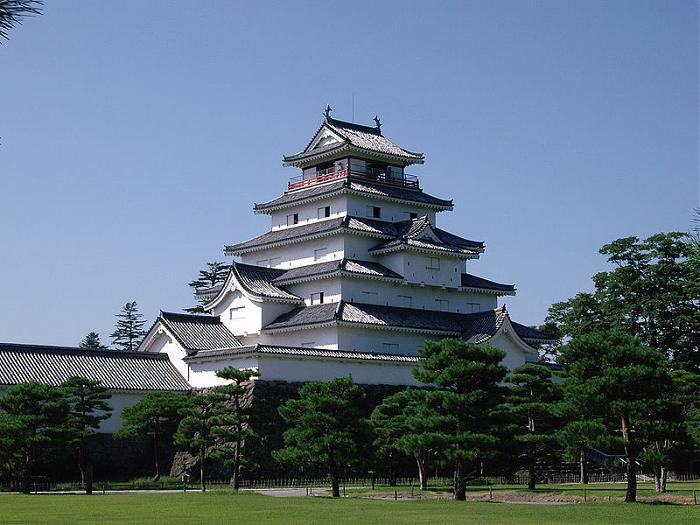
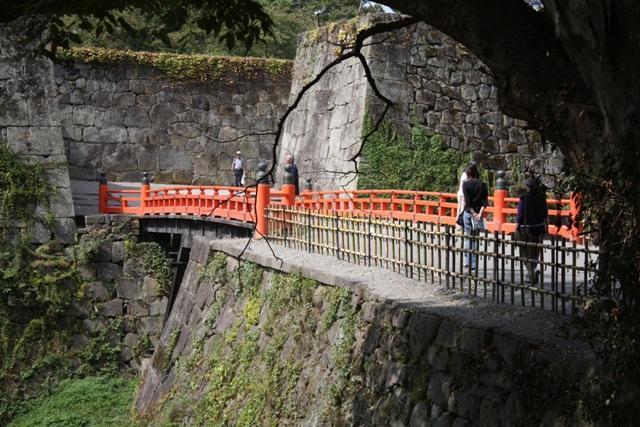
Aizuwakamatsu Castle (会津若松城, Aizuwakamatsu-jō), also known as Tsuruga Castle (鶴ヶ城 Tsuruga-jō) is a traditional castle in northern Japan, at the center of the city of Aizuwakamatsu, in Fukushima Prefecture.
The castle was constructed by Ashina Naomori in 1384, and was originally named Kurokawa Castle (黒川城, Kurokawa-jō). It was the military and administrative center of the Aizu region until 1868.
Date Masamune, the greatest warlord of the Tōhoku area, had struggled against the Ashina clan for years, and finally captured the castle in 1589. But soon he submitted to Toyotomi Hideyoshi and gave it up in 1590.
In 1592 a new lord, Gamō Ujisato, redesigned the castle and gave it the name Tsuruga Castle, although the populace also referred to it as Aizu Castle or Wakamatsu Castle.
During the Edo period, it was the seat of the daimyo of the Aizu Han. The founder was Hoshina Masayuki, the son of shōgun Tokugawa Hidetada and the grandson of Ieyasu. He and his successors bore the Matsudaira name. The castle was an important Tokugawa stronghold in the Tōhoku Region of Honshū.
The castle was surrounded in 1868 during the Boshin War. After a month of isolated defence, Matsudaira Katamori surrendered. It was broken by the new government in 1874.
The tenshu, the largest tower of the castle, was reconstructed in 1965 in concrete. Currently there is a museum inside, and an observation gallery on top with panoramic views of the city.
The castle was constructed by Ashina Naomori in 1384, and was originally named Kurokawa Castle (黒川城, Kurokawa-jō). It was the military and administrative center of the Aizu region until 1868.
Date Masamune, the greatest warlord of the Tōhoku area, had struggled against the Ashina clan for years, and finally captured the castle in 1589. But soon he submitted to Toyotomi Hideyoshi and gave it up in 1590.
In 1592 a new lord, Gamō Ujisato, redesigned the castle and gave it the name Tsuruga Castle, although the populace also referred to it as Aizu Castle or Wakamatsu Castle.
During the Edo period, it was the seat of the daimyo of the Aizu Han. The founder was Hoshina Masayuki, the son of shōgun Tokugawa Hidetada and the grandson of Ieyasu. He and his successors bore the Matsudaira name. The castle was an important Tokugawa stronghold in the Tōhoku Region of Honshū.
The castle was surrounded in 1868 during the Boshin War. After a month of isolated defence, Matsudaira Katamori surrendered. It was broken by the new government in 1874.
The tenshu, the largest tower of the castle, was reconstructed in 1965 in concrete. Currently there is a museum inside, and an observation gallery on top with panoramic views of the city.
Wikipedia article: http://en.wikipedia.org/wiki/Aizuwakamatsu_Castle
Nearby cities:
Coordinates: 37°29'15"N 139°55'48"E
- Ruins of Taga Castle 130 km
- Site of Azuchi castle 427 km
- Himeji Castle 556 km
- Hwaseong Fortress 1142 km
- Tokmulsan Fortress 1174 km
- Taehyon Fortress 1206 km
- Taesong Fortress 1244 km
- Pakrung Fortress 1271 km
- Kuju Castle 1304 km
- Hailongtun Fortress 3266 km
- Nisso Metallochemical Co., Ltd. Aizu Plant 9 km
- Lake Inawashiro 14 km
- Nekoma Ski Ground 18 km
- Mount Bandai (磐梯山 Bandai-san) 18 km
- Lake Hibara 25 km
- Lake Akimoto 26 km
- Mont Nakaazuma (Japon) 34 km
- Mount Adatara 35 km
- Mount Azuma-kofuji (1705 m) 39 km
- Fukushima 54 km