
Tanjung Puting National Park (Area 1)
Indonesia /
Kalimantan Tengah /
Pangkalanbuun /
World
/ Indonesia
/ Kalimantan Tengah
/ Pangkalanbuun
World / Indonesia / Kalimantan Tengah
park, nature conservation park / area, national park

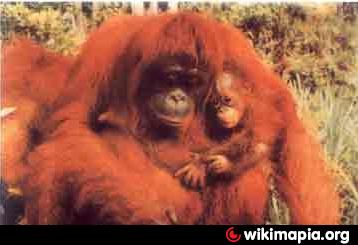
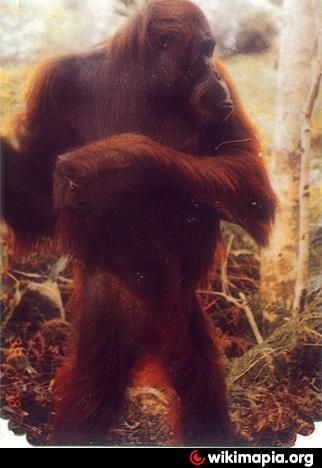
The Tanjung Puting National Park is a conservation area that protects a large variety of plants, animals and their associated ecosystems. It is the largest protected area of swamp forest in South-East Asia.
Tanjung Puting first received a level of protection in 1935, and was officially designated a wildlife reserve in 1939. In 1982, it was declared a national park.
The park was established primarily for the protection of the Bornean Orangutan (Pongo pygmaeus), and its formation was instigated and aided by the efforts of Dr. Birute Galdikas and the Orangutan Foundation International. When this area become a national park, Tanjung Harapan moved to the other side of the Sekonyer River (across the original area). The original width of the park was 3,000.4 km². In its new location, it increased to 4,150.4 km².
The Park receives aid from the Orangutan International Canada, and it is recognized as a World Biosphere Reserve by the United Nations. Tanjung Puting occupies most of the peninsula between Teluk Kumai and the Seruyan River, and consists of varied habitats including peat and freshwater swamp forests, lowland tropical rainforests and heath forests. The Park is drained by several black water rivers that flow from the northern and eastern regions.
Tanjung Puting National Park is famous primarily because of two primates: the orangutan and the proboscis monkey (endemic to Borneo). At Camp Leakey, research is conducted on orangutans, gibbons, other animals and ecological processes. Orangutans are also rehabilitated and returned to the wild from this camp. Since 1971, over 200 orangutans have been returned to the wild as part of Dr. Birute Galdika's Orangutan Research and Conservation Project.
The park is divided into four areas, each highlighting a different set of natural resources. They are:
Tanjung Harapan. This area was developed for ecotourism, and hosts the information center, guest house, watch tower and camping ground. By traveling along the edge of the river, one can see the nipah formation, screw pine and bog forest. Hiking and bird watching are also popular.
Pondok Tanggui. This area is home to pre-wild and adolescent orangutans. It hosts various kinds of animals like deer, pig, the rangkong bird (rhinoceros), Raja Udang bird and Sesep Madu bird. During journeys from Tanjung Harapan to Pondok Tanggui, one passes through the habitats of the bekantan monkey and the estuarine crocodile (Crocodylus porosus dan Tomistoma schlegelli).
Camp Leakey. This area is devoted to the research and rehabilitation of adult orangutans. It is suitable for witnessing pre-wild or wild orangutan rehabilitation. Other species that can be seen in this area include the Owa-owa, bald eagle, Sesep Madu bird, and Hornbill (Enggang) or Rangkong.
Pantai Sungai Cabang. This area is located alongside a white sand beach. The working and maintenance huts are located here, along with guest houses, an information center, shelter, watch tower, camp ground, dock and various other tourist activities.
Home of the orangutans. But for how many years?
savetheorangutan.org/index.php
www.orangutan.org/
www.fnpf.org/
This is the northern part of the national park.
Note: The area is divided into three polygon because of the limitation of wikimapia area.
Tanjung Puting first received a level of protection in 1935, and was officially designated a wildlife reserve in 1939. In 1982, it was declared a national park.
The park was established primarily for the protection of the Bornean Orangutan (Pongo pygmaeus), and its formation was instigated and aided by the efforts of Dr. Birute Galdikas and the Orangutan Foundation International. When this area become a national park, Tanjung Harapan moved to the other side of the Sekonyer River (across the original area). The original width of the park was 3,000.4 km². In its new location, it increased to 4,150.4 km².
The Park receives aid from the Orangutan International Canada, and it is recognized as a World Biosphere Reserve by the United Nations. Tanjung Puting occupies most of the peninsula between Teluk Kumai and the Seruyan River, and consists of varied habitats including peat and freshwater swamp forests, lowland tropical rainforests and heath forests. The Park is drained by several black water rivers that flow from the northern and eastern regions.
Tanjung Puting National Park is famous primarily because of two primates: the orangutan and the proboscis monkey (endemic to Borneo). At Camp Leakey, research is conducted on orangutans, gibbons, other animals and ecological processes. Orangutans are also rehabilitated and returned to the wild from this camp. Since 1971, over 200 orangutans have been returned to the wild as part of Dr. Birute Galdika's Orangutan Research and Conservation Project.
The park is divided into four areas, each highlighting a different set of natural resources. They are:
Tanjung Harapan. This area was developed for ecotourism, and hosts the information center, guest house, watch tower and camping ground. By traveling along the edge of the river, one can see the nipah formation, screw pine and bog forest. Hiking and bird watching are also popular.
Pondok Tanggui. This area is home to pre-wild and adolescent orangutans. It hosts various kinds of animals like deer, pig, the rangkong bird (rhinoceros), Raja Udang bird and Sesep Madu bird. During journeys from Tanjung Harapan to Pondok Tanggui, one passes through the habitats of the bekantan monkey and the estuarine crocodile (Crocodylus porosus dan Tomistoma schlegelli).
Camp Leakey. This area is devoted to the research and rehabilitation of adult orangutans. It is suitable for witnessing pre-wild or wild orangutan rehabilitation. Other species that can be seen in this area include the Owa-owa, bald eagle, Sesep Madu bird, and Hornbill (Enggang) or Rangkong.
Pantai Sungai Cabang. This area is located alongside a white sand beach. The working and maintenance huts are located here, along with guest houses, an information center, shelter, watch tower, camp ground, dock and various other tourist activities.
Home of the orangutans. But for how many years?
savetheorangutan.org/index.php
www.orangutan.org/
www.fnpf.org/
This is the northern part of the national park.
Note: The area is divided into three polygon because of the limitation of wikimapia area.
Wikipedia article: http://en.wikipedia.org/wiki/Tanjung_Puting
Nearby cities:
Coordinates: 2°46'45"S 111°59'14"E
- Tanjung Puting National Park (Area 2) 22 km
- orangutanodysseys 29 km
- Tanjung Puting National Park (Area 3) 37 km
- Tanjung Keluang Nature Tourism Park 39 km
- Desa Sidomulyo (Pir Desa 2) 45 km
- Lamandau Wildlife Sanctuary 78 km
- Sapetro Inc Plantation 100 km
- Muara Kendawang Nature Reserve 207 km
- Gunung Palung National Park 287 km
- TNI AU AWR - TACTICAL AIR WEOPANARY RANGE 368 km
- PT. KORINTIGA HUTANI, PORT NATAI PERAMUAN 26 km
- Oil Palm Plantation 29 km
- Sembuluh Lake 41 km
- Oil Palm Plantation 47 km
- Hanau Palm Oil Mill 48 km
- Oil Palm Plantation 48 km
- Oil palm plantation 51 km
- Seruyan Raya 63 km
- Oil Palm Plantation 72 km
- Oil palm plantation 79 km