
Guspini
Italy /
Sardinien /
Guspini /
World
/ Italy
/ Sardinien
/ Guspini
World / Italy / Sardegna / Medio Campidano
municipality, commune - administrative division
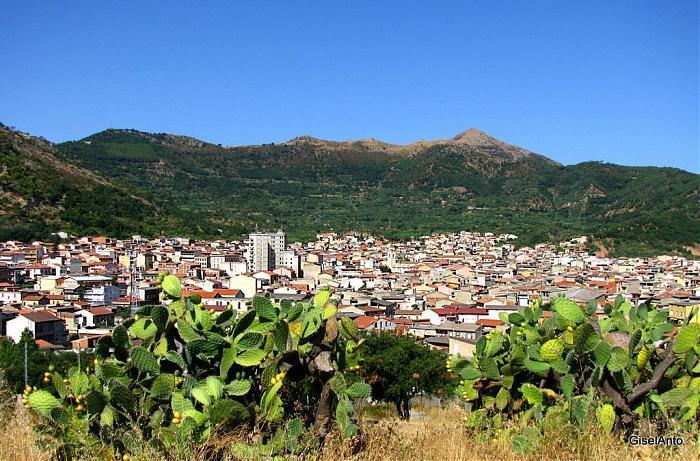
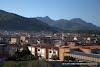
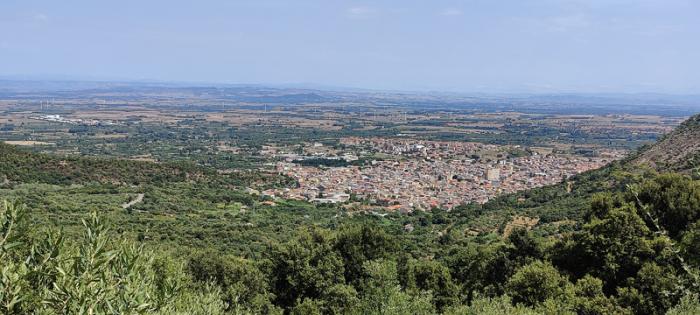
The territory of Guspini occupies the northernmost point of the new province of the Middle Campidano: the borders of the metal to the observations of the Iglesiente Oristano, from the plains of Campidano pond of Santa Maria in Naples. With an extension of 174 square kilometers and an altitude that ranges from 0 to 750 m above sea level, the territory of Guspini, boasts a rich environment for both traits in terms of wildlife and botanical. In all the territory it dominates the high spot in arbutus, heather, viburnum, holm oak and cork oak, and near the beds of rivers there are formations of black alder, willow and white oleander.
In the Mediterranean between the mouth of the river and Montevecchio Piscinas dominates with its grandeur and beauty of the Sardinian deer (Cervus elaphus corsicanus) the variety of Sardinian-race European red deer (Cervus elaphus elaphus Linnaeus), for which is slightly smaller and more slender. A unique species of vertebrate fauna in Sardinia Montevecchio is not uncommon in the vicinity of the mining structures.
The thick, tangled vegetation also provides a safe haven for wild boars, martens, foxes, weasels, wild cats, rabbits, hares, porcupines and mice Quercini. Important endemic fauna further enrich the specificity of these environments such as the presence of the Sardinian newt of discoglosso, dell'algiroide nano and tarantolino.
The Park City Gentilis is an ideal place to relax between pine trees and springs, in contact with nature and pristine environments.
Towards the coast, the Pond of Santa Maria di Neapolis offers the colors of pink flamingos and other species that find their habitat here.
From the perspective of particular geological interest is a characteristic formation of basaltic hill in Cuccureddu 'and Zeppara (167 m), a small basaltic volcanic cone. The survey, which formed in the Miocene (3-12 million years ago), was affected by mining activities in the past still visible in the sides of the pad. The natural monument consists of a vertical wall of basalt prisms, matched according to the characteristic shape of a "pipe organ". The prisms, about 20 m tall, had originated from the gradual cooling of the lava, which has created a perfect vertical cracking of the columns. The special shape and sharpness of the cuts makes it one of the most important examples of the island and in Europe.
In the Mediterranean between the mouth of the river and Montevecchio Piscinas dominates with its grandeur and beauty of the Sardinian deer (Cervus elaphus corsicanus) the variety of Sardinian-race European red deer (Cervus elaphus elaphus Linnaeus), for which is slightly smaller and more slender. A unique species of vertebrate fauna in Sardinia Montevecchio is not uncommon in the vicinity of the mining structures.
The thick, tangled vegetation also provides a safe haven for wild boars, martens, foxes, weasels, wild cats, rabbits, hares, porcupines and mice Quercini. Important endemic fauna further enrich the specificity of these environments such as the presence of the Sardinian newt of discoglosso, dell'algiroide nano and tarantolino.
The Park City Gentilis is an ideal place to relax between pine trees and springs, in contact with nature and pristine environments.
Towards the coast, the Pond of Santa Maria di Neapolis offers the colors of pink flamingos and other species that find their habitat here.
From the perspective of particular geological interest is a characteristic formation of basaltic hill in Cuccureddu 'and Zeppara (167 m), a small basaltic volcanic cone. The survey, which formed in the Miocene (3-12 million years ago), was affected by mining activities in the past still visible in the sides of the pad. The natural monument consists of a vertical wall of basalt prisms, matched according to the characteristic shape of a "pipe organ". The prisms, about 20 m tall, had originated from the gradual cooling of the lava, which has created a perfect vertical cracking of the columns. The special shape and sharpness of the cuts makes it one of the most important examples of the island and in Europe.
Nearby cities:
Coordinates: 39°32'19"N 8°38'0"E
- Iglesias 27 km
- Oristano 42 km
- Cagliari 50 km
- Quartu Sant'Elena 56 km
- Nuoro 104 km
- Sassari 136 km
- Porto Torres 146 km
- Olbia, Sardinia 172 km
- Ash-Shafqa 386 km
- Taher 386 km
- Chiesa di San Pio X 0.3 km
- Istituto di Istruzione Superiore "A.Volta" - Guspini 0.9 km
- Nuraghe Cara 1.5 km
- Sa Rocca Hotel & Resort 1.7 km
- Nuraghe Terra Frucca or Terrafurga 2.3 km
- Nuraghe Arrosu or Mudegu or Causa Pia 2.5 km
- Nuraghe Terra Maistus 3.2 km
- Pala PIP 3.4 km
- Nuraghe San Cosimo II 3.9 km
- Sardinia 65 km
Comments