
Karabashmed plant (Karabash)
Russia /
Cheljabinsk /
Karabash
World
/ Russia
/ Cheljabinsk
/ Karabash
, 2 km from center (Карабаш)
World / Russia / Chelyabinsk
smelter
Add category


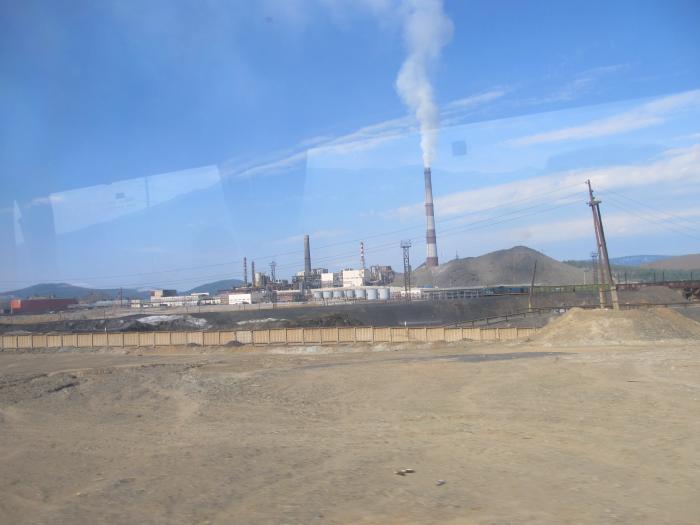
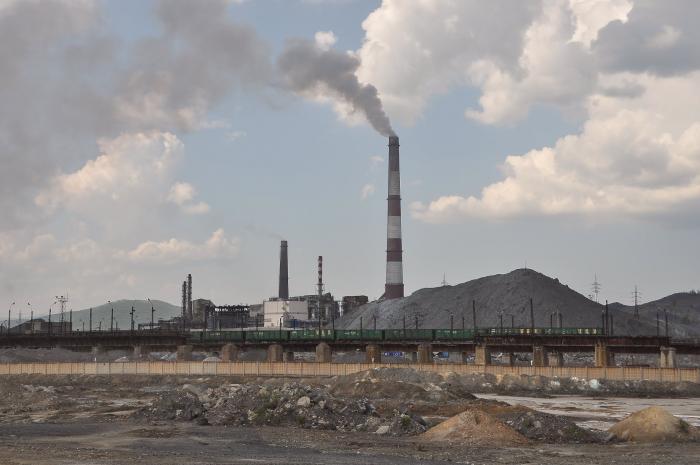
This giant copper smelter operated by RMK Russian Copper Company processes copper concentrates into blister copper.
The problem
The smelter town of Karabash lies in the Chelyabinskaya region of the south Urals, 1,300 kilometers southeast of Moscow. The town originally developed due to large copper deposits and in 1910 a smelter was built here specializing in the production of 'blister copper'. Immense sulfur dioxide emissions, fall-out of metal-rich particulates and mounds of black slag are thought to be responsible for higher incidences of birth defects, skin diseases and internal organ failure among the residents of this town.
Health Impact
The results of a survey conducted by the Chelyabinsk Provincial Institute for Public Health and Environment in 1994 in Karabash were so bad that the provincial Ministry for the Environment classified it as an Ecological Disaster Zone. They found that children from Karabash were considerably smaller than children from the control group, had 3.5 times more birth defects, 2.7 times more skin diseases and suffered from heavy metal poisoning.
Upgrade:
Activity on the modernisation of the Karabash smelter, Chelyabinsk Region, started in 1998. The main production process is Ausmelt Technology. Karabash now has a hi-tech and environmentally safe metallurgical plant which, apart from the Ausmelt furnace, also includes a modern waste treatment, sulphuric acid and effluent treatment plants. The Karabash plant is now one of the most modern plants of its type in Russia and the complex is among the most up-to-date and environmentally safe copper smelters globally.
The plant is designed to treat 480,000 tonnes a year of copper concentrates. It is Ausmelt’s first project in Russia.
Construction was completed and the furnace was heated up for the first time in October 2006. The plant achieved its design targets for concentrate feed and matte quality within the commissioning period. Ausmelt's metallurgical engineers left the site in December 2006 and the plant continues to operate successfully.
The problem
The smelter town of Karabash lies in the Chelyabinskaya region of the south Urals, 1,300 kilometers southeast of Moscow. The town originally developed due to large copper deposits and in 1910 a smelter was built here specializing in the production of 'blister copper'. Immense sulfur dioxide emissions, fall-out of metal-rich particulates and mounds of black slag are thought to be responsible for higher incidences of birth defects, skin diseases and internal organ failure among the residents of this town.
Health Impact
The results of a survey conducted by the Chelyabinsk Provincial Institute for Public Health and Environment in 1994 in Karabash were so bad that the provincial Ministry for the Environment classified it as an Ecological Disaster Zone. They found that children from Karabash were considerably smaller than children from the control group, had 3.5 times more birth defects, 2.7 times more skin diseases and suffered from heavy metal poisoning.
Upgrade:
Activity on the modernisation of the Karabash smelter, Chelyabinsk Region, started in 1998. The main production process is Ausmelt Technology. Karabash now has a hi-tech and environmentally safe metallurgical plant which, apart from the Ausmelt furnace, also includes a modern waste treatment, sulphuric acid and effluent treatment plants. The Karabash plant is now one of the most modern plants of its type in Russia and the complex is among the most up-to-date and environmentally safe copper smelters globally.
The plant is designed to treat 480,000 tonnes a year of copper concentrates. It is Ausmelt’s first project in Russia.
Construction was completed and the furnace was heated up for the first time in October 2006. The plant achieved its design targets for concentrate feed and matte quality within the commissioning period. Ausmelt's metallurgical engineers left the site in December 2006 and the plant continues to operate successfully.
Nearby cities:
Coordinates: 55°28'1"N 60°12'20"E
- Pervouralsky Novotrubny Works 161 km
- Magnitogorsk Iron & Steel Works 235 km
- Nizhniy Tagil Iron and Steel Works 276 km
- Kama foundry 486 km
- Ural Steel JSC 487 km
- Ispat Karmet, Mittal Arcelor group steel plant,Temirtau 1046 km
- PO Balhashcvetmet 1400 km
- Novokuznetsk Iron and Steel Plant 1729 km
- West Siberian Metallurgical Plant (Zapsib, ZSMK) 1735 km
- Qiya Aluminium Plant 2342 km
- Mountain Karabash 2.9 km
- Karabashmed plant sump 3.5 km
- Lake Barakhtan 4.5 km
- Dead land in the valley of the Sak-Elga river 4.5 km
- Lake Bolshie Barnyi 6.2 km
- Mountain Kamennaya (Stone mountain) 6.3 km
- Military Unit 96493 6.4 km
- Military Unit 48548 6.6 km
- Kialim Reservoir (Kialimskoye Vodokhranilische) 8.4 km
- Saktaevo's Mountain 12 km