
Maa - Palaiokastro Archealogical site
Cyprus /
Government controlled area /
Pegeia /
World
/ Cyprus
/ Government controlled area
/ Pegeia
World / Cyprus
archaeological site, open air museum, fenced area
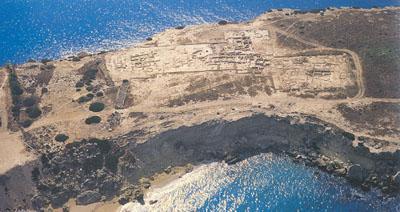
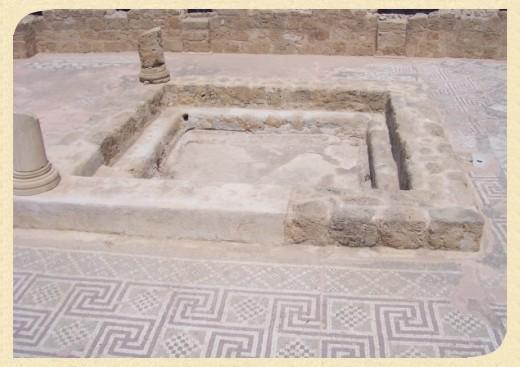
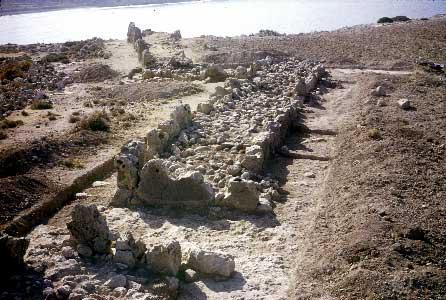


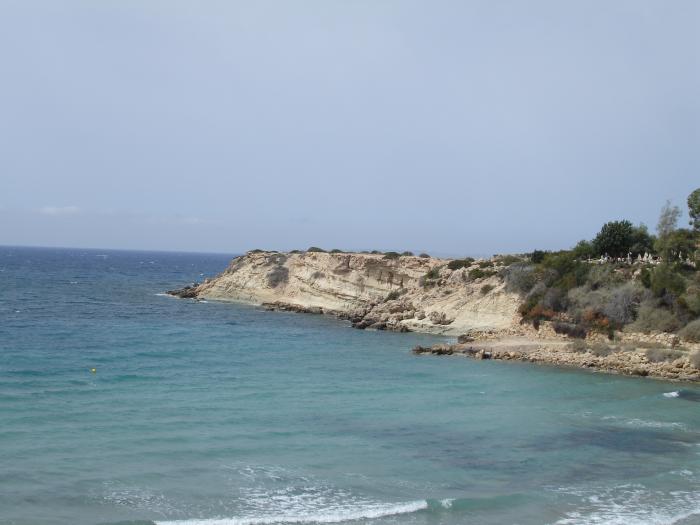
This is where Mycenaean Greeks settled, around 1200 BC after the fall of the Mycenaean Kingdoms in mainland Greece.
The little museum with its unusual architecture is interesting with good information on the Mycenaean nature of the site.
Maa Paleokastro is situated about 13v kilometers north-west of the town of Pafos.
Small-scale excavation was conducted in 1952 by Porphyrios Dikaios followed by systematic excavations from 1979 to 1985 under the direction of the then director of the Department of Antiquities, Dr Vassos. Karageorghis.
It is a fortified settlement of the Late Bronze Age built on a small promontory and it is related to the permanent settlement of the Acheans in Cyprus and the subsequent hellinisation of the island. The settlement is protected by two imposing fortifying walls, one facing the land, the other facing the sea at the tip of the promontory.
In the enclosure of the settlement very small buildings were discovered, probably residential, and also some structures with architectural elements associated with the Aegean Sea.
Two of the buildings contain each a large hall with a hearth at the centre and smaller rooms which seems to have housed, among others, storage rooms, workshops etc.
Some of the buildings in the complex are believed to have been common halls, or halls for congregation, in order to produce food.
Many elements indicate metallurgical activities.
The settlement was destroyed by fire and immediately rebuilt by its inhabitants as it is demonstrated by the cultural continuity noticed between the two phases.
Nevertheless, the second phase was more modern. The settlement was destroyed in 1175 B.C., probably by pirates, but it was soon rebuilt by the inhabitants. The site was finally abandoned around 1150 BC.
The little museum with its unusual architecture is interesting with good information on the Mycenaean nature of the site.
Maa Paleokastro is situated about 13v kilometers north-west of the town of Pafos.
Small-scale excavation was conducted in 1952 by Porphyrios Dikaios followed by systematic excavations from 1979 to 1985 under the direction of the then director of the Department of Antiquities, Dr Vassos. Karageorghis.
It is a fortified settlement of the Late Bronze Age built on a small promontory and it is related to the permanent settlement of the Acheans in Cyprus and the subsequent hellinisation of the island. The settlement is protected by two imposing fortifying walls, one facing the land, the other facing the sea at the tip of the promontory.
In the enclosure of the settlement very small buildings were discovered, probably residential, and also some structures with architectural elements associated with the Aegean Sea.
Two of the buildings contain each a large hall with a hearth at the centre and smaller rooms which seems to have housed, among others, storage rooms, workshops etc.
Some of the buildings in the complex are believed to have been common halls, or halls for congregation, in order to produce food.
Many elements indicate metallurgical activities.
The settlement was destroyed by fire and immediately rebuilt by its inhabitants as it is demonstrated by the cultural continuity noticed between the two phases.
Nevertheless, the second phase was more modern. The settlement was destroyed in 1175 B.C., probably by pirates, but it was soon rebuilt by the inhabitants. The site was finally abandoned around 1150 BC.
Nearby cities:
Coordinates: 34°51'14"N 32°21'47"E
- Lamos (Cilician) 155 km
- Kekova (Lycian) 272 km
- Apollonia (Lycian) 279 km
- Patara (Lycian) 318 km
- Xanthos (Lycian) 323 km
- Letoon (Lycian) 324 km
- Pydnae (Lycian) 329 km
- Sidyma (Lycian) 336 km
- Pinara (Lycian) 336 km
- Monte Smith 416 km
- Coral Beach Hotel & Resort 5* 0.3 km
- Coral Bay 0.5 km
- Coral Bay Village 1.3 km
- Kissonerga Community Beach Potima 3.1 km
- Cynthiana 3.9 km
- TUI FAMILY LIFE Atlantica Mare Village Paphos 4 km
- Mavrokolympos Dam 4.3 km
- Kamares Village 6.4 km
- Club St. George Resort 7.6 km
- Paphos District 16 km