
Komarovo (Saint Petersburg)
| quarter (urban subdivision)
Russia /
Sankt Petersburg /
Komarovo /
Saint Petersburg
World
/ Russia
/ Sankt Petersburg
/ Komarovo
, 1 km from center (Комарово)
World / Russia / Leningrad
quarter (urban subdivision)
Add category
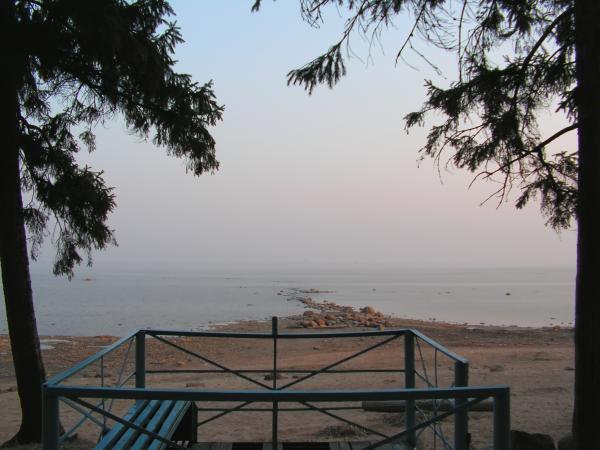
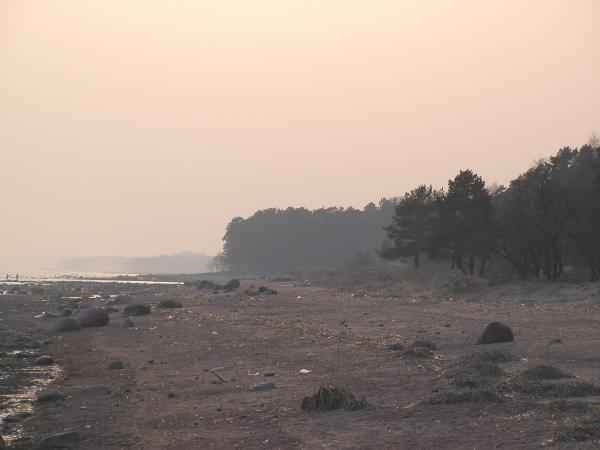
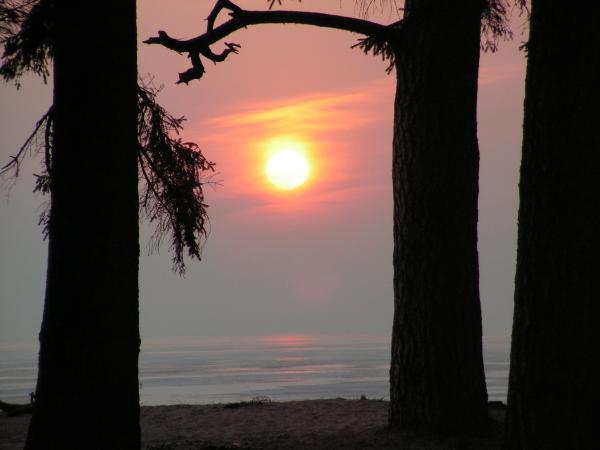
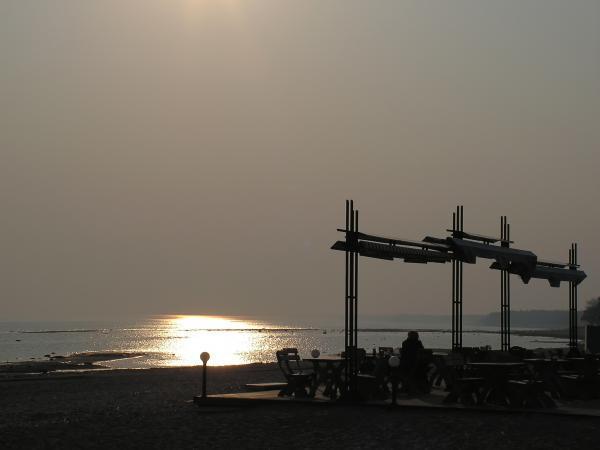
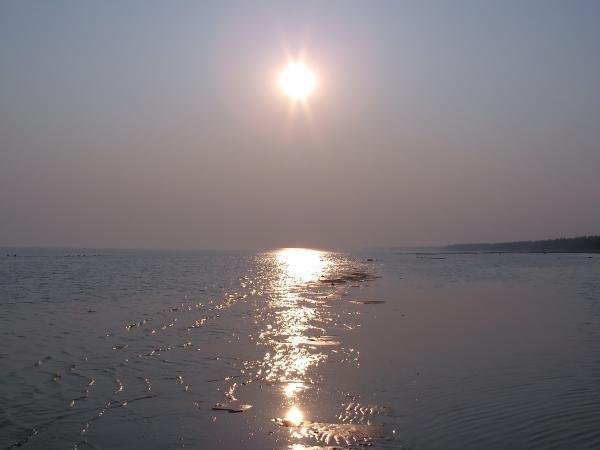

Municipal settlement in Kurortny District of the federal city of St. Petersburg, Russia, located in the Karelian Isthmus on the shore of the Gulf of Finland, and a station of the Saint Petersburg-Vyborg railroad. It is about 45 kilometers (28 mi) northwest of central Saint Petersburg. Population: 1,230 (2010 Census).
Like many settlements on the Karelian Isthmus on the Saint Petersburg-Vyborg railroad line, Kellomäki was vigorously developed in the late 19th – early 20th century at the height of the summer-resort boom. The original meaning of Kellomäki was "Bell Hill", named after a bell positioned on a sandy hill for railroad workers. The bell notified workers of the dinner break and the end of the workday. A railroad station opened near that spot on May 1, 1903, which is the unofficial date of Kellomäki's founding. The Russian Orthodox Church of the Holy Spirit was built in 1908, and burnt down in 1917. After that, a house chapel in one of the dachas served as the church until the Soviet takeover. In 1916, about 800 dachas were counted in the settlement. The development of summer-resort towns on the Karelian Isthmus was slowed down after Finland's declaration of independence in 1917. Many of the dachas were abandoned, and some 200 buildings were auctioned off, dismantled and rebuilt in other Finnish towns. An Émigré community formed in Kellomäki after the revolution as the White Russians fled to Finland. By the beginning of the Soviet-Finnish War, 167 families remained in the settlement – most of them were evacuated to Järvenpää during the Soviet-Finnish border negotiations in the fall of 1939. On November 30, 1939, after an artillery bombardment, Kellomäki surrendered to Soviet troops without a battle. Several buildings were destroyed, but overall the damage to the settlement was not serious. The town was annexed to the Soviet Union in the Moscow Peace Treaty (1940). Immediately after World War II, the Council of Peoples Commissars issued decree No. 2638 "on building dachas for members of the Academy of Sciences of the USSR and setting aside land plots from 1.25 to 2.5 acres (10,000 m2) as gratis personal property". Standard houses manufactured in Finland on account of war reparations, were transported and assembled on the spot. Kellomäki was renamed to Komarovo in honor of botanist Vladimir Komarov, President of the academy in 1948. Special resorts and dachas were also established for Writers, Composers, Theater and Cinema WWorkers. The land was set aside for Atomic Scientists as well.
Like many settlements on the Karelian Isthmus on the Saint Petersburg-Vyborg railroad line, Kellomäki was vigorously developed in the late 19th – early 20th century at the height of the summer-resort boom. The original meaning of Kellomäki was "Bell Hill", named after a bell positioned on a sandy hill for railroad workers. The bell notified workers of the dinner break and the end of the workday. A railroad station opened near that spot on May 1, 1903, which is the unofficial date of Kellomäki's founding. The Russian Orthodox Church of the Holy Spirit was built in 1908, and burnt down in 1917. After that, a house chapel in one of the dachas served as the church until the Soviet takeover. In 1916, about 800 dachas were counted in the settlement. The development of summer-resort towns on the Karelian Isthmus was slowed down after Finland's declaration of independence in 1917. Many of the dachas were abandoned, and some 200 buildings were auctioned off, dismantled and rebuilt in other Finnish towns. An Émigré community formed in Kellomäki after the revolution as the White Russians fled to Finland. By the beginning of the Soviet-Finnish War, 167 families remained in the settlement – most of them were evacuated to Järvenpää during the Soviet-Finnish border negotiations in the fall of 1939. On November 30, 1939, after an artillery bombardment, Kellomäki surrendered to Soviet troops without a battle. Several buildings were destroyed, but overall the damage to the settlement was not serious. The town was annexed to the Soviet Union in the Moscow Peace Treaty (1940). Immediately after World War II, the Council of Peoples Commissars issued decree No. 2638 "on building dachas for members of the Academy of Sciences of the USSR and setting aside land plots from 1.25 to 2.5 acres (10,000 m2) as gratis personal property". Standard houses manufactured in Finland on account of war reparations, were transported and assembled on the spot. Kellomäki was renamed to Komarovo in honor of botanist Vladimir Komarov, President of the academy in 1948. Special resorts and dachas were also established for Writers, Composers, Theater and Cinema WWorkers. The land was set aside for Atomic Scientists as well.
Wikipedia article: http://en.wikipedia.org/wiki/Komarovo,_Saint_Petersburg
Nearby cities:
Coordinates: 60°11'13"N 29°48'38"E
- Repino 0.8 km
- Solnechnoye 5.4 km
- Beloostrov 10 km
- Pesochny 14 km
- Levashovo 17 km
- Chyornaya Rechka 18 km
- 19th quarter 20 km
- Levashovo-2 23 km
- Lomonosov 29 km
- Martyshkino 31 km
- Olympiyets sports camp 0.6 km
- Country residence of the Governor of St. Petersburg 0.7 km
- Sanatorium's area 0.8 km
- Komarovo rest house 1.3 km
- Beach 1.5 km
- Komarovsky Bereg natural monument 1.9 km
- Repino 3.7 km
- Natural reserve "Ozero Shchuchye" 3.7 km
- Kurortny District 7 km
- Water area of the Gulf of Finland northwest of Kotlin Island 18 km
Comments