
Phaistos Palace
| archaeological site, open air museum, Minoan, archaeology museum
Greece /
Iraklion /
Timbakion /
World
/ Greece
/ Iraklion
/ Timbakion
, 5 km from center (Τυμπάκιον)
World / Greece / Kriti
archaeological site, open air museum, Minoan, archaeology museum


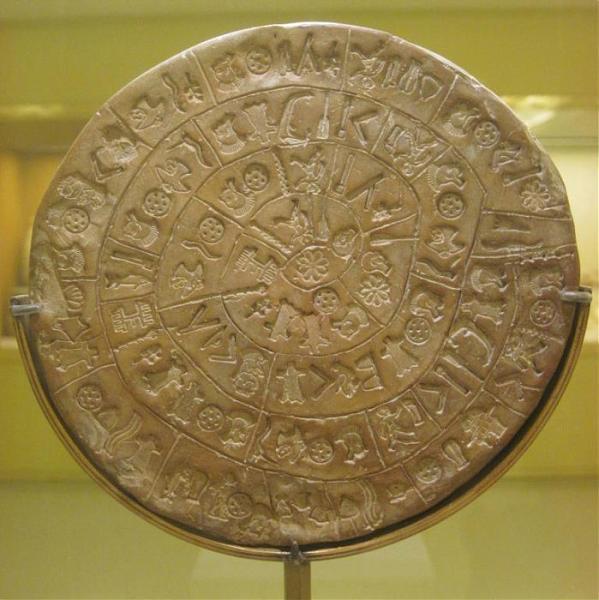
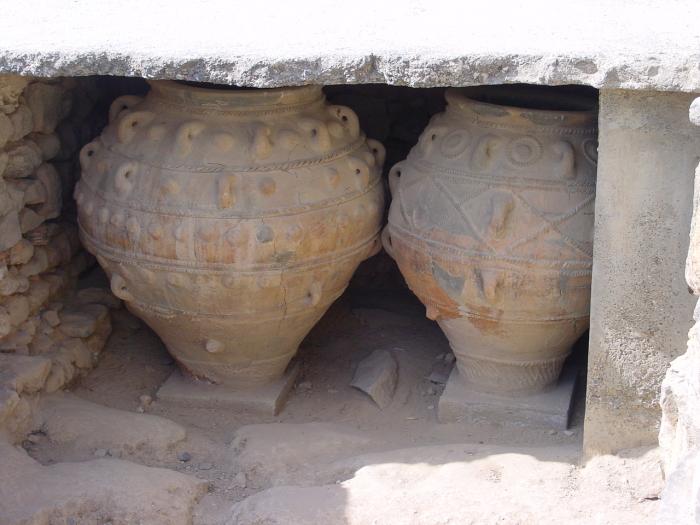
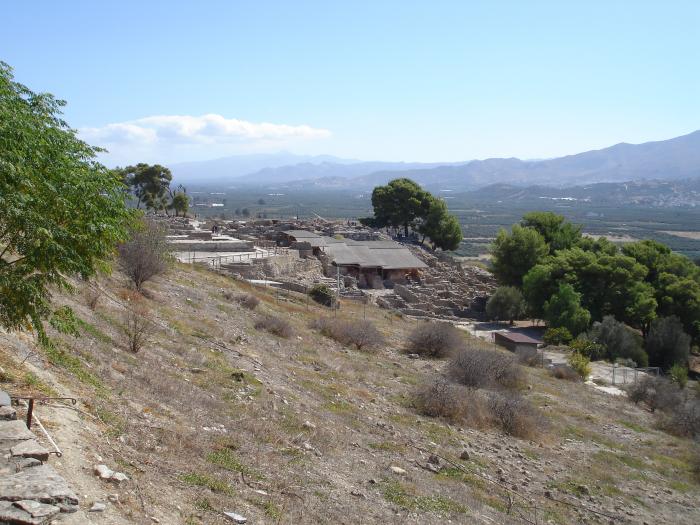
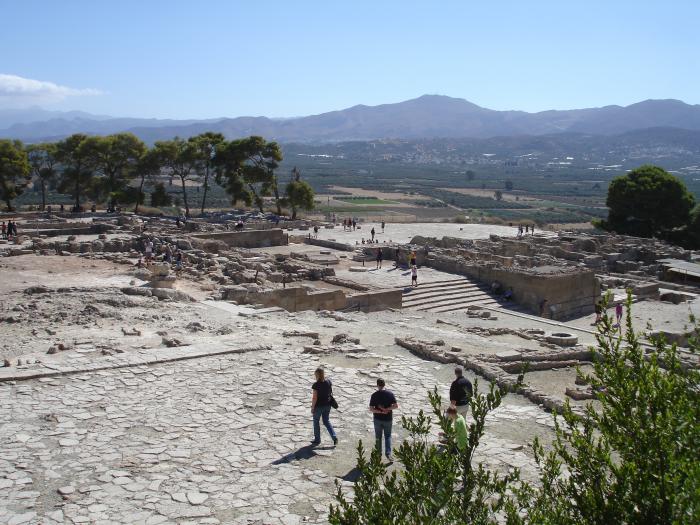
Phaistos (Phaestus, Phestos or Festos, Linear B: 𐀞𐀂𐀵 Pa-i-to; Linear A: 𐘂𐘚𐘄 Pa-i-to) was one of the most important centres of Minoan civilization, and the most wealthy and powerful city in southern Crete. It was inhabited from the Neolithic period until the foundation and development of the Minoan palaces in the 15th century B.C. The Minoan city covered a considerable area around the palatial centre. After the destruction of the palace in the 15th century, the city continued to be inhabited in the Mycenaean and Geometric periods, that is, until the 8th century B.C. Later, the temple of Rhea was built to the south of the old palace. The Hellenistic city was extremely prosperous; houses of the period are to be seen in the west court (upper terrace) of the palace. In the middle of the 2nd century B.C. it was destroyed and dominated by the neighbouring city of Gortyn. Traces of habitation dating from the Venetian period are scattered in the whole area. The archaeological investigation of Phaistos started in 1884 by F. Halbherr and continued by the Italian Archaeological School at Athens, under the direction of F. Halbherr and L. Pernier in 1900-1904 and by Doro Levi, in 1950-1971. Along with the excavations, consolidation work was carried out by the Italian Archaeological School. Some of the monuments, mainly the old palace and the royal quarters of the new palace, were protected under plastic sheds, while others, like the storerooms of the new palace, were covered with a concrete roofing.
Phaistos is famous for its Minoan palace, which is a visitable archaeological site and receives thousands of visitors every year. The palace of Phaistos was built on a low hill in the plain of Messara, with panoramic views to the surrounding area. It is the second largest after Knossos and occupies an area of 18 acres.
The palace of Phaistos was built in about 2000BC, according to the legend, by Minos. The palace’s king was the brother of Minos, the mythical Rhadamanthys. Rhadamanthys was second son of Zeus and Europe and was known for his righteousness. Indeed, he is considered the writer of the Cretan Code, the first standards of Justice, which was later adopted by the Spartans. Due to his fairness, after his death, he was assigned as a judge in Hades (like his brother Minos).
The palace was destroyed in about 1700BC by an earthquake, but was restored immediately. Then Phaestus declined and the neighboring settlement of Agia Triada flourished, the archaeological site of which you can visit today. Phaestus remained the most important religious center of southern Crete. After the destruction of 1450BC (possibly due to an earthquake), Phaestus recovered and created its own currency. This new bloom lasted till the first century BC, when it was destroyed by the neighboring Gortys, which then became the new capital of Crete.
The buildings a visitor sees today are in Phaestus date back in 1700–4150BC and, unlike Knossos, have not been restored
en.wikipedia.org/wiki/Phaistos_Disc
www.huffpost.com/entry/ancient-cd-rom-phaistos-disk-cod...
en.wikipedia.org/wiki/Phaistos_Disc
Phaistos is famous for its Minoan palace, which is a visitable archaeological site and receives thousands of visitors every year. The palace of Phaistos was built on a low hill in the plain of Messara, with panoramic views to the surrounding area. It is the second largest after Knossos and occupies an area of 18 acres.
The palace of Phaistos was built in about 2000BC, according to the legend, by Minos. The palace’s king was the brother of Minos, the mythical Rhadamanthys. Rhadamanthys was second son of Zeus and Europe and was known for his righteousness. Indeed, he is considered the writer of the Cretan Code, the first standards of Justice, which was later adopted by the Spartans. Due to his fairness, after his death, he was assigned as a judge in Hades (like his brother Minos).
The palace was destroyed in about 1700BC by an earthquake, but was restored immediately. Then Phaestus declined and the neighboring settlement of Agia Triada flourished, the archaeological site of which you can visit today. Phaestus remained the most important religious center of southern Crete. After the destruction of 1450BC (possibly due to an earthquake), Phaestus recovered and created its own currency. This new bloom lasted till the first century BC, when it was destroyed by the neighboring Gortys, which then became the new capital of Crete.
The buildings a visitor sees today are in Phaestus date back in 1700–4150BC and, unlike Knossos, have not been restored
en.wikipedia.org/wiki/Phaistos_Disc
www.huffpost.com/entry/ancient-cd-rom-phaistos-disk-cod...
en.wikipedia.org/wiki/Phaistos_Disc
Wikipedia article: http://en.wikipedia.org/wiki/Phaistos
Nearby cities:
Coordinates: 35°3'4"N 24°48'51"E
- Ancient Gortyn (Gortis) 12 km
- Ano Archanes 38 km
- Ancient Mala 70 km
- Ancient site of Anopolis 71 km
- Ruins of Ancient Aptera 77 km
- Olous (ancient city) 86 km
- Pseira 96 km
- Ancient Traostalos 131 km
- Kato Zakros 131 km
- Sesklio 320 km
- Monastery Kalivianis 1.8 km
- Photovoltaic power station 2.1 km
- Villa Mandrakia 2.4 km
- Agia Triada (former village) 2.4 km
- Μires Gymnasium 5 km
- Dam 5.8 km
- Faneromenis Reservoir 6.9 km
- Messara Plain 14 km
- Crete 30 km
- Peripheral unit of Rethymno 30 km