
Mayrno
Sudan /
Sinnar /
Mayurnu /
World
/ Sudan
/ Sinnar
/ Mayurnu
World / Sudan / Blue Nile / Sennar / Sennar
city
Add category
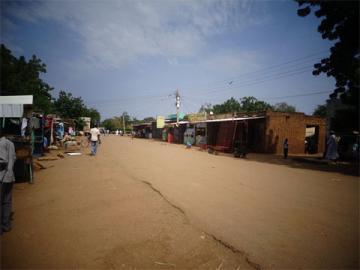
Myrno dates back to the year 1903 AD when it was founded by Sheikh Muhammad Bello (son of Sultan al-Tahir and the grandson of Sheikh Osman Danfoudi known as "Mai Werno), who came to it with a large number of subjects of the Caliphate of the State of Skoto, which extended north of Nigeria and southern Niger and part of Burkina Faso and the region Adamu, west of Cameroon, and all the subjects of this caliphate owed Islam, which thanks to their struggles and their eagerness to raise it and raise its flag spread in most West African countries through them, and their migration towards Sudan came after the English colonialists entered their caliphate at the beginning of the last century and after its fall, scholars of the Islamic caliphate thought about a silent state about Their fate was that three options were determined, namely the truce, migration, or jihad, and they ruled out the truce completely, and due to the difference in war capabilities, they lost the decisive battle against the colonizer, so they migrated to the Chadian Cameroonian borders under the leadership of the first pure caliph to join them and the colonizer chose between returning to participate in power or war, so they sided with the second option They lost the battle, so the emigration to Sudan took place, and the first caliph al-Zahir, who was called the Commander of the Faithful, fell in that battle yen
It was a straw house. It was only in 1916 that the clay building appeared in it
The Sultan's first clay house was built (May and Reno), and by 1924 it had become Moreno
A fully planned city with most of its houses made of clay
Mierno was divided in its beginnings into several neighborhoods, at the head of each neighborhood, a sheikh representing the region and weight
Tribal in that neighborhood
By 1927 there were about 47 Sheikhs in Meyerno.
The ethnic formation of the 1920s consisted of the two large groups of Fulani (
Sokoto and Katsina
These are the Urban Fulanin (Fulanin tsoro
And the other groups consist of the Duker Fulani, Damrami and Milli groups
They settled in Wadhashim, a little northward. There are other small groups of
The Fulani migrated from the eastern regions of Nigeria and northern Cameroon, these are the Fulani
Bedouins (Fulanin Daji
The most characteristic of these two groups is that the first group (Urban Fulani) are speaking
Hausa, while other groups (Fulani Bedouins) speak Fulani.
There are also other small groups that have settled in Meyerno, such as Al Zabarma, Al Barqo and
One group of Hausa
She is (Zanfara) Zanfara
The town of Mairno is located 15 kilometers south of Sennar on the west bank of the Blue Nile, and covers an area of 8 square kilometers, and it has a population of about twenty-five thousand people, and the main ethnic elements that make up its inhabitants are the Fulani (71.7%), the Hausa (16.4%) and the Singai (7.7%). %) And all of them preserve their tribal or tribal languages in addition to the Arabic language, there are many governmental institutions in it (5 primary schools, two intermediate schools, a chafkhana, a health center, a popular council, and a popular court) and its ancient market began to lose its vitality after its increasing dependence on Sennar as a result of the construction of the asphalt road ( Sennar - Singa - Damzin), but one of the positive results of this road is if Mairno becomes a passage for travelers from the villages east of the Nile and who cross them by boats or (bunton) and take advantage of buses to Sennar.
It was a straw house. It was only in 1916 that the clay building appeared in it
The Sultan's first clay house was built (May and Reno), and by 1924 it had become Moreno
A fully planned city with most of its houses made of clay
Mierno was divided in its beginnings into several neighborhoods, at the head of each neighborhood, a sheikh representing the region and weight
Tribal in that neighborhood
By 1927 there were about 47 Sheikhs in Meyerno.
The ethnic formation of the 1920s consisted of the two large groups of Fulani (
Sokoto and Katsina
These are the Urban Fulanin (Fulanin tsoro
And the other groups consist of the Duker Fulani, Damrami and Milli groups
They settled in Wadhashim, a little northward. There are other small groups of
The Fulani migrated from the eastern regions of Nigeria and northern Cameroon, these are the Fulani
Bedouins (Fulanin Daji
The most characteristic of these two groups is that the first group (Urban Fulani) are speaking
Hausa, while other groups (Fulani Bedouins) speak Fulani.
There are also other small groups that have settled in Meyerno, such as Al Zabarma, Al Barqo and
One group of Hausa
She is (Zanfara) Zanfara
The town of Mairno is located 15 kilometers south of Sennar on the west bank of the Blue Nile, and covers an area of 8 square kilometers, and it has a population of about twenty-five thousand people, and the main ethnic elements that make up its inhabitants are the Fulani (71.7%), the Hausa (16.4%) and the Singai (7.7%). %) And all of them preserve their tribal or tribal languages in addition to the Arabic language, there are many governmental institutions in it (5 primary schools, two intermediate schools, a chafkhana, a health center, a popular council, and a popular court) and its ancient market began to lose its vitality after its increasing dependence on Sennar as a result of the construction of the asphalt road ( Sennar - Singa - Damzin), but one of the positive results of this road is if Mairno becomes a passage for travelers from the villages east of the Nile and who cross them by boats or (bunton) and take advantage of buses to Sennar.
Nearby cities:
Coordinates: 13°25'45"N 33°39'42"E
- District Mayrno 2 0.4 km
- Mayrnu Ha Al Zuhuwr 1 km
- Ahim Mohamed Ibrahim 2.2 km
- Wad Hashim farm 8.5 km
- Al Qaleat (Citadel ) 11 km
- Tektuk district 13 km
- Ataisha fareeg 13 km
- Kasab Text factory 13 km
- Al-Samany Youssef Al-Bunian District - Sinnar University 14 km
- Industrial Area 14 km