
Coober Pedy
Australia /
South Australia /
Port Augusta /
World
/ Australia
/ South Australia
/ Port Augusta
World / Australia / South Australia
town, interesting place, invisible, underground facility
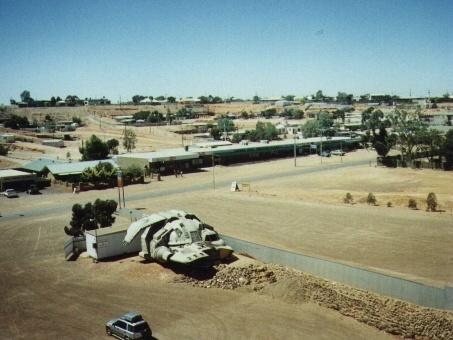
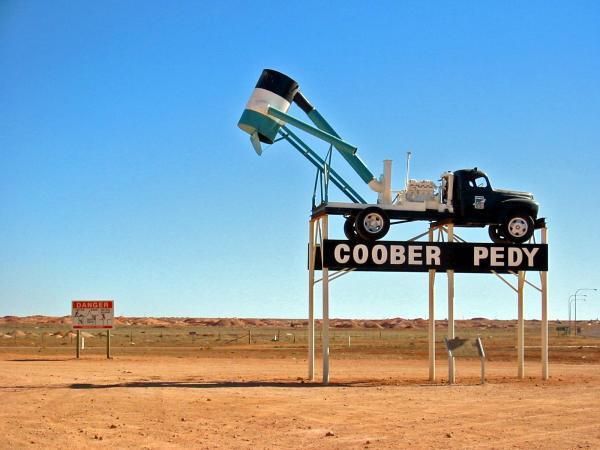
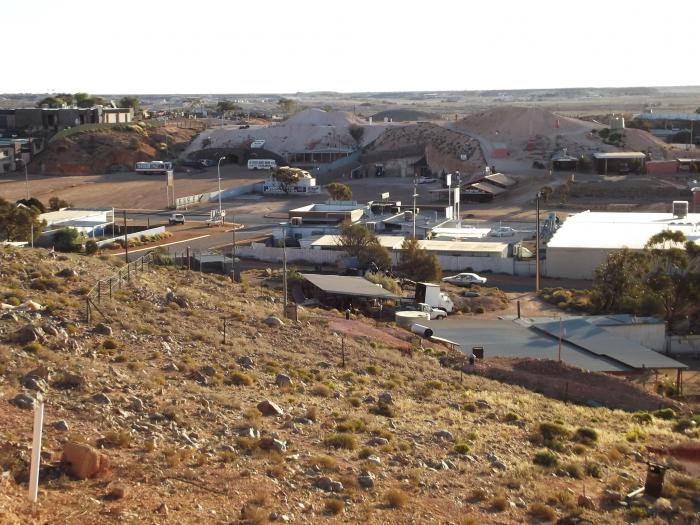
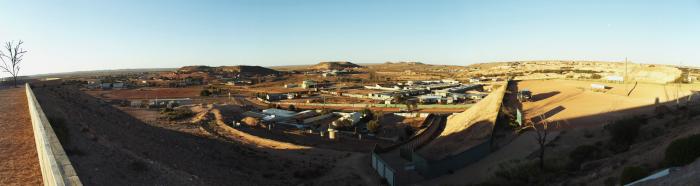
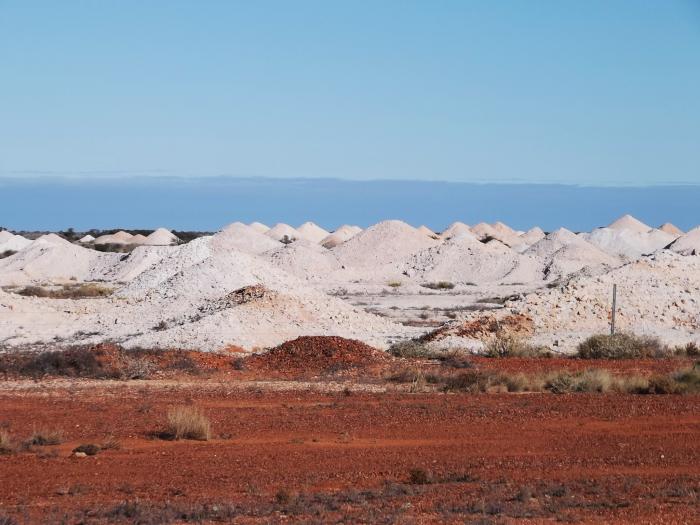
Coober Pedy, population 3,500, is a small town in northern South Australia, 846 kilometres north of Adelaide on the Stuart Highway. The town is known as the opal capital of the world because what are widely regarded as the most precious opals are mined there. The name 'Coober Pedy' comes from the local Aboriginal term kupa piti, meaning "white man in a hole".
Located in the Australian outback, Coober Pedy is hundreds of kilometres from the nearest settlement. The harsh summer temperatures and the dominant industry mean that most residents live in caves bored into the hillsides and work underground in mine shafts. A standard three bedroom cave home with lounge, kitchen, and bathroom can be drilled out of the rock in the hillside for a similar price to a house on the surface. It remains at a constant temperature, whereas surface living needs air-conditioning, especially during the summer months, when the temperature often exceed 40 degrees Celsius (104 degrees Fahrenheit). The relative humidity rarely gets over 20% on these hot days, and the skies are usually cloud-free. The average maximum temperature is 30-32 degrees Celsius, but it can get quite cool in the winter.
Some of the interesting attractions in Coober Pedy include the mines, the graveyard, and the underground churches. The first tree ever seen in the town was welded together from scrap iron. It still sits on a hilltop overlooking the town. The local golf course - mostly played at night with glowing balls, to avoid daytime temperatures - is completely free of grass and golfers take a small piece of "turf" around to use for teeing off.
Coober Pedy is a popular tourist destination and the surrounding countryside (such as the Breakaways and Moonplain) have featured as backdrops in films including Mad Max Beyond Thunderdome, Priscilla, Queen of the Desert, Pitch Black and Salute of the Jugger which although arguably forgettable made considerable use of the colourful collection of locals as extras. Coober Pedy featured in the second season of the TV series, The Amazing Race.
Located in the Australian outback, Coober Pedy is hundreds of kilometres from the nearest settlement. The harsh summer temperatures and the dominant industry mean that most residents live in caves bored into the hillsides and work underground in mine shafts. A standard three bedroom cave home with lounge, kitchen, and bathroom can be drilled out of the rock in the hillside for a similar price to a house on the surface. It remains at a constant temperature, whereas surface living needs air-conditioning, especially during the summer months, when the temperature often exceed 40 degrees Celsius (104 degrees Fahrenheit). The relative humidity rarely gets over 20% on these hot days, and the skies are usually cloud-free. The average maximum temperature is 30-32 degrees Celsius, but it can get quite cool in the winter.
Some of the interesting attractions in Coober Pedy include the mines, the graveyard, and the underground churches. The first tree ever seen in the town was welded together from scrap iron. It still sits on a hilltop overlooking the town. The local golf course - mostly played at night with glowing balls, to avoid daytime temperatures - is completely free of grass and golfers take a small piece of "turf" around to use for teeing off.
Coober Pedy is a popular tourist destination and the surrounding countryside (such as the Breakaways and Moonplain) have featured as backdrops in films including Mad Max Beyond Thunderdome, Priscilla, Queen of the Desert, Pitch Black and Salute of the Jugger which although arguably forgettable made considerable use of the colourful collection of locals as extras. Coober Pedy featured in the second season of the TV series, The Amazing Race.
Wikipedia article: http://en.wikipedia.org/wiki/Coober_Pedy
Nearby cities:
Coordinates: 29°0'28"S 134°45'25"E
- Ellenbrook 1829 km
- Byford, WA 1832 km
- Armadale 1832 km
- Forrestdale, WA 1838 km
- Collie 1839 km
- Canning Vale, WA 1839 km
- Wanneroo 1846 km
- Nambeelup 1854 km
- Baldivis 1870 km
- Dunsborough 1937 km
- Kanku-Breakaways Conservation Park 15 km
- Maralinga range 318 km
- Boondina Conservation Park 362 km
- Lake Dey Dey 362 km
- Lake Maurice 370 km
- Port Eyre 393 km
- Head of Bight 443 km
- Mamungari Conservation Park 536 km
- Great Australian Bight Marine Park 554 km
- Nullarbor National Park 571 km