
Gamla Uppsala, mounds, tumuli (Uppsala)
Sweden /
Uppsala /
Uppsala
World
/ Sweden
/ Uppsala
/ Uppsala
World / Sweden / Stockholm
archeological site, barrow/tumulus/burial mound

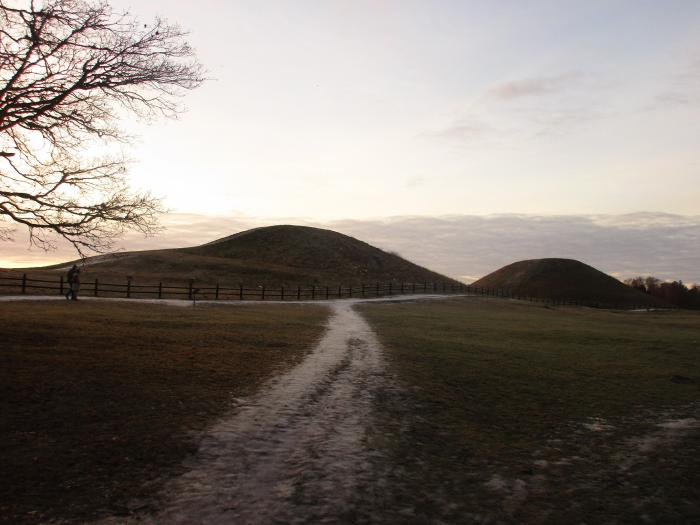
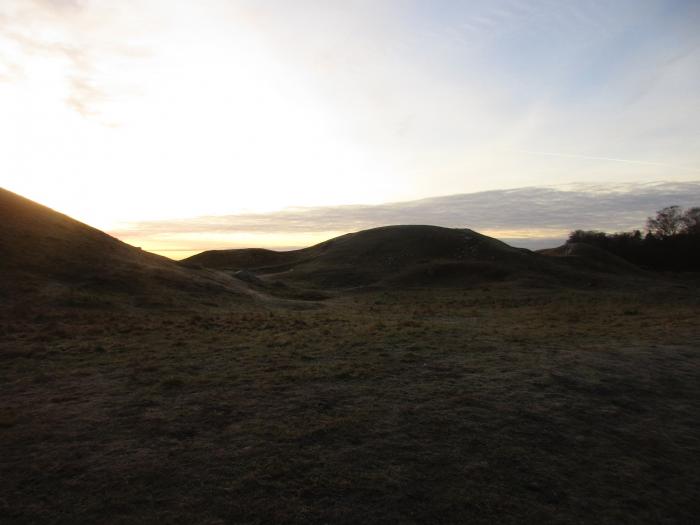
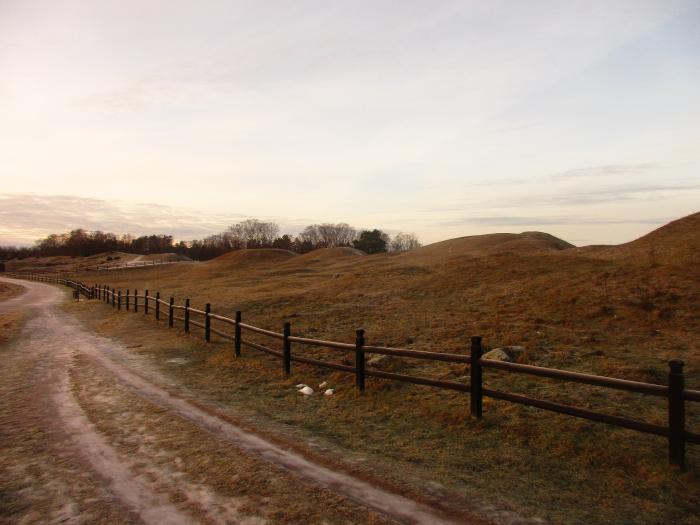

The Royal mounds (Swedish: Kungshögarna) is the name for the three large barrows which are located in Gamla Uppsala. They are dated to the 5th and 6th centuries. As Sweden's oldest national symbols they are even depicted on the covers of books about the Swedish national identity.
In the 6th century, Gamla Uppsala was the location of royal burials. The location was chosen carefully and in order to make them majestic. The tumuli were constructed on top of the ridge.
By burning the dead king and his armour, he was moved to Valhalla by the consuming force of the fire. The fire could reach temperatures of 1500 °C. The remains were covered with cobblestones and then a layer of gravel and sand and finally a thin layer of turf.
Thus he (Odin) established by law that all dead men should be burned, and their belongings laid with them upon the pile, and the ashes be cast into the sea or buried in the earth. Thus, said he, every one will come to Valhalla with the riches he had with him upon the pile; and he would also enjoy whatever he himself had buried in the earth. For men of consequence a mound should be raised to their memory, and for all other warriors who had been distinguished for manhood a standing stone; which custom remained long after Odin's time. [...] It was their faith that the higher the smoke arose in the air, the higher he would be raised whose pile it was; and the richer he would be, the more property that was consumed with him. (Ynglinga saga)
In the 6th century, Gamla Uppsala was the location of royal burials. The location was chosen carefully and in order to make them majestic. The tumuli were constructed on top of the ridge.
By burning the dead king and his armour, he was moved to Valhalla by the consuming force of the fire. The fire could reach temperatures of 1500 °C. The remains were covered with cobblestones and then a layer of gravel and sand and finally a thin layer of turf.
Thus he (Odin) established by law that all dead men should be burned, and their belongings laid with them upon the pile, and the ashes be cast into the sea or buried in the earth. Thus, said he, every one will come to Valhalla with the riches he had with him upon the pile; and he would also enjoy whatever he himself had buried in the earth. For men of consequence a mound should be raised to their memory, and for all other warriors who had been distinguished for manhood a standing stone; which custom remained long after Odin's time. [...] It was their faith that the higher the smoke arose in the air, the higher he would be raised whose pile it was; and the richer he would be, the more property that was consumed with him. (Ynglinga saga)
Wikipedia article: http://en.wikipedia.org/wiki/Tumulus
Nearby cities:
Coordinates: 59°53'51"N 17°37'44"E
- Hovgården 60 km
- Birka 62 km
- Tre Kronor Museum 68 km
- Sammallahdenmäki 265 km
- Visingsborg Castle Ruins 280 km
- Broberg 387 km
- Hjortahammar 434 km
- Skuldelev ships 563 km
- Aggersborg 584 km
- Skumsnes farm 687 km
- Gamla Uppsala 0.6 km
- LSS, F 16 Swedish Airforce base 2.2 km
- Lövstalöt 7.3 km
- Skyttorp 21 km
- Alunda 32 km
- Örbyhus Golf Club 34 km
- Gimo Airport Swedish Air Force 37 km
- Örbyhus 37 km
- Österbybruk 37 km
- Gimo Airport 44 km