
Maaseik
Belgium /
Limburg /
Maaseik /
World
/ Belgium
/ Limburg
/ Maaseik
World / Belgium / Vlaanderen / Limburg / Maaseik
city, draw only border
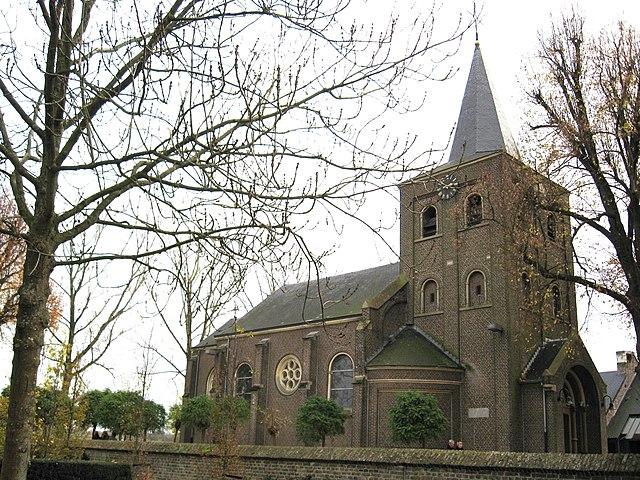
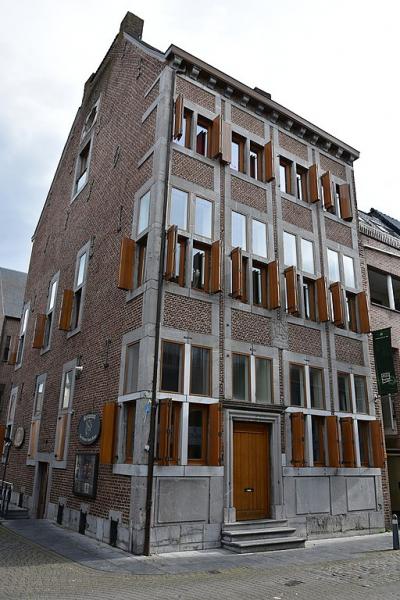

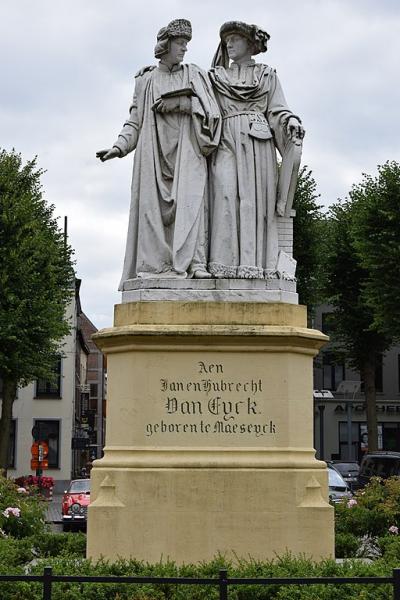
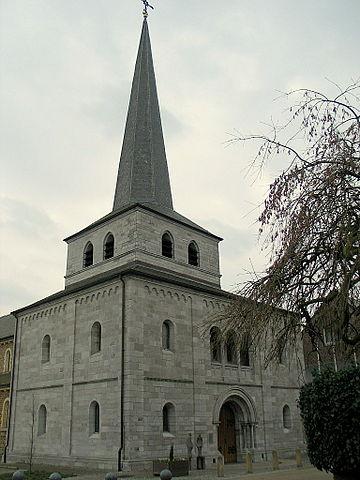
Maaseik (Limburgish: Mezeik) is a town in the municipality with the same name, in the Belgian province of Limburg.
Internationally, Maaseik is known as the assumed birthplace of the famous Flemish painters Jan and Hubert van Eyck.
As its name would suggest, Aldeneik (possibly to be translated as 'old oak') is older than Maaseik ('Meuse oak'). Although most toponyms with the affix -eik refer to a landscape with oaks, it is also possible that it is derived from the German word Ecke, which means 'corner'. 'Old corner' or 'bend' may in that case be linked to the fact that historically, the Meuse formed a bend around Aldeneik. An oaktree, however, is present in the town's coat of arms, which includes three crosses (perhaps representing the three oldest parishes) and a fish (representing the river Meuse).
According to tradition, Aldeneik Abbey was established by Adelard, a local Frankish lord, around 700 AD, as a Benedictine nunnery. His two daughters, Herlindis and Relindis, both became abbesses of the monastery and eventually became saints. The abbey at Aldeneik soon became the center of a small village community.
The abbey probably suffered destruction by the Vikings in the 9th century. Around 950, emperor Otto I gave the restored monastery to the bishop of Liège, who turned it into a religious chapter for (male) canons. The reason for this reform may have been that there were already several religious institutions for noble women in the area: Susteren Abbey, Thorn Abbey and Munsterbilzen Abbey. Aldeneik Abbey was abandoned at the beginning of the Eighty Years' War but the chapter continued in Nieuw-Eycke ('new oak'), now Maaseik.
Internationally, Maaseik is known as the assumed birthplace of the famous Flemish painters Jan and Hubert van Eyck.
As its name would suggest, Aldeneik (possibly to be translated as 'old oak') is older than Maaseik ('Meuse oak'). Although most toponyms with the affix -eik refer to a landscape with oaks, it is also possible that it is derived from the German word Ecke, which means 'corner'. 'Old corner' or 'bend' may in that case be linked to the fact that historically, the Meuse formed a bend around Aldeneik. An oaktree, however, is present in the town's coat of arms, which includes three crosses (perhaps representing the three oldest parishes) and a fish (representing the river Meuse).
According to tradition, Aldeneik Abbey was established by Adelard, a local Frankish lord, around 700 AD, as a Benedictine nunnery. His two daughters, Herlindis and Relindis, both became abbesses of the monastery and eventually became saints. The abbey at Aldeneik soon became the center of a small village community.
The abbey probably suffered destruction by the Vikings in the 9th century. Around 950, emperor Otto I gave the restored monastery to the bishop of Liège, who turned it into a religious chapter for (male) canons. The reason for this reform may have been that there were already several religious institutions for noble women in the area: Susteren Abbey, Thorn Abbey and Munsterbilzen Abbey. Aldeneik Abbey was abandoned at the beginning of the Eighty Years' War but the chapter continued in Nieuw-Eycke ('new oak'), now Maaseik.
Wikipedia article: http://en.wikipedia.org/wiki/Maaseik
Nearby cities:
Coordinates: 51°5'43"N 5°47'10"E
- Sittard-Geleen 3.1 km
- Echt-Susteren 4.5 km
- Heinsberg (district) 12 km
- Roerdalen 14 km
- Maasgouw 14 km
- Maasmechelen 16 km
- Heinsberg 18 km
- Wegberg 27 km
- Eijsden-Margraten 28 km
- Aachen 30 km
- Supermarket "Carrefour Market" 0.3 km
- Markt 0.4 km
- Saint-Catherine's Church 0.6 km
- Kloosterbempden shopping centre 0.6 km
- Roads and Traffic Department 2.7 km
- Fire department 2.7 km
- Electricity pylon 3 km
- Electricity pylon 3 km
- Electricity pylon 3 km
- 380 kV Substation Van Eyck 3 km
Comments