
Valea lui Mihai
| city
Romania /
Bihor /
Valea lui Mihai /
World
/ Romania
/ Bihor
/ Valea lui Mihai
World / Romania
city
Add category
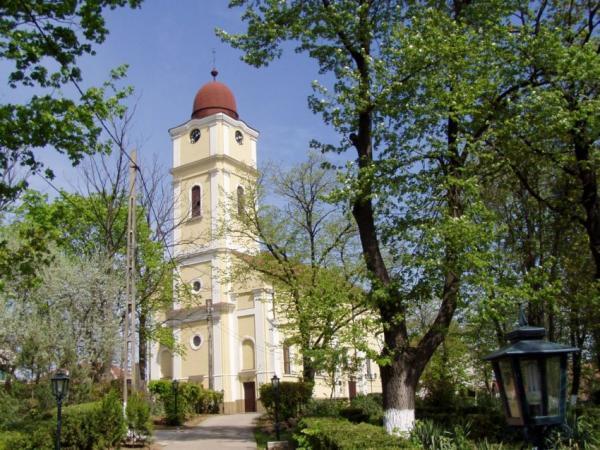
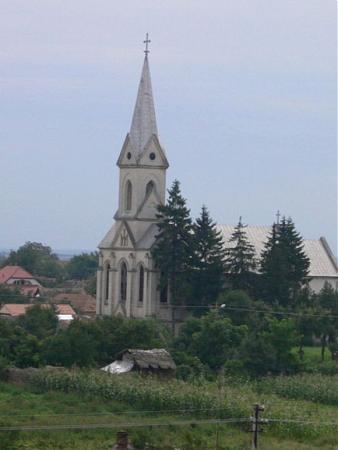

Valea lui Mihai (Hungarian: Érmihályfalva) is a town in the western part of Bihor county, Romania, close to the border between Romania and Hungary.
The first written record of the Hungarian settlement was made on 20th August 1270. The right of collecting customs fees was given to the settlement in 1302 by the Hungarian king Károly Róbert (Charles Robert I of the Angevin dinasty, reigning between 1308–1342). At that time the town had several names like Nogh Myhalfalva, Nogmyhal.
In the reign of the Hungarian king Mátyás Hunyadi (Matthias Corvinus Hunyadi, reigning between 1458-1490) the town was one of the 18 towns in county Bihar. In 1459 the right of holding markets was given to the town. In 1587 the Ottoman Empire occupied the town and the inhabitants had to flee. After the Turks had left the town, the inhabitants returned and soon they were converted to Calvinism. The destroyed church was rebuilt, the bell casted in 1491 in Nagyvárad (Romanian: Oradea) is still can be found in the belfry of the church.
In 1880 the number of inhabitants of Érmihályfalva was 1,594, all of them being Hungarians.
The railway lines built in 1871 between Szatmár (Romanian: Satu Mare) and Debrecen and in 1887 between Nagyvárad and Debrecen passed by the town.
From the end of the First World War the town became part of Romania by the Treaty of Trianon (4th June 1920). By the Second Vienna Award (1940) the town was returned to Hungary for a short time, but from 1945, as agreed on at the Treaty of Paris in 1947, the town entered again into possession of Romania.
During the communist regime a very strong industrialization of the town was carried on, several plants were built.
In 2002 the number of inhabitants of the town was 10,324 – from this number 8,757 Hungarians (84.82 percent), 1,442 Romanians, 95 Roma and 30 other nationalities.
The first written record of the Hungarian settlement was made on 20th August 1270. The right of collecting customs fees was given to the settlement in 1302 by the Hungarian king Károly Róbert (Charles Robert I of the Angevin dinasty, reigning between 1308–1342). At that time the town had several names like Nogh Myhalfalva, Nogmyhal.
In the reign of the Hungarian king Mátyás Hunyadi (Matthias Corvinus Hunyadi, reigning between 1458-1490) the town was one of the 18 towns in county Bihar. In 1459 the right of holding markets was given to the town. In 1587 the Ottoman Empire occupied the town and the inhabitants had to flee. After the Turks had left the town, the inhabitants returned and soon they were converted to Calvinism. The destroyed church was rebuilt, the bell casted in 1491 in Nagyvárad (Romanian: Oradea) is still can be found in the belfry of the church.
In 1880 the number of inhabitants of Érmihályfalva was 1,594, all of them being Hungarians.
The railway lines built in 1871 between Szatmár (Romanian: Satu Mare) and Debrecen and in 1887 between Nagyvárad and Debrecen passed by the town.
From the end of the First World War the town became part of Romania by the Treaty of Trianon (4th June 1920). By the Second Vienna Award (1940) the town was returned to Hungary for a short time, but from 1945, as agreed on at the Treaty of Paris in 1947, the town entered again into possession of Romania.
During the communist regime a very strong industrialization of the town was carried on, several plants were built.
In 2002 the number of inhabitants of the town was 10,324 – from this number 8,757 Hungarians (84.82 percent), 1,442 Romanians, 95 Roma and 30 other nationalities.
Wikipedia article: http://en.wikipedia.org/wiki/Valea_lui_Mihai
Nearby cities:
Coordinates: 47°31'11"N 22°8'7"E
- Debrecen 47 km
- Oradea 50 km
- Nyíregyháza 66 km
- Uzhhorod 127 km
- Miskolc 131 km
- Szolnok 156 km
- Košice 164 km
- Ózd 166 km
- Gyöngyös 174 km
- Salgótarján 190 km
- Bánháza Jókaitelep 10 km
- Buzita 16 km
- Melániatanya 21 km
- Reviczkymajor 21 km
- Ha0du 24 km
- Aradványpuszta 27 km
- Tamásipuszta 28 km
- Szakolykert 28 km
- Szalmadpuszta 28 km
- Cibakpuszta 33 km