
Wreck of USS Hammann (DD-412)
USA /
Hawaii /
Kekaha /
World
/ USA
/ Hawaii
/ Kekaha
World
Second World War 1939-1945, military, shipwreck, destroyer (ship), United States Navy

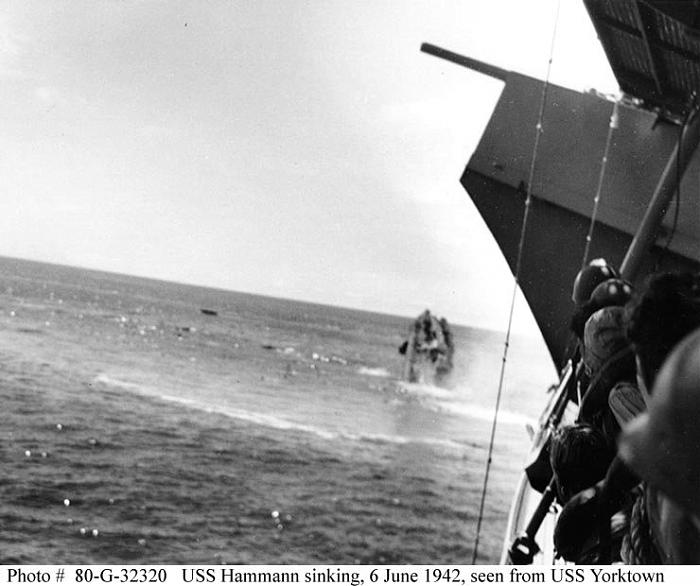
USS Hammann was a Sims Class Destroyer laid down in January 1938 and commissioned into US Navy service in August 1939 as a member of the Atlantic Fleet. With war breaking out in Europe less than a month after her commissioning, the Hammann and her crew began conducting patrols in the Atlantic to maintain America's Neutrality, but as German U-Boats began unrestricted submarine warfare against Allied Merchant Ships the Hammann and her crew were based at Iceland and took on a more active role as convoy escort for ships from heading to and from the US mainland.
As the conditions in the North Atlantic grew increasingly hostile and reports of exchanges of fire between Americans and Germans became ever more common, the Hammann's crew expected war to be declared any day with Nazi Germany, but when the surprise attack on Pearl Harbor on December 7th, 1941 by the Japanese brought the US into the war instead, orders soon reached the Hammann to report to the Pacific Fleet.
Joining with Vice Admiral Fletcher's Task Force 17 off California on February 25th, the Hammann was attached to the Aircraft Carrier USS Lexington (CV-2) and spent the next three months screening the 'Lady Lex' as she conducted airstrikes on Japanese positions around the Coral Sea. May 1942 brought confirmation that the Imperial Japanese Navy was moving Southwest from Rabaul and Truk towards the Allied base in the city of Port Moresby, intent on ousting the Allies from New Guinea and securing its vast natural resources and strategic location in the West Indies. Task Force 17 was ordered to intercept and repulse the Japanese thrust, and on May 7th the two naval forces met in the Battle of the Coral Sea, which lasted into the night of May 8th. Screening the "Lady Lex' throughout the battle, Hammann and her fellow Destroyers put up barrage after barrage of anti-aircraft fire at several waves of Japanese Carrier aircraft, but could not prevent the Veteran Japanese pilots from sending two torpedoes and several bombs into the Lexington, starting fires which eventually reached the Carrier's torpedo magazine and mortally damaged the ship. After rescuing survivors from the Carrier, the Hammann stood by as Lexington was scuttled on May 8th and then screened the damaged USS Yorktown (CV-5) as she and the rest of the Task Force made top speed for Pearl Harbor.
After only three days in Pearl, the entire Task Force was reprovisioned and dispatched to meet a large Japanese invasion force Allied Codebreakers had determined would be attempting to conquer Midway Atoll in the first days of June. Now attached to the USS Yorktown, the Hammann and her crew prepared themselves once again for battle with the Imperial Japanese Navy. American recon planes soon sighted the main Japanese Battle Fleet and before dawn on June 4th the Yorktown, USS Enterprise (CV-6) and USS Hornet (CV-7) were launching their first air strikes in the Battle of Midway. Reports were soon reaching the American Fleet by 1200hrs that three of the four Japanese Carriers were in flames and sinking, however crews aboard each ship knew the airwing from the fourth Carrier would eventually make their presence felt to the US Fleet.
Shortly after 1300hrs as the Yorktown was launching a fresh Combat Air Patrol her radar began picking up inbound enemy aircraft, soon confirmed to be 'Val' Dive-bombers. Yorktown’s aircraft began engaging the Japanese bombers some 20 miles out at 1345hrs and shortly thereafter the Hammann and the rest of Yorktown's screen opened fire. Despite downing several Japanese bombers, the Yorktown took three hits and was stopped dead in the water with several fires burning onboard. Hammann stood off her Carrier while damage control teams on Yorktown went to work, and by 1600hrs she was underway again making 20knots and recovering aircraft. No sooner had Yorktown rejoined the fight than a second wave of Japanese planes appeared, this time torpedo bombers, and made their attack on the battered Carrier. Hammann's crew downed three of the attackers in the resulting fray but Yorktown took two torpedoes in her Port side and again went dead in the water, and soon was sporting a 26 degree list to Port. Hammann and several other Destroyers received word that Yorktown was being abandoned and closed to pull off her crew as the Carrier, including her Captain, leaving the once proud ship to her fate as night fell on June 4th.
Dawn of June 5th revealed the Yorktown still stubbornly afloat and maintaining her list to Port, which prompted her Captain to re-board the Carrier with a volunteer crew in an attempt to save the ship and for the entire day salvage efforts were undertaken and the Yorktown was placed under tow. Alternating with other Destroyers in providing an anti-submarine screen around the salvage operation, Hammann was requested to come alongside Yorktown on June 6th to provide damage control teams, tools and electrical power for pumps emptying out the Carriers flooded hull spaces. Tied alongside Yorktown's Starboard Quarter, the Hammann and her crew tended to the stricken Carrier for the entire morning as the convoy labored to the South at a snail’s pace.
The amount of vessel traffic around Yorktown in the wake of the Battle of Midway attracted the attention of the Japanese Submarine I-168, operating off Midway as part of the Invasion Force but executing orders to return to port after the Japanese Fleet was turned back. Shortly before noon on June 6th, the I-168's Captain sighted the Yorktown and her armada and utilized the debris strewn water to stealthily penetrate the Destroyer screen around the heavily listing ship. Lining up his shot on the Carrier's exposed lower Starboard hull, likely to be thinly armored, the I-168 sent a spread of four torpedoes at the Carrier and the Destroyer alongside her.
Lookouts stationed aboard the Hammann and the Yorktown quickly sighted the onrushing torpedo spread churning inexorably closer to their ships, but little could be done by either ship to avoid them. Nonetheless, Hammann's Captain rang down for flank speed and ordered all mooring and electrical lines cast off to get his Destroyer underway as her crew went to General Quarters. Gunners in Hammann's Starboard 20mm mounts opened fire on the inbound torpedoes in a last-ditch attempt to destroy them but helplessly watched as the first round passed beneath her keel and slammed into Yorktown's hull. The second torpedo from I-168 followed the path of the first but ran higher in the water and struck Hammann in her forward fireroom beneath her #2 turret where it caused the fireroom bulkhead to fail and broke the Destroyer's back. Sending up a huge plume of debris, oil and seawater onto the Hammanns deck, the force of the two blasts and another torpedo striking the Yorktown severed all the lines holding the two ships together and cast the Hammann adrift as she sagged by her bow and began to settle. The abandon ship was quickly passed and topside crew jettisoned life rafts as she quickly began to sink, and within four minutes the Hammann's bow had gone under rearing her Stern high out of the water and showing her still-turning screws before it too went down with dozens of her crew still trapped below decks.
Survivors from the Hammann thrown into the sea were frantically paddling for life rafts or lines dropped from Yorktown when the Destroyers armed depth charges began detonating in the deep beneath them, causing enormous explosions which killed many of her survivors in the water and likely sealing the fate of the severely damaged Yorktown, whose hull took yet another round of punishment. Attending Destroyers and salvage ships quickly moved in and pulled the Hammann's remaining crew from the water but 80 of her compliment either went down with the ship or did not survive the depth charging while awaiting rescue.
For her service in the Second World War, USS Hammann received two Battle Stars.
www.navsource.org/archives/05/412.htm
As the conditions in the North Atlantic grew increasingly hostile and reports of exchanges of fire between Americans and Germans became ever more common, the Hammann's crew expected war to be declared any day with Nazi Germany, but when the surprise attack on Pearl Harbor on December 7th, 1941 by the Japanese brought the US into the war instead, orders soon reached the Hammann to report to the Pacific Fleet.
Joining with Vice Admiral Fletcher's Task Force 17 off California on February 25th, the Hammann was attached to the Aircraft Carrier USS Lexington (CV-2) and spent the next three months screening the 'Lady Lex' as she conducted airstrikes on Japanese positions around the Coral Sea. May 1942 brought confirmation that the Imperial Japanese Navy was moving Southwest from Rabaul and Truk towards the Allied base in the city of Port Moresby, intent on ousting the Allies from New Guinea and securing its vast natural resources and strategic location in the West Indies. Task Force 17 was ordered to intercept and repulse the Japanese thrust, and on May 7th the two naval forces met in the Battle of the Coral Sea, which lasted into the night of May 8th. Screening the "Lady Lex' throughout the battle, Hammann and her fellow Destroyers put up barrage after barrage of anti-aircraft fire at several waves of Japanese Carrier aircraft, but could not prevent the Veteran Japanese pilots from sending two torpedoes and several bombs into the Lexington, starting fires which eventually reached the Carrier's torpedo magazine and mortally damaged the ship. After rescuing survivors from the Carrier, the Hammann stood by as Lexington was scuttled on May 8th and then screened the damaged USS Yorktown (CV-5) as she and the rest of the Task Force made top speed for Pearl Harbor.
After only three days in Pearl, the entire Task Force was reprovisioned and dispatched to meet a large Japanese invasion force Allied Codebreakers had determined would be attempting to conquer Midway Atoll in the first days of June. Now attached to the USS Yorktown, the Hammann and her crew prepared themselves once again for battle with the Imperial Japanese Navy. American recon planes soon sighted the main Japanese Battle Fleet and before dawn on June 4th the Yorktown, USS Enterprise (CV-6) and USS Hornet (CV-7) were launching their first air strikes in the Battle of Midway. Reports were soon reaching the American Fleet by 1200hrs that three of the four Japanese Carriers were in flames and sinking, however crews aboard each ship knew the airwing from the fourth Carrier would eventually make their presence felt to the US Fleet.
Shortly after 1300hrs as the Yorktown was launching a fresh Combat Air Patrol her radar began picking up inbound enemy aircraft, soon confirmed to be 'Val' Dive-bombers. Yorktown’s aircraft began engaging the Japanese bombers some 20 miles out at 1345hrs and shortly thereafter the Hammann and the rest of Yorktown's screen opened fire. Despite downing several Japanese bombers, the Yorktown took three hits and was stopped dead in the water with several fires burning onboard. Hammann stood off her Carrier while damage control teams on Yorktown went to work, and by 1600hrs she was underway again making 20knots and recovering aircraft. No sooner had Yorktown rejoined the fight than a second wave of Japanese planes appeared, this time torpedo bombers, and made their attack on the battered Carrier. Hammann's crew downed three of the attackers in the resulting fray but Yorktown took two torpedoes in her Port side and again went dead in the water, and soon was sporting a 26 degree list to Port. Hammann and several other Destroyers received word that Yorktown was being abandoned and closed to pull off her crew as the Carrier, including her Captain, leaving the once proud ship to her fate as night fell on June 4th.
Dawn of June 5th revealed the Yorktown still stubbornly afloat and maintaining her list to Port, which prompted her Captain to re-board the Carrier with a volunteer crew in an attempt to save the ship and for the entire day salvage efforts were undertaken and the Yorktown was placed under tow. Alternating with other Destroyers in providing an anti-submarine screen around the salvage operation, Hammann was requested to come alongside Yorktown on June 6th to provide damage control teams, tools and electrical power for pumps emptying out the Carriers flooded hull spaces. Tied alongside Yorktown's Starboard Quarter, the Hammann and her crew tended to the stricken Carrier for the entire morning as the convoy labored to the South at a snail’s pace.
The amount of vessel traffic around Yorktown in the wake of the Battle of Midway attracted the attention of the Japanese Submarine I-168, operating off Midway as part of the Invasion Force but executing orders to return to port after the Japanese Fleet was turned back. Shortly before noon on June 6th, the I-168's Captain sighted the Yorktown and her armada and utilized the debris strewn water to stealthily penetrate the Destroyer screen around the heavily listing ship. Lining up his shot on the Carrier's exposed lower Starboard hull, likely to be thinly armored, the I-168 sent a spread of four torpedoes at the Carrier and the Destroyer alongside her.
Lookouts stationed aboard the Hammann and the Yorktown quickly sighted the onrushing torpedo spread churning inexorably closer to their ships, but little could be done by either ship to avoid them. Nonetheless, Hammann's Captain rang down for flank speed and ordered all mooring and electrical lines cast off to get his Destroyer underway as her crew went to General Quarters. Gunners in Hammann's Starboard 20mm mounts opened fire on the inbound torpedoes in a last-ditch attempt to destroy them but helplessly watched as the first round passed beneath her keel and slammed into Yorktown's hull. The second torpedo from I-168 followed the path of the first but ran higher in the water and struck Hammann in her forward fireroom beneath her #2 turret where it caused the fireroom bulkhead to fail and broke the Destroyer's back. Sending up a huge plume of debris, oil and seawater onto the Hammanns deck, the force of the two blasts and another torpedo striking the Yorktown severed all the lines holding the two ships together and cast the Hammann adrift as she sagged by her bow and began to settle. The abandon ship was quickly passed and topside crew jettisoned life rafts as she quickly began to sink, and within four minutes the Hammann's bow had gone under rearing her Stern high out of the water and showing her still-turning screws before it too went down with dozens of her crew still trapped below decks.
Survivors from the Hammann thrown into the sea were frantically paddling for life rafts or lines dropped from Yorktown when the Destroyers armed depth charges began detonating in the deep beneath them, causing enormous explosions which killed many of her survivors in the water and likely sealing the fate of the severely damaged Yorktown, whose hull took yet another round of punishment. Attending Destroyers and salvage ships quickly moved in and pulled the Hammann's remaining crew from the water but 80 of her compliment either went down with the ship or did not survive the depth charging while awaiting rescue.
For her service in the Second World War, USS Hammann received two Battle Stars.
www.navsource.org/archives/05/412.htm
Wikipedia article: http://en.wikipedia.org/wiki/USS_Hammann_(DD-412)
Nearby cities:
Coordinates: 30°36'49"N 176°34'7"W
- Wreck of USS Yorktown (CV-5) 1 km
- Wreck of HIJMS Akagi (赤城) 202 km
- Wreck of HIJMS Hiryū (飛龍) 246 km
- Wreck of HIJMS Sōryū (蒼龍) 254 km
- Wreck of HIJMS Kaga (加賀) 263 km
- former Henderson Field 277 km
- Kahuku Army Airfield 2101 km
- Waiele Gulch Army Airfield 2109 km
- Wreck of Japanese Submarine I-401 2117 km
- Cassidy International Airport 3775 km
- Deep Lagoon 276 km
- Midway Islands 276 km
- Wells Harbor 279 km
- Sand Island 279 km
- Kure Atoll 298 km
- Pearl and Hermes Atoll 314 km
- Nero Seamount 325 km
- Neva Shoals 572 km
- Maro Reef 825 km
- Raita Reef 895 km
Comments