
Basilica of Our Lady (Tongeren)
Belgium /
Limburg /
Tongeren /
Museumkwartier, 2
World
/ Belgium
/ Limburg
/ Tongeren
World / Belgium / Vlaanderen / Limburg / Tongeren
Gothic (architecture), belfry, Gothic revival (architecture), UNESCO World Heritage Site, listed building / architectural heritage, Roman Catholic church, 12th century construction

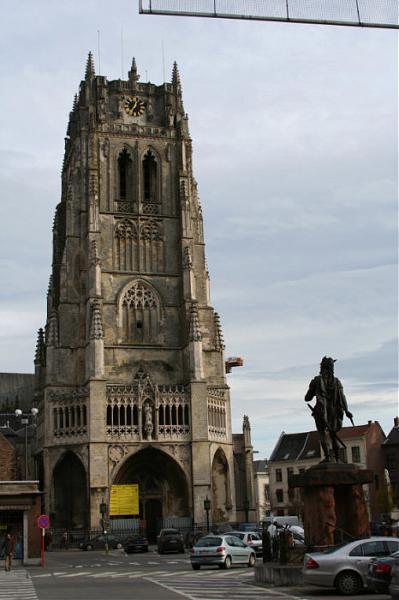
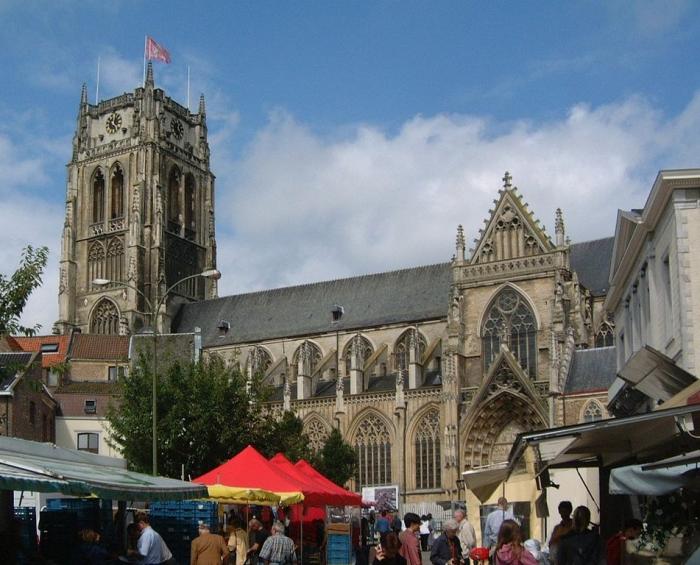


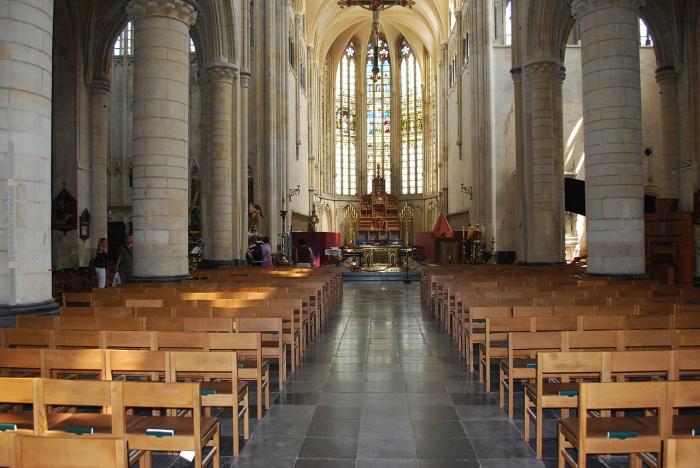

Under the current Gothic church there are still traces of several older churches. There is therefore a long continuity of religious buildings on this site.
Archaeological research has shown that the history of the basilica goes back to the foundation of the city of Tongeren, in 10 BC. Roman occupation was followed in the 4th century by the construction of a Roman basilica (meeting hall), which was possibly used as an early Christian church at one point.
The basilica had a rectangular shape, was three-aisled, and was closed off by a semicircular apse. In this apse there were low benches against the wall, with a central recessed space, possibly for a wooden seat? On the floor of the apse the impression of a plinth of a small monument was found. A wall separated the apse from the hall. There are traces of several refurbishments. We do not know what condition the basilica was in when the Merovingian church was built in the sixth century, but the reuse of the apse and the floor in this early medieval church suggests that the building was still largely standing.
The oldest Merovingian church was built between 530 and 580 and underwent several renovations or ‘reconstructions’ after that. It was a single-nave construction of initially 17.5 metres by 12.4 metres, a small hall, with a semicircular apse. There was no tower. Inside, a choir wall separated the slightly higher choir from the rest of the building: the people literally looked up at what was happening in the choir. Until 1803, there was another preserved Merovingian building near the Tongeren basilica, the Sint-Maternuskapel, which may have been the baptismal chapel at this Merovingian church. However, the Sint-Maternuskapel disappeared at the beginning of the 19th century to make way for smoother traffic on the market.
At the end of the 9th century (870-900), a larger Carolingian church was built or at least laid in the foundations: a three-aisled construction with a higher central nave and again a semi-circular apse. About half a century after its construction, this was replaced by a subsequent Ottonian church, which was slightly larger. This ‘Ottonian’ church had an elongated, three-aisled nave (dated between 935 and 975), a strongly extended transept and a semi-circular choir. The dating of the construction phase coincides with the rule of Bishop Heraclius (959-972). The nave was preceded by a younger, square tower in Romanesque style, which was accessible via a round stair tower (dated 1180-1220).
Historical sources describe that the Count of Loon captured the city in 1180 and severely damaged it. The church also suffered as a result. In 1213, the Duke of Brabant besieged the city. The devastation from this last period may have been the reason to start building the next, Gothic church. According to an archival source, the construction of the Gothic Basilica of Our Lady was started in 1240, which is confirmed by the C14 dating of mortar from the foundation of the choir. The construction characteristics of the various parts of the church also show that construction of the southern part of the transept and the choir had at least begun. The main altar was already consecrated in 1242.
The northern part of the transept was built later, in the second half of the 14th century. The nave was also built at that time. Archival sources show that construction of the tower only started in 1442, approximately two centuries after the start of the Gothic work. This can only be explained by the simultaneous existence of a Romanesque predecessor that was only very gradually demolished as the construction of the Gothic church progressed. This allowed the church to continue to be used during the centuries of construction.
However, the Romanesque predecessor has not completely disappeared: in the northwest portal, the doorway is crowned by an arch and columns that are clearly Romanesque in style. The columns in the western part of the nave also have a different shape than the eastern ones. This probably involves the reuse of building elements, which were not preserved in situ. The western columns appear to have been built later. The tower of the predecessor of the Gothic church was also only demolished in the 16th century, after which the nave was extended to the Gothic tower.
The large Gothic tower on the west side of the basilica was never finished. At one time, it must have been the intention to provide the tower with a spire, but that never succeeded. A succession of wooden constructions did crown the building for a long time.
Bij de recente opgravingen werden fragmenten van oude decoratieschema’s van het interieur teruggevonden: deze werden op een ongekend moment afgekapt, en in een puinkuil in het koor geworpen. In de late dertiende eeuw waren de binnenwanden van de gotische kerk afgewerkt met een witte pleisterschildering waarop met rode lijnen rechthoekige steenblokken gesuggereerd werden. Op de profielen van muren en gewelfribben waren met dezelfde rode kleur V-vormige motieven aangebracht. Enkele fragmenten – die we niet in het gebouw kunnen lokaliseren – vertonen grillige penseelstreken, mogelijk te interpreteren als een vorm van marmerimitatie? Blind maaswerk – ook een restant uit de eerste bouwfase van de gotische kerk – draagt witte, okeren en vermiljoenen kalklagen. Merkwaardig is ook een gesculpteerde rondboog die men uit de fragmenten kon samenstellen, die een gotische zijde heeft, met een strak geometrisch patroon, en een renaissance-zijde, met een slinger van gestileerd fruit (waaronder granaatappels).
De Onze-Lieve-Vrouwbasiliek werd in de middeleeuwen zelfs gebruikt als belfort: als uitkijkpost, brandalarm, om de archieven te bewaren en om tot schuilplaats van de bevolking te dienen.
In 1677 werd de dakkap en het interieur van de kerk zwaar beschadigd tijdens een brand aangestoken door de troepen van Lodewijk XIV. Al in 1677 werd gestart met het herstel van de dakkap.
In 1731 wordt een sacristie gebouwd naar ontwerp van E. Fayn.
Onder leiding van Joseph Jonas Dumont werd van 1846 tot 1859 een restauratiecampagne uitgevoerd. Zowel buiten als binnen werden delen van het steenwerk vervangen door nieuwe bouwblokken. Het zuidportaal werd heraangelegd nadat het aangrenzende kapittelhuis werd ingekort. Ook het noordoostelijke portaal is niet meer origineel en het interieur werd aangepakt. Renaissance-glasramen, gedateerd tussen 1548 en 1550, werden gerestaureerd. Daarnaast kwamen er ook nieuwe glaspartijen uit het atelier van Jean-Baptiste Capronnier (1814-1891). De binnenmuren werden afgekapt, waardoor veel laatmiddeleeuwse schilderingen verloren gingen. Een tweede restauratie werd begonnen in 1969.
Ten oosten van de kerk bevindt zich het voormalige klooster. Waarschijnlijk bestond het oorspronkelijk uit vier vleugels waarvan de westelijke verdwenen is bij de bouw van het huidige koor. Op basis van stilistische gegevens kan het gedateerd worden tussen 1146 en 1164. Zuilengalerij en binnenhof dienden als begraafplaats voor de kanunniken. Aan de zuidelijke zijde bevindt zich de kapittelzaal, voorzien van een ronde toren, resterend van de versterking van het monasterium. In de 13de eeuw wordt het gemeenschapsleven opgegeven en vestigen de kanunniken zich in eigen woningen (zie Maastrichterstraat), ten noorden van het kerkhof en de omheiningsmuur, die op deze plaats nog lange tijd als kerkhofmuur bleef fungeren. Beschrijving.
Archaeological research has shown that the history of the basilica goes back to the foundation of the city of Tongeren, in 10 BC. Roman occupation was followed in the 4th century by the construction of a Roman basilica (meeting hall), which was possibly used as an early Christian church at one point.
The basilica had a rectangular shape, was three-aisled, and was closed off by a semicircular apse. In this apse there were low benches against the wall, with a central recessed space, possibly for a wooden seat? On the floor of the apse the impression of a plinth of a small monument was found. A wall separated the apse from the hall. There are traces of several refurbishments. We do not know what condition the basilica was in when the Merovingian church was built in the sixth century, but the reuse of the apse and the floor in this early medieval church suggests that the building was still largely standing.
The oldest Merovingian church was built between 530 and 580 and underwent several renovations or ‘reconstructions’ after that. It was a single-nave construction of initially 17.5 metres by 12.4 metres, a small hall, with a semicircular apse. There was no tower. Inside, a choir wall separated the slightly higher choir from the rest of the building: the people literally looked up at what was happening in the choir. Until 1803, there was another preserved Merovingian building near the Tongeren basilica, the Sint-Maternuskapel, which may have been the baptismal chapel at this Merovingian church. However, the Sint-Maternuskapel disappeared at the beginning of the 19th century to make way for smoother traffic on the market.
At the end of the 9th century (870-900), a larger Carolingian church was built or at least laid in the foundations: a three-aisled construction with a higher central nave and again a semi-circular apse. About half a century after its construction, this was replaced by a subsequent Ottonian church, which was slightly larger. This ‘Ottonian’ church had an elongated, three-aisled nave (dated between 935 and 975), a strongly extended transept and a semi-circular choir. The dating of the construction phase coincides with the rule of Bishop Heraclius (959-972). The nave was preceded by a younger, square tower in Romanesque style, which was accessible via a round stair tower (dated 1180-1220).
Historical sources describe that the Count of Loon captured the city in 1180 and severely damaged it. The church also suffered as a result. In 1213, the Duke of Brabant besieged the city. The devastation from this last period may have been the reason to start building the next, Gothic church. According to an archival source, the construction of the Gothic Basilica of Our Lady was started in 1240, which is confirmed by the C14 dating of mortar from the foundation of the choir. The construction characteristics of the various parts of the church also show that construction of the southern part of the transept and the choir had at least begun. The main altar was already consecrated in 1242.
The northern part of the transept was built later, in the second half of the 14th century. The nave was also built at that time. Archival sources show that construction of the tower only started in 1442, approximately two centuries after the start of the Gothic work. This can only be explained by the simultaneous existence of a Romanesque predecessor that was only very gradually demolished as the construction of the Gothic church progressed. This allowed the church to continue to be used during the centuries of construction.
However, the Romanesque predecessor has not completely disappeared: in the northwest portal, the doorway is crowned by an arch and columns that are clearly Romanesque in style. The columns in the western part of the nave also have a different shape than the eastern ones. This probably involves the reuse of building elements, which were not preserved in situ. The western columns appear to have been built later. The tower of the predecessor of the Gothic church was also only demolished in the 16th century, after which the nave was extended to the Gothic tower.
The large Gothic tower on the west side of the basilica was never finished. At one time, it must have been the intention to provide the tower with a spire, but that never succeeded. A succession of wooden constructions did crown the building for a long time.
Bij de recente opgravingen werden fragmenten van oude decoratieschema’s van het interieur teruggevonden: deze werden op een ongekend moment afgekapt, en in een puinkuil in het koor geworpen. In de late dertiende eeuw waren de binnenwanden van de gotische kerk afgewerkt met een witte pleisterschildering waarop met rode lijnen rechthoekige steenblokken gesuggereerd werden. Op de profielen van muren en gewelfribben waren met dezelfde rode kleur V-vormige motieven aangebracht. Enkele fragmenten – die we niet in het gebouw kunnen lokaliseren – vertonen grillige penseelstreken, mogelijk te interpreteren als een vorm van marmerimitatie? Blind maaswerk – ook een restant uit de eerste bouwfase van de gotische kerk – draagt witte, okeren en vermiljoenen kalklagen. Merkwaardig is ook een gesculpteerde rondboog die men uit de fragmenten kon samenstellen, die een gotische zijde heeft, met een strak geometrisch patroon, en een renaissance-zijde, met een slinger van gestileerd fruit (waaronder granaatappels).
De Onze-Lieve-Vrouwbasiliek werd in de middeleeuwen zelfs gebruikt als belfort: als uitkijkpost, brandalarm, om de archieven te bewaren en om tot schuilplaats van de bevolking te dienen.
In 1677 werd de dakkap en het interieur van de kerk zwaar beschadigd tijdens een brand aangestoken door de troepen van Lodewijk XIV. Al in 1677 werd gestart met het herstel van de dakkap.
In 1731 wordt een sacristie gebouwd naar ontwerp van E. Fayn.
Onder leiding van Joseph Jonas Dumont werd van 1846 tot 1859 een restauratiecampagne uitgevoerd. Zowel buiten als binnen werden delen van het steenwerk vervangen door nieuwe bouwblokken. Het zuidportaal werd heraangelegd nadat het aangrenzende kapittelhuis werd ingekort. Ook het noordoostelijke portaal is niet meer origineel en het interieur werd aangepakt. Renaissance-glasramen, gedateerd tussen 1548 en 1550, werden gerestaureerd. Daarnaast kwamen er ook nieuwe glaspartijen uit het atelier van Jean-Baptiste Capronnier (1814-1891). De binnenmuren werden afgekapt, waardoor veel laatmiddeleeuwse schilderingen verloren gingen. Een tweede restauratie werd begonnen in 1969.
Ten oosten van de kerk bevindt zich het voormalige klooster. Waarschijnlijk bestond het oorspronkelijk uit vier vleugels waarvan de westelijke verdwenen is bij de bouw van het huidige koor. Op basis van stilistische gegevens kan het gedateerd worden tussen 1146 en 1164. Zuilengalerij en binnenhof dienden als begraafplaats voor de kanunniken. Aan de zuidelijke zijde bevindt zich de kapittelzaal, voorzien van een ronde toren, resterend van de versterking van het monasterium. In de 13de eeuw wordt het gemeenschapsleven opgegeven en vestigen de kanunniken zich in eigen woningen (zie Maastrichterstraat), ten noorden van het kerkhof en de omheiningsmuur, die op deze plaats nog lange tijd als kerkhofmuur bleef fungeren. Beschrijving.
Wikipedia article: https://en.wikipedia.org/wiki/Basilica_of_Our_Lady,_Tongeren
Nearby cities:
Coordinates: 50°46'51"N 5°27'53"E
- St Paul's Cathedral 17 km
- St. Peter's Church 55 km
- Brussels City Hall 79 km
- Charleroi Town Hall 83 km
- Cathedral of Our Lady 89 km
- Campanile Hotel Gouda 149 km
- Oude Kerk (Old Church) 157 km
- Belfry and Halles 164 km
- Douai Town Hall and Belfry 175 km
- Cloth Hall and Belfry 182 km
- VIIO Humaniora 0.6 km
- Old Cemetery, City Of Tongeren 0.7 km
- Betho Castle 1.2 km
- Tongeren (municipality) 1.2 km
- Beukenberg woods 1.2 km
- Amborix Quarters 1.2 km
- Plinus Park Tongeren 1.3 km
- Jeker racecourse 1.5 km
- HN Autotransport N.V. 1.7 km
- Loix house building company 1.9 km