
Wreck of HMS Sheffield (D-80)
Falkland Islands /
Port Stanley /
World
/ Falkland Islands
/ Falkland Islands
/ Port Stanley
World
navy, shipwreck
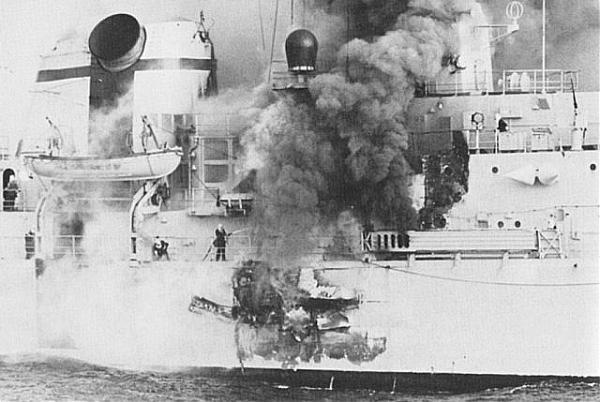

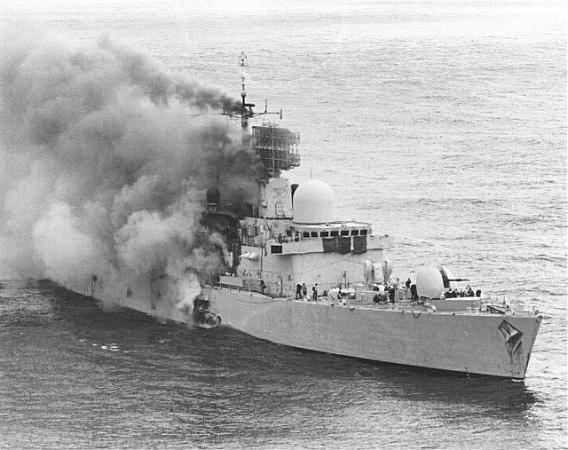
HMS Sheffield was a Type 42 Guided Missile Destroyer in service with the Royal Navy during the Falklands War and was on Radar picket duty on the morning of May 4th, 1982 when she was attacked by 2 Super Etendards of the Argentine Air Force.
The Argentine aircraft were not picked up by the Sheffields radar systems and the crew were unaware they were in any danger until 2 Exocet anti-ship missiles were detected closing on the ship at high speed. The crew had all of 10-15 seconds of warning before the missiles struck, the 1st Exocet missing and landing well off her port bow but the 2nd hitting squarely amidships about 8 feet above the waterline. The missile killed 20 members the Sheffields crew but it's warhead did not detonate on impact; instead the missiles fuel began starting fires deep in the hull of the Sheffield which quickly grew unmanageable due to damage to the ships water mains and electrial systems.
As the fires grew worse the Sheffield was ordered abandoned on the morning of May 5th. While awaiting rescue, her crew famously sang "Always Look On the Bright Side of Life" from Monty Python and were eventually picked up by HMS Yarmouth which then stood by the Sheffields burning hulk as the fires began to burn themselves out over the following days. On May 10th the Yarmouth was ordered to take the Sheffield under tow to more protected waters however mounting seas began to swamp the Sheffield through the gaping holes in her hull and she finally was sunk by scuttling charges on the afternoon of May 10th, 1982.
Today the wreck of HMS Sheffield is considered a war grave and is under the Protection of Military Remains Act.
The Argentine aircraft were not picked up by the Sheffields radar systems and the crew were unaware they were in any danger until 2 Exocet anti-ship missiles were detected closing on the ship at high speed. The crew had all of 10-15 seconds of warning before the missiles struck, the 1st Exocet missing and landing well off her port bow but the 2nd hitting squarely amidships about 8 feet above the waterline. The missile killed 20 members the Sheffields crew but it's warhead did not detonate on impact; instead the missiles fuel began starting fires deep in the hull of the Sheffield which quickly grew unmanageable due to damage to the ships water mains and electrial systems.
As the fires grew worse the Sheffield was ordered abandoned on the morning of May 5th. While awaiting rescue, her crew famously sang "Always Look On the Bright Side of Life" from Monty Python and were eventually picked up by HMS Yarmouth which then stood by the Sheffields burning hulk as the fires began to burn themselves out over the following days. On May 10th the Yarmouth was ordered to take the Sheffield under tow to more protected waters however mounting seas began to swamp the Sheffield through the gaping holes in her hull and she finally was sunk by scuttling charges on the afternoon of May 10th, 1982.
Today the wreck of HMS Sheffield is considered a war grave and is under the Protection of Military Remains Act.
Wikipedia article: http://en.wikipedia.org/wiki/HMS_Sheffield_(D80)
Nearby cities:
Coordinates: 53°4'0"S 56°56'15"W
- Wreck of SMS Gneisenau 70 km
- Wreck of SMS Scharnhorst 82 km
- Wreck of ARA General Belgrano 396 km
- ARA San Juan submarine (Approximate) 777 km
- Approximate sinking location: HMS Monmouth 2228 km
- Wreck of USS La Moure County (LST-1194) 2647 km
- App. position of S/V CONCORDIA sinking 17.02.2010. 3143 km
- Wreck of USS St. Louis (CL-49) / NAe Tamandare (C-12) 4454 km
- Spacecraft cemetery 6167 km
- approximate Sinking position of auxiliary cruiser Atlantis 6601 km
- Beauchêne Island 152 km
- Burdwood Bank 160 km